Results by title

7 books match the query 'Gellman, Erik S.'
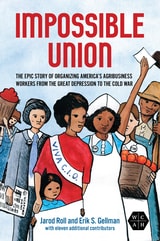
cover of Impossible Union: The Epic Story of Organizing America’s Agribusiness Workers from the Great Depression to the Cold War

Impossible Union

The Epic Story of Organizing America’s Agribusiness Workers from the Great Depression to the Cold War

Jarod Roll and Erik S. Gellman

University of Illinois Press, 2027

The United Cannery, Agricultural, Packing, and Allied Workers of America (UCAPAWA) and its successor, the Food, Tobacco, Agricultural and Allied Workers of America (FTA), organized some of the nation’s most exploited workers. Jarod Roll, Erik S. Gellman, and eleven other contributors provide a first-ever complete history of UCAPAWA-FTA that illuminates the organizations’ mission, accomplishments, and impediments while offering a new account of the potential for working-class democracy in the New Deal and World War II eras.

Workers of many racial, ethnic, and social identities united under the UCAPAWA-FTA banner. Their grassroots activism and bold national leadership fueled the union’s success despite opposition from employers, the government, and other labor groups. The union’s common sense anti-fascist ideology empowered workers to forge solidarities across their vast differences and linked workers’ rights to campaigns against racism and inequality. UCAPAWA-FTA advocated for an inclusive American democracy that can inform today’s struggles for dignity and security. This unique volume includes a special collection of essays by affiliated scholars that explore specific aspects of the union’s larger history.

Expansive and monumental, Impossible Union chronicles the labor organization that brought personhood and power to America’s marginal yet essential workers.

Additional contributors: Benjamin Makani Fortun, Dorothy Fujita-Rony, Robert Korstad, Bernadette Pérez, Michael Pierce, Charles Romney, Vicki L. Ruiz, Dan Sidorick, Dwana Waugh, John Weber, and Lane Windham
[more]
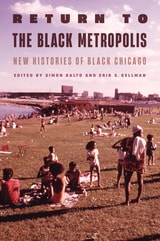
cover of Return to the Black Metropolis: New Histories of Black Chicago

Return to the Black Metropolis

New Histories of Black Chicago

Edited by Simon Balto and Erik S. Gellman

University of Illinois Press, 2027

Published in 1945, Black Metropolis: A Study of Negro Life in a Northern City remains an essential portrait of the diversity, nuance, and complexity of Black people’s lives in Chicago. The foundational book’s immense legacy includes the Black Metropolis Research Consortium (BMRC), an initiative dedicated to facilitating access to and use of Chicago’s African American archival materials.

Simon Balto and Erik S. Gellman edit a collection of the research and historical scholarship that have emerged from BMRC programs. The editors organize the contributions along thematic lines: policing, incarceration, and survival; protest politics; historical, literary, and artistic representations of African Americans; and photography’s role in commerce, art, and activism. Throughout, the contributors explore the understanding of Black Metropolis as a living concept that both reflects and embodies the dynamism of Black Chicago.

An exciting collection of cutting-edge scholarship, Return to the Black Metropolis captures the spirit of the foundational text while adding to the decades-long promise of, in the words of Timuel Black, bringing historical knowledge forward.

Contributors: Sumayya Ahmed, Richard Benson, Kimberly Black-Parker, Richard A. Courage, Ashley Dennis, Melissa Ford, Michelle Johnson, Mark Koschmann, Nick Kryczka, Amy Mooney, Melanie D. Newport, Ian Rocksborough-Smith, E. James West, Jakobi Williams
[more]
cover of The Black Chicago Renaissance

The Black Chicago Renaissance

Edited by Darlene Clark Hine and John McCluskey Jr.

University of Illinois Press, 2012
Beginning in the 1930s, Black Chicago experienced a cultural renaissance that lasted into the 1950s and rivaled the cultural outpouring in the Harlem Renaissance of the 1920s. The contributors to this volume analyze this prolific period of African American creativity in music, performance art, social science scholarship, and visual and literary artistic expression.
 
Unlike Harlem, Chicago was an urban industrial center that gave a unique working class and internationalist perspective to the cultural work being done in Chicago. This collection's various essays discuss the forces that distinguished the Black Chicago Renaissance from the Harlem Renaissance and placed the development of black culture in a national and international context. Among the topics discussed in this volume are Chicago writers Gwendolyn Brooks and Richard Wright, The Chicago Defender and Tivoli Theater, African American music and visual arts, and the American Negro Exposition of 1940.
 
Contributors are Hilary Mac Austin, David T. Bailey, Murry N. DePillars, Samuel A. Floyd Jr., Erik S. Gellman, Jeffrey Helgeson, Darlene Clark Hine, John McCluskey Jr., Christopher Robert Reed, Elizabeth Schlabach, and Clovis E. Semmes.
[more]
cover of The Chicago Food Encyclopedia

The Chicago Food Encyclopedia

Edited by Carol Mighton Haddix, Bruce Kraig, and Colleen Taylor Sen: Foreword by Russell Lewis

University of Illinois Press, 2017
The Chicago Food Encyclopedia is a far-ranging portrait of an American culinary paradise. Hundreds of entries deliver all of the visionary restauranteurs, Michelin superstars, beloved haunts, and food companies of today and yesterday. More than 100 sumptuous images include thirty full-color photographs that transport readers to dining rooms and food stands across the city. Throughout, a roster of writers, scholars, and industry experts pays tribute to an expansive--and still expanding--food history that not only helped build Chicago but fed a growing nation. Pizza. Alinea. Wrigley Spearmint. Soul food. Rick Bayless. Hot Dogs. Koreatown. Everest. All served up A-Z, and all part of the ultimate reference on Chicago and its food.
[more]
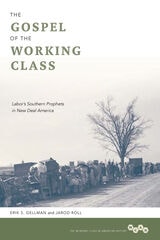
cover of The Gospel of the Working Class: Labor's Southern Prophets in New Deal America

The Gospel of the Working Class

Labor's Southern Prophets in New Deal America

Erik S. Gellman and Jarod Roll

University of Illinois Press, 2011

In this exceptional dual biography and cultural history, Erik S. Gellman and Jarod Roll trace the influence of two southern activist preachers, one black and one white, who used their ministry to organize the working class in the 1930s and 1940s across lines of gender, race, and geography. Owen Whitfield and Claude Williams, along with their wives Zella Whitfield and Joyce Williams, drew on their bedrock religious beliefs to stir ordinary men and women to demand social and economic justice in the eras of the Great Depression, New Deal, and Second World War.
 
Williams and Whitfield preached a working-class gospel rooted in the American creed that hard, productive work entitled people to a decent standard of living. Gellman and Roll detail how the two preachers galvanized thousands of farm and industrial workers for the Southern Tenant Farmers Union and the Congress of Industrial Organizations. They also link the activism of the 1930s and 1940s to that of the 1960s and emphasize the central role of the ministers' wives, with whom they established the People's Institute for Applied Religion.
 
This detailed narrative illuminates a cast of characters who became the two couples' closest allies in coordinating a complex network of activists that transcended Jim Crow racial divisions, blurring conventional categories and boundaries to help black and white workers make better lives. In chronicling the shifting contexts of the actions of Whitfield and Williams, The Gospel of the Working Class situates Christian theology within the struggles of some of America's most downtrodden workers, transforming the dominant narratives of the era and offering a fresh view of the promise and instability of religion and civil rights unionism.
[more]
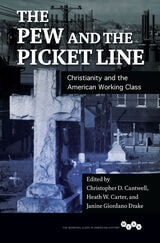
cover of The Pew and the Picket Line: Christianity and the American Working Class

The Pew and the Picket Line

Christianity and the American Working Class

Edited by Christopher D. Cantwell, Heath W. Carter, and Janine Giordano Drake

University of Illinois Press, 2016
The Pew and the Picket Line collects works from a new generation of scholars working at the nexus where religious history and working-class history converge. Focusing on Christianity and its unique purchase in America, the contributors use in-depth local histories to illustrate how Americans male and female, rural and urban, and from a range of ethnic backgrounds dwelt in a space between the church and the shop floor. Their vivid essays show Pentecostal miners preaching prosperity while seeking miracles in the depths of the earth, while aboveground black sharecroppers and white Protestants establish credit unions to pursue a joint vision of cooperative capitalism. Innovative and essential, The Pew and the Picket Line reframes venerable debates as it maps the dynamic contours of a landscape sculpted by the powerful forces of Christianity and capitalism. Contributors: Christopher D. Cantwell, Heath W. Carter, Janine Giordano Drake, Ken Fones-Wolf, Erik Gellman, Alison Collis Greene, Brett Hendrickson, Dan McKanan, Matthew Pehl, Kerry L. Pimblott, Jarod Roll, Evelyn Sterne, and Arlene Sanchez Walsh.
[more]
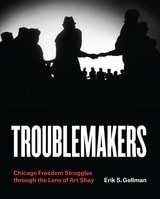
cover of Troublemakers: Chicago Freedom Struggles through the Lens of Art Shay

Troublemakers

Chicago Freedom Struggles through the Lens of Art Shay

Erik S. Gellman

University of Chicago Press, 2019

What does democracy look like? And when should we cause trouble to pursue it?
Troublemakers fuses photography and history to demonstrate how racial and economic inequality gave rise to a decades-long struggle for justice in one American city.
In dialogue with 275 of Art Shay’s photographs, Erik S. Gellman takes a new look at major developments in postwar US history: the Second Great Migration, “white flight,” and neighborhood and street conflicts, as well as shifting party politics and the growth of the carceral state. The result is a visual and written history that complicates—and even upends—the morality tales and popular memory of postwar freedom struggles.
Shay himself was a “troublemaker,” seeking to unsettle society by illuminating truths that many middle-class, white, media, political, and businesspeople pretended did not exist. Shay served as a navigator in the US Army Air Forces during World War II, then took a position as a writer for Life Magazine. But soon after his 1948 move to Chicago, he decided to become a freelance photographer. Shay wandered the city photographing whatever caught his eye—and much did. His lens captured everything from private moments of rebellion to era-defining public movements, as he sought to understand the creative and destructive energies that propelled freedom struggles in the Windy City.
Shay illuminated the pain and ecstasy that sprung up from the streets of Chicago, while Gellman reveals their collective impact on the urban fabric and on our national narrative. This collaboration offers a fresh and timely look at how social conflict can shape a city—and may even inspire us to make trouble today.
[more]