Results by title

3 books match the query 'Gender Race'

cover of Manliness and Civilization: A Cultural History of Gender and Race in the United States, 1880-1917

Manliness and Civilization

A Cultural History of Gender and Race in the United States, 1880-1917

Gail Bederman

University of Chicago Press, 1995

When former heavyweight champion Jim Jeffries came out of retirement on the fourth of July, 1910 to fight current black heavywight champion Jack Johnson in Reno, Nevada, he boasted that he was doing it "for the sole purpose of proving that a white man is better than a negro." Jeffries, though, was trounced. Whites everywhere rioted. The furor, Gail Bederman demonstrates, was part of two fundamental and volatile national obsessions: manhood and racial dominance.

In turn-of-the-century America, cultural ideals of manhood changed profoundly, as Victorian notions of self-restrained, moral manliness were challenged by ideals of an aggressive, overtly sexualized masculinity. Bederman traces this shift in values and shows how it brought together two seemingly contradictory ideals: the unfettered virility of racially "primitive" men and the refined superiority of "civilized" white men. Focusing on the lives and works of four very different Americans—Theodore Roosevelt, educator G. Stanley Hall, Ida B. Wells, and Charlotte Perkins Gilman—she illuminates the ideological, cultural, and social interests these ideals came to serve.
[more]
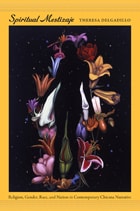
cover of Spiritual Mestizaje: Religion, Gender, Race, and Nation in Contemporary Chicana Narrative

Spiritual Mestizaje

Religion, Gender, Race, and Nation in Contemporary Chicana Narrative

Theresa Delgadillo

Duke University Press, 2011

Gloria Anzaldúa’s narrative and theoretical innovations, particularly her concept of mestiza consciousness, have influenced critical thinking about colonialism, gender, history, language, religion, sexuality, spirituality, and subjectivity. Yet Anzaldúa’s theory of spiritual mestizaje has not been extensively studied until now. Taking up that task, Theresa Delgadillo reveals spiritual mestizaje as central to the queer feminist Chicana theorist’s life and thought, and as a critical framework for interpreting contemporary Chicana literary and visual narratives. First mentioned by Anzaldúa in her pioneering book Borderlands/La Frontera, spiritual mestizaje is a transformative process of excavating bodily memory to develop a radical, sustained critique of oppression and renew one’s relation to the sacred. Delgadillo analyzes the role of spiritual mestizaje in Anzaldúa’s work and in relation to other forms of spirituality and theories of oppression. Illuminating the ways that contemporary Chicana narratives visualize, imagine, and enact Anzaldúa’s theory and method of spiritual mestizaje, Delgadillo interprets novels, memoir, and documentaries. Her critical reading of literary and visual technologies demonstrates how Chicanas challenge normative categories of gender, sexuality, nation, and race by depicting alternative visions of spirituality.
[more]
cover of State Anti-Intellectualism and the Politics of Gender and Race: Illiberal France and Beyond

State Anti-Intellectualism and the Politics of Gender and Race

Illiberal France and Beyond

Éric Fassin

Central European University Press, 2024

Eric Fassin examines the trend of State anti-intellectualism in France using the nation as a case study to demonstrate that this tendency is not limited to ostensibly illiberal regimes. He argues that today’s world requires an examination of this phenomenon beyond Cold War geopolitical divisions and highlights a global shift towards authoritarian neoliberalism. His book is a plea for the political urgency of intellectual work in a global moment of political anti-intellectualism.
The book covers the period from President Sarkozy to Prime Minister Valls and includes both firsthand and public cases of attacks against academics, not only in France, but also in Brazil, Hungary, Russia, Turkey, and the United States, with examples of State racism and the argument of the State against antiracism. The book also considers issues of censorship and cancel culture, concluding with Fassin’s firsthand account of attacks on him from the far-right.

[more]