Results by title

4 books match the query 'Gender identity in dance'

cover of A Queer History of Flamenco: Diversions, Transitions, and Returns in Flamenco Dance (1808–2018)

A Queer History of Flamenco

Diversions, Transitions, and Returns in Flamenco Dance (1808–2018)

Fernando López Rodríguez, translation by Ryan Rockmore

University of Michigan Press, 2024

A Queer History of Flamenco offers a groundbreaking exploration of flamenco through the lenses of queer theory and cultural studies. Previous histories have provided a largely distorted image about why, where, and how people have done flamenco—as well as who has performed flamenco. Yet feminists, transvestites, butches, femmes, the Spanish Roma, disabled people, guiris, and “incomprehensible” artists have been determined to do things differently without giving up their flamenco status. In this skillful translation of his book Historia queer del flamenco, Fernando López Rodríguez draws on diverse archival materials as well as his own lived experience and artistic practice, unearthing queer flamenco histories, voices, and perspectives that were previously unknown, avoided, or purposely hidden. 

Tracing flamenco’s development from its birth up to the contemporary era, the book places flamenco within significant historical periods such as the Spanish Civil War, Franco’s dictatorship, the transition to democracy, and the economic crisis of 2008, up to contemporary performances of the late 2010s. In taking a queer approach to History, the author abandons antiquated debates about purities and impurities; anecdotes about the lives of artists that are completely detached from their processes of creation; and myths about geniuses who seem to make art alone and completely detached from their collaborators and the historical, social, economic and artistic moment in which they lived. A Queer History of Flamenco is not only about the present and the queerness of people living, performing, or creating in it, but also about flamenco’s past in which so many queer artists and practices and their lives have remained unearthed and unaddressed.
[more]
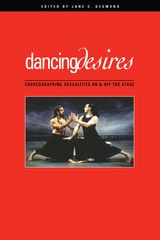
cover of Dancing Desires: Choreographing Sexualities On And Off The Stage

Dancing Desires

Choreographing Sexualities On And Off The Stage

Jane C. Desmond

University of Wisconsin Press, 2001

What happens to the writing of dance history when issues of sexuality and sexual identity are made central? What happens to queer theory, and to other theoretical constructs of gender and sexuality, when a dancing body takes center stage? Dancing Desires asks these questions, exploring the relationship between dancing bodies and sexual identity on the concert stage, in nightclubs, in film, in the courts, and on the streets. From Nijinsky’s balletic prowess to Charlie Chaplin's lightfooted "Little Tramp," from lesbian go-go dancers to the swans of Swan Lake, from the postmodern works of Bill T. Jones to the dangers of same-sex social dancing at Disneyland and the ecstatic Mardi Gras dance parties of Sydney, Australia, this book tracks the intersections of dance and human sexuality in the twentieth century as the definition of each has shifted and expanded.
     The contributors come from a number of fields (literature, history, theater, dance, film studies, legal studies, critical race studies) and employ methodologies ranging from textual analysis and film theory to ethnography. By embracing dance, and bodily movement more generally, as a crucial focus for investigation, together they initiate a new agenda for tracking the historical kinesthetics of sexuality.
[more]
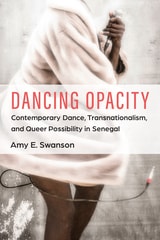
cover of Dancing Opacity: Contemporary Dance, Transnationalism, and Queer Possibility in Senegal

Dancing Opacity

Contemporary Dance, Transnationalism, and Queer Possibility in Senegal

Amy E. Swanson

University of Michigan Press, 2025
Amy Swanson’s Dancing Opacity chronicles the ways in which contemporary dancers in Senegal navigate the global contemporary dance circuit while challenging heteropatriarchal ideologies at home. A longstanding hub of African performing arts, Senegal was at the forefront of the explosion of contemporary dance across the continent at the turn of the twenty-first century. Drawing on ethnographic and historical research, Swanson demonstrates how Senegalese choreographers and dancers contend with entrenched racialized prejudices about Africa outside the continent, while pushing back against repressive regulations of gender and sexuality within Senegal. Swanson employs the concept of opacity, defined as a refusal to adhere to the colonial logic of transparency for dominant gazes and argues that artists create work with multiple layers of meaning that are not meant to be immediately transparent to all viewers. By doing so, these artists evade cultural norms that govern gender and sexual expression in Senegal, while challenging their international audiences to expand their perceptions of African dance. Dancing Opacity highlights the artists’ accounts of their pedagogies, performances, aesthetics, and lived realities, as well as Africanist conceptions of gender, sexuality, and queerness that have yet to be applied to contemporary dance.
[more]
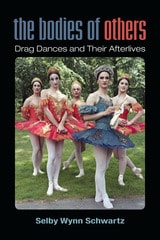
cover of The Bodies of Others: Drag Dances and Their Afterlives

The Bodies of Others

Drag Dances and Their Afterlives

Selby Wynn Schwartz

University of Michigan Press, 2019

The Bodies of Others explores the politics of gender in motion. From drag ballerinas to faux queens, and from butoh divas to the club mothers of modern dance, the book delves into four decades of drag dances on American stages. Drag dances take us beyond glittery one-liners and into the spaces between gender norms. In these backstage histories, dancers give their bodies over to other selves, opening up the category of realness. The book maps out a drag politics of embodiment, connecting drag dances to queer hope, memory, and mourning. There are aging étoiles, midnight shows, mystical séances, and all of the dust and velvet of divas in their dressing-rooms. But these forty years of drag dances are also a cultural history, including Mark Morris dancing the death of Dido in the shadow of AIDS, and the swans of Les Ballets Trockadero de Monte Carlo sketching an antiracist vision for ballet. Drawing on queer theory, dance history, and the embodied practices of dancers themselves, The Bodies of Others examines the ways in which drag dances undertake the work of a shared queer and trans politics.
[more]