Results by title
5 books match the query 'Generative AI'
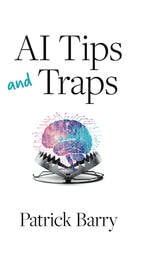
AI Tips and Traps
Patrick Barry
Michigan Publishing Services, 2026
Based on a series of popular courses and workshops that Professor Patrick Barry has created for students, professionals, and anyone else interested in taking a skills-based approach to artificial intelligence, this book gives you a chance to engage with important AI concepts, experiment with exploratory AI exercises, and then ultimately develop your own customized list of AI traps to try as well as AI traps to avoid.
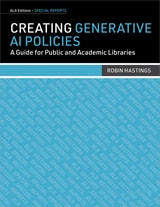
Creating Generative AI Policies
A Guide for Public and Academic LibrariesRobin Hastings
American Library Association, 2026
Though it’s challenging to set policies for a technology that is so young and still in flux, the need is urgent. Because usage of AI presents both opportunities and risks, libraries must be proactive. The WEF (World Economic Forum) predicts that while there may be a loss of 92 million jobs to various AI tools, they see 170 million new jobs and roles emerging from the use of this new technology. Whether or not this proves correct, there are already digital literacy skills, including a basic understanding of the technology around AI, that libraries can help their patrons master; and because of data privacy, security, and ethics issues, library workers require clear AI policies too. Technology expert Hastings highlights the first attempts of libraries across the country to set up policies for the use of AI in their organizations, as well as policies created by cities and other similar institutions, to guide stakeholders in creating their own smart, forward-thinking course of action. Succinct and pragmatic, this timely resource
- provides a short overview of Generative AI history, basic technical knowledge, and the key arguments put forth by those in favor and those opposed to this technology;
- offers advice on discovering how library staff encounter AI in their day-to-day work, both in their own usage and by patrons, to inform what policies the library needs and which policies to consider adjusting for particular use cases;
- includes separate chapters focusing on staff-side policy and patron/public-facing policy, delving into essential considerations like staff training, privacy and data protection, security, AI usage for reference, patron education and AI literacy, and setting limits and boundaries on patron AI use;
- suggests useful approaches to ensure that AI policies are easy to follow and understand by library workers, patrons, and the wider community;
- discusses how to craft flexible procedures that can be updated as AI continues to change, drawing on technology management best practices; and
- offers links to additional resources like sample policy documents and a curated reading list for understanding the environment around AI.
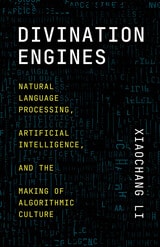
Divination Engines
Natural Language Processing, Artificial Intelligence, and the Making of Algorithmic CultureXiaochang Li
University of Chicago Press, 2026
A revealing and surprising origin story, showing how attempts to render human speech and language computable led from the era of big data to today’s AI.
Since the advent of computers, society has fantasized about conversing with machines. In this eye-opening book, technology expert Xiaochang Li shows readers how that dream both fueled the demand for data and set the stage for today’s generative AI. With original research and clear explanations, Li elucidates the origins of what’s known as natural language processing (NLP) and the heated twentieth-century debates between computer scientists, linguists, and communication engineers that shaped today’s technology. Starting with early devices that recorded, analyzed, and attempted to interpret human speech, she demonstrates how computer speech recognition, particularly efforts led by Bell Labs and IBM, advanced technology by deemphasizing linguistic meaning in favor of statistical prediction. In other words, researchers gradually abandoned systems that sought to understand human language, opting instead for work-arounds that simply predicted patterns in speech and text data. That solution became incredibly and surprisingly adaptable. As Li reveals, transforming linguistic questions into engineering ones ushered in the routine operation of search engines, spam filters, and the varied content sorting and recommendation mechanisms that regulate the access, circulation, and legitimacy of information across every platform. But this has all come at the cost of forever requiring copious and ever-growing amounts of new data.
At its core, Divination Engines illuminates how the artifacts of human communication—speech, text, and images—have become both the fodder for and products of computers. This connection between communication and computation, Li shows, has given rise to data-driven analytics, machine learning, and today’s algorithmic culture.
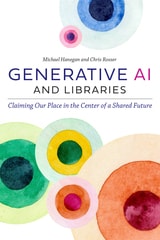
Generative AI and Libraries
Claiming Our Place in the Center of a Shared FutureMichael Hanegan and Chris Rosser
American Library Association, 2025
- be introduced to foundational principles and frameworks for navigating the so-called “Age of Intelligence” that provide useful guiderails no matter how AI technology actively evolves;
- delve into the complex ethical considerations of AI, including bias, equity, privacy, misinformation, and the potential impact on human agency and dignity;
- receive guidance related to stakeholder engagement, resource allocation, and the need for continuous learning and adaptation;
- discover practical models for evaluating and implementing AI tools thoughtfully and effectively in ways that align with libraries’ values and mission;
- become familiar with STACKS, an approach for learning, problem solving, and innovation with generative AI;
- explore AI literacy as an expression of metaliteracy using seven frames for instruction and learning; and
- walk away with a sense of how libraries can actively define their essential role as leaders and shapers of the AI landscape, ensuring their continued value and preventing marginalization.

Narrative Interplay in the Digital Era
Generative AI, Alternate Reality Games, and the Future of Interactive PedagogyEdited by Andrew Klobucar
Intellect Books, 2025
In Narrative Interplay in the Digital Era, leading scholars and artists explore how digital narratives, alternate reality games, and AI-driven storytelling reshape how we create, experience, and teach interactive fiction. This collection moves beyond traditional analysis and examines the social and artistic dimensions of interactivity, highlighting how narratives unfold dynamically through player engagement and machine collaboration.
Organized into three sections—alternate realities, digital interactive fiction, and the politics of gaming—this book reveals the evolving role of play and interactivity in contemporary education, creative expression, and online culture. Contributors offer insights from inside the creative process, centering the perspectives of game designers and artists to shed light on how interactive stories emerge at the intersection of technology and human imagination.
A practical resource for researchers in game studies, electronic literature, and digital storytelling, this collection also speaks to educators and creators eager to explore how AI and interactivity are redefining the future of narrative.