Results by title
13 books match the query 'Geriatrics'
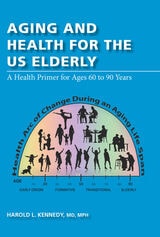
Aging and Health for the US Elderly
A Health Primer for Ages 60 to 90 YearsHarold L. Kennedy
University of Missouri Press, 2021
In this short, easy-to-read book designed as a concise but effective healthcare guide, Dr. Harold Kennedy, with more than 60 years of experience practicing medicine, guides readers through the healthcare maze faced by many seniors. While the information in this book is not intended to diagnose or treat ailments, it will give readers a valuable foundation of health literacy, crucial in making good decisions regarding their health and medical care services, and that of their loved ones.
Written expressly to help persons aged 60 years and older, Aging and Health for the US Elderly: A Health Primer for Ages 60 to 90 is essential reading for all older Americans. Chapter topics include health risk factors; social determinants of disease; best practices; and up-to-date prevention, surveillance, and wellness, with special chapters tailored specifically for women and for men. Coverage also includes an overview of the U.S. health care system, both its history and the current state of affairs. Scientific validity of the evidence is provided by more than 180 references.
Aging in the Church
How Social Relationships Affect HealthNeal M. Krause
Templeton Press, 2008
A growing number of studies indicate that older people in the church form social ties that have a significant positive impact on their physical and mental health. In Aging in the Church, Neal Krause comprehensively assesses the various relationships that stem from church involvement.
Among the many types of relationships Krause explores are close companion friendships, social-support structures (such as assistance provided by fellow church members during difficult times), and interactions that arise from Bible study and prayer groups. Through his thorough investigation of the underlying links between these relationships and the ways they relate to attributes like forgiveness, hope, gratitude, and altruism, the author hopes to explain why older adults who are involved in religious activities tend to enjoy better physical and mental health than those who are not engaged in religious communities. Going beyond merely reviewing the existing research on this subject, Aging in the Church provides a blueprint for taking research on church-based social relationships and health to the next level by identifying conceptual and methodological issues that investigators will confront as they delve more deeply into these connections.
Though these are complex issues, readers will find plain language and literature drawn from a wide array of disciplines, including sociology, psychology, public health, medicine, psychiatry, nursing, social work, gerontology, and theology. Literature, poetry, philosophy, and ethical ideas supplement the insights from these diverse fields. As a result, Aging in the Church takes on a genuinely interdisciplinary focus that will appeal to various scholars, researchers, and students.

Don't Send Me Flowers When I'm Dead
Voices of Rural ElderlyEva J. Salber
Duke University Press, 1983
"They are men and women, blacks and whites, Dr. Salber's teachers. The North Carolinians in this book have no trouble giving us a good measure of open-eyed social comment, not to mention intelligent self-scrutiny and astute moral reflection. These pages glow with all that. . . . This book represents an intense and unyielding ethical as well as medical and literary commitment by a most impressive physician."—Robert Coles
Growing Old in a New China
Transitions in Elder CareRose K. Keimig
Rutgers University Press, 2021
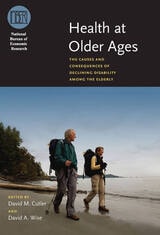
Health at Older Ages
The Causes and Consequences of Declining Disability Among the ElderlyEdited by David M. Cutler and David A. Wise
University of Chicago Press, 2009
This breakthrough volume argues that educational attainment, high socioeconomic status, an older retirement age, and accessible medical care have improved the health and quality of life of seniors. Along the way, it outlines the economic benefits of disability decline, such as an increased rate of seniors in the workplace, relief for the healthcare system and care-giving families, and reduced medical expenses for the elderly themselves. Health at Older Ages will be an essential contribution to the debate about meeting the medical needs of an aging nation.
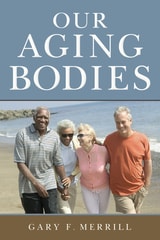
Our Aging Bodies
Merrill, Gary F
Rutgers University Press, 2015
People in developed countries are living longer and, just as the aged population around the world is steadily growing, the number of adults eighty-five and older in the United States is projected to quadruple to twenty-one million people by 2050. The aging of our population has huge implications for baby boomers and their children, and has generated a greater interest in the causes and effects of aging.
Our Aging Bodies provides a clear, scientifically based explanation of what happens to all the major organ systems and bodily processes—such as the cardiovascular and digestive systems—as people age. The first section is an overview of secondary aging—changes that occur with age that are related to disease and the environment—and include the effect of such things as diet, humor, and exercise. Readers will also learn about primary aging—intrinsic changes that occur with the aging of specific organs and body systems (including the prostate, the heart, the digestive system, and the brain). Throughout the book, Gary F. Merrill weaves in personal anecdotes and stories that help clarify and reinforce the facts and principles of the underlying scientific processes and explanations. Our Aging Bodies is accessible to a general reader interested in the aging phenomenon, or baby boomers wanting to be more informed when seeing their doctor and discussing changes to their bodies as they age.
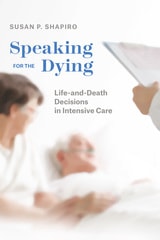
Speaking for the Dying
Life-and-Death Decisions in Intensive CareSusan P. Shapiro
University of Chicago Press, 2019
Speaking for the Dying tells their story, drawing on daily observations over more than two years in two intensive care units in a diverse urban hospital. From bedsides, hallways, and conference rooms, you will hear, in their own words, how physicians really talk to families and how they respond. You will see how decision makers are selected, the interventions they weigh in on, the information they seek and evaluate, the values and memories they draw on, the criteria they weigh, the outcomes they choose, the conflicts they become embroiled in, and the challenges they face. Observations also provide insight into why some decision makers authorize one aggressive intervention after the next while others do not—even on behalf of patients with similar problems and prospects. And they expose the limited role of advance directives in structuring the process decision makers follow or the outcomes that result.
Research has consistently found that choosing life or death for another is one of the most difficult decisions anyone can face, sometimes haunting families for decades. This book shines a bright light on a role few of us will escape and offers steps that patients and loved ones, health care providers, lawyers, and policymakers could undertake before it is too late.
Successful Aging as a Contemporary Obsession
Global PerspectivesLamb, Sarah
Rutgers University Press, 2017
The contributors to Successful Aging as a Contemporary Obsession explore how the successful aging movement is playing out across five continents. Their chapters investigate a variety of people, including Catholic nuns in the United States; Hindu ashram dwellers; older American women seeking plastic surgery; aging African-American lesbians and gay men in the District of Columbia; Chicago home health care workers and their aging clients; Mexican men foregoing Viagra; dementia and Alzheimer sufferers in the United States and Brazil; and aging policies in Denmark, Poland, India, China, Japan, and Uganda. This book offers a fresh look at a major cultural and public health movement of our time, questioning what has become for many a taken-for-granted goal—aging in a way that almost denies aging itself.
The Meanings of Age
Selected PapersBernice L. Neugarten
University of Chicago Press, 1996
Carefully edited by Dail Neugarten, each chapter presents the reader with Bernice Neugarten's original formulations on topics such as age norms and age constraints, the changing meanings of age, and age neutral social policy. Including four previously unpublished papers, The Meanings of Age will be of interest to scholars, students, and practitioners of psychology, education, law, medicine, social policy, and gerontology.
The Shapes of Memory Loss
Stories, Poems and Essays from the University of Michigan Medical School and Health SystemMichigan Publishing Services, 2013
Transnational Aging and Reconfigurations of Kin Work
Dossa, Parin
Rutgers University Press, 2017
What Every Senior Needs to Know About Health Care
J Nora
University Press of Colorado, 2004
With Shaking Hands
Aging with Parkinson's Disease in America's HeartlandSolimeo, Samantha
Rutgers University Press, 2009
At the heart of With Shaking Hands is the account of elder Americans in rural Iowa who have been diagnosed with PD. With a focus on the impact of chronic illness on an aging population, Samantha Solimeo combines clear and accessible prose with qualitative and quantitative research to demonstrate how PD accelerates, mediates, and obscures patterns of aging. She explores how ideas of what to expect in older age influence and direct interpretations of one's body.
This sensitive and groundbreaking work unites theories of disease with modern conceptions of the body in biological and social terms. PD, like other chronic disorders, presents a special case of embodiment which challenge our thinking about how such diseases should be researched and how they are experienced.