Results by title
2 books match the query 'German Music'
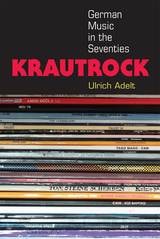
Krautrock
German Music in the SeventiesUlrich Adelt
University of Michigan Press, 2016
Among other topics, individual chapters of the book focus on the redefinition of German identity in the music of Kraftwerk, Can, and Neu!; on community and conflict in the music of Amon Düül, Faust, and Ton Steine Scherben; on “cosmic music” and New Age; and on Donna Summer’s and David Bowie’s connections to Germany. Rather than providing a purely musicological or historical account, Krautrock discusses the music as being constructed through performance and articulated through various forms of expressive culture, including communal living, spirituality, and sound.
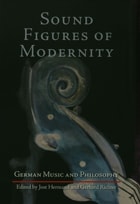
Sound Figures of Modernity
German Music and PhilosophyEdited by Jost Hermand and Gerhard Richter
University of Wisconsin Press, 2006
The rich conceptual and experiential relays between music and philosophy—echoes of what Theodor W. Adorno once called Klangfiguren, or "sound figures"—resonate with heightened intensity during the period of modernity that extends from early German Idealism to the Critical Theory of the Frankfurt School. This volume traces the political, historical, and philosophical trajectories of a specifically German tradition in which thinkers take recourse to music, both as an aesthetic practice and as the object of their speculative work.
The contributors examine the texts of such highly influential writers and thinkers as Schelling, Schopenhauer, Nietzsche, Bloch, Mann, Adorno, and Lukács in relation to individual composers including Beethoven, Wagner, Schönberg, and Eisler. Their explorations of the complexities that arise in conceptualizing music as a mode of representation and philosophy as a mode of aesthetic practice thematize the ways in which the fields of music and philosophy are altered when either attempts to express itself in terms defined by the other.
Contributors: Albrecht Betz, Lydia Goehr, Beatrice Hanssen, Jost Hermand, David Farrell Krell, Ludger Lütkehaus, Margaret Moore, Rebekah Pryor Paré, Gerhard Richter, Hans Rudolf Vaget, Samuel Weber