Results by title
10 books match the query 'Getting'
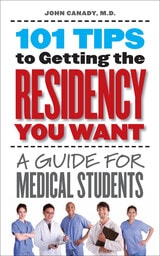
101 Tips to Getting the Residency You Want
A Guide for Medical StudentsJohn Canady, M.D.
University of Iowa Press, 2008
Each year, more than 15,000 U.S. medical students—along with more than 18,000 graduates of foreign medical schools and schools of osteopathic medicine—take part in the National Residency Matching Program, vying for a small number of positions in the United States. In this keenly competitive environment, they seek every advantage they can get. Based on more than two decades of experience preparing candidates for residency programs, John Canady has developed a concise practical guide to making one’s way through the maze of residency applications and interviews.
Guiding residency applicants past the pitfalls in all aspects of the process, 101 Tips to Getting the Residency You Want includes sections on tried-and-true methods for senior year planning, the importance of networking, tips for interviewing, practical advice for carefree travel, and guidelines for follow-up to out-of-town rotations and interviews. This guide covers the do’s and don’ts that will maximize each applicant’s chances and exposes the common blunders that can ruin an application in spite of the best grades and test scores.
Getting A Life
Everyday Uses of AutobiographySidonie Smith
University of Minnesota Press, 1996
Getting In
The Essential Guide to Finding a STEMM Undergrad Research ExperienceParis H. Grey and David G. Oppenheimer
University of Chicago Press, 2023
Conducting research is an important foundation for many undergraduates on STEMM career paths. But landing an extremely competitive research spot that is also an enriching experience involves knowing how to present yourself effectively and an awareness of your goals and expectations. In this book, an expert lab manager and a longtime principal investigator share their secrets for obtaining these coveted positions.
Offering advice to students in a wide variety of STEMM fields at both research-intensive universities and primarily undergraduate institutions, Getting In helps students navigate the hidden curriculum of academia, unofficial rules that disproportionately affect first-generation college students and those from low-income backgrounds and communities historically underrepresented in science. The authors provide not only an overview of STEMM research and lab opportunities but also specific strategies for the entire application process—including how to write emails that get noticed by busy professors, how to ask for a research position during office hours, and interview questions to prepare for—so students can claim their place in research settings.
With its emphasis on the many interpersonal and professional benefits of research experiences, Getting In equips all STEMM undergrads with the tools they need both to secure these valued positions and to develop habits that will build productive relationships with their future research mentors.
As an undergrad, Getting In will help you:
- determine how much time you can spend on research by evaluating your current activity level and goals.
- find the time to do research without giving up your social life or risking your GPA.
- avoid common mistakes in the search, application, or interview that make it harder to find a research experience.
- write emails that get you noticed by busy professors by customizing the included templates.
- prepare for tough interview questions so you’ll impress the interviewer with your answers, and be able to determine if the position is right for you.
As a research mentor, Getting In will help your students:
- navigate the hidden curriculum of finding a research experience in science, technology, engineering, math, and medicine (STEMM).
- set realistic expectations for their research experience.
- understand why conducting research requires effort and will include some failure and other challenges.
- be active participants in their success in the lab.

Getting The Word Out
Academic Libraries AsMaria Bonn
Assoc of College & Research Libraries, 2015
Getting a Job
A Study of Contacts and CareersMark Granovetter
University of Chicago Press, 1995
This second edition is updated with a new Afterword and includes Granovetter's influential article "Economic Action and Social Structure: The Problems of Embeddedness."
"Who would imagine that a book with such a prosaic title as 'getting a job' could pose such provocative questions about social structure and even social policy? In a remarkably ingenious and deceptively simple analysis of data gathered from a carefully designed sample of professional, technical, and managerial employees . . . Granovetter manages to raise a number of critical issues for the economic theory of labor markets as well as for theories of social structure by exploiting the emerging 'social network' perspective."—Edward O. Laumann, American Journal of Sociology
"This short volume has much to offer readers of many disciplines. . . . Granovetter demonstrates ingenuity in his design and collection of data."—Jacob Siegel, Monthly Labor Review
"A fascinating exploration, for Granovetter's principal interest lies in utilizing sociological theory and method to ascertain the nature of the linkages through which labor market information is transmitted by 'friends and relatives.'"—Herbert Parnes, Industrial and Labor Relations Review
Getting the Word Out
Academic Libraries as Scholarly PublishersMaria Bonn
Assoc of College & Research Libraries, 2015
Getting to War
Predicting International Conflict with Mass Media IndicatorsW. Ben Hunt
University of Michigan Press, 1997
Language and Historical Representation
Getting the Story CrookedHans Kellner
University of Wisconsin Press, 1989
“This may well be the most important contribution to the linguistically informed study of historiography since Hayden White’s Metahistory. Looking at historical texts, Kellner is able to show us that they are more complex, and bear a more complicated relationship to reality, than we think. His scholarship is not only sound but is on the cutting edge or recent reflection on historiography. . . . The insights, not rarely, are stunning.”—Allan Megill, University of Iowa

Moving Your Library
Getting the Collection from Here to ThereSteven Carl Fortriede
American Library Association, 2010
The "Getting to Yes" Guide for ESL Students and Professionals
Principled Negotiation for Non-Native Speakers of EnglishBarrie J. Roberts
University of Michigan Press, 2024
The Getting to Yes Guide for ESL Students and Professionals prepares non-native speakers of English to join the global community of people who use Getting to Yes to negotiate win-win agreements in English. It provides page-by-page explanations of over 1,000 words, phrases, concepts, and examples that these readers may misunderstand; short stories that use these new words and concepts to help readers apply them to new contexts; delightful cartoons to highlight main ideas; optional ESL activities; and a glossary of the key negotiation idioms and terms used in Getting to Yes. In this guide, author Barrie J. Roberts applies her experience as a public interest attorney, court Alternative Dispute Resolution administrator, ESL instructor, and court interpreter trainer to help readers improve their professional-level English along with their negotiation skills.
Benefits for teachers:
- Each Chapter Guide provides a ready-made lesson plan with activities to do before, while, and after reading each chapter of Getting to Yes
- The book can be used as a recommended self-study reference
- This book can be used for selected chapters of Getting to Yes or for a complete standalone course on Getting to Yes for non-native speakers of English or Generation 1.5 students
- Optional activities throughout the book can be assigned for in or out of the classroom. These include activities for reading comprehension, vocabulary building, paraphrasing, critical thinking, discussing, and writing
- Short stories written to accompany each chapter require students to apply new vocabulary and negotiation concepts to real-world disputes