Results by title
31 books match the query 'Ghost'

A Ghost in Trieste
Joseph Cary
University of Chicago Press, 1993
Here is the crossroads of East and West. A port held in turn by the Romans, the Venetians, the Austrians, the Germans, the Slavs, and finally the Italians, Trieste is the capital of nowhere, fertile source of a unique literary florescence before the First World War. At times an exile home and an exiled city. "I cannot claim to have walked across it all,:" wrote Saba, the poet of Trieste in 1910 of the city Cary crosses and recrosses, seeking the poetry of the place that inspired its literary giants. Trieste's cultural and historical riches, its geographical splendor of hills and sea and mysterious presence unfold in a series of stories, monologues and literary juxtapositions that reveal the city's charms as well as its seductive hold on the writer's imagination. Throughout, literary and immediate impressions alike are elaborated in paintings and maps, and in handsome line drawings by Nicholas Read.
This "clownish and adolescent Parsifal," this Trieste of the "prickly grace," this place "impaled in my heart like a permanent point," this symbol of the Adriatic, this "city made of books" — here the book remakes the city. The Trieste of allusions magically becomes a city of palpable allure, of warmth and trying contradictions and gritty beauty. Part travel diary, part guide book, part literary history, A Ghost in Trieste is a brilliant introduction to an extraordinary time and place. In Joseph Cary, Trieste has found a new poet, and readers, a remarkably captivating companion and guide.
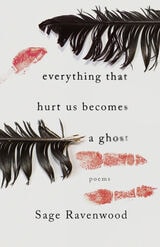
Everything That Hurt Us Becomes a Ghost
PoemsSage Ravenwood
Gallaudet University Press, 2023

Ghost Of
Diana Khoi Nguyen
Omnidawn, 2018
Ghost Of was selected by Terrance Hayes to win Omnidawn’s Open Poetry Book Contest. It was also a finalist for the National Book Award and L.A. Times Book Prize.
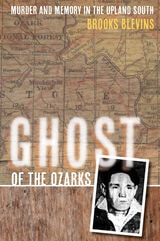
Ghost of the Ozarks
Murder and Memory in the Upland SouthBrooks Blevins
University of Illinois Press, 2012
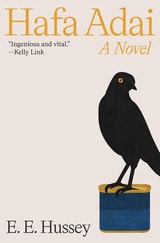
Hafa Adai
A NovelE. E. Hussey
Northwestern University Press, 2027
A tale of two sisters braving the current of global tremors, mysterious beings, and their own past
Amihan is a respected and talented wildlife researcher on a small Pacific island in the US Commonwealth of the Northern Mariana Islands, where the land has undergone centuries of occupation. Offshore military testing, shifting climates, and tourists threaten the local ecosystem, making Amihan’s job harder than ever. As she braves knotty forests and watery caves in search of the elusive rufous fantail, her expedition takes her to the suicide cliffs . . . and over them. Amihan plummets into another realm, a purgatory of colonial violence and Filipino folklore.
Ligaya, Amihan’s sister, is back in Osaka and in between research positions when she is called to the island to search for her itinerant and reclusive sister. But when her search uncovers a stowaway, Ligaya's path takes an unexpected turn. Traveling along with her is a ghost with an omikuji tongue—a ghost that delights in spitting fortunes and mining memories. As Ligaya searches and Amihan wanders, it becomes clear that there is more to confront between these sisters than their whereabouts. On an island shuddering under the weight of global crises, can Ligaya make it to Amihan, or has her sister wandered too far?
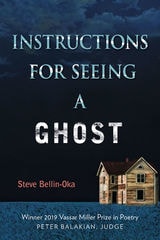
Instructions for Seeing a Ghost
Steve Bellin-Oka
University of North Texas Press, 2020
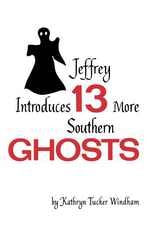
Jeffrey Introduces Thirteen More Southern Ghosts
Commemorative EditionKathryn Tucker Windham
University of Alabama Press, 2015
A commemorative edition of the beloved and best-selling second book in famed folklorist Kathryn Tucker Windham’s southern ghosts series.
Jeffrey was the resident apparition in the Selma, Alabama, home of nationally-known folklorist Kathryn Tucker Windham and the inspiration for Windham’s best-selling collection of macabre tales that reveal two hundred years of Alabama’s ghostly secrets, Thirteen Alabama Ghosts and Jeffrey. One of the most popular books ever published in the state, generations of Alabama children and students have been thrilled and chilled by Windham’s spectral legends.
Following the overwhelming success of Thirteen Alabama Ghosts and Jeffrey, Windham and Jeffrey began to journey across the South assembling a second collection of ghastly tales that repeat Windham’s winning combination of traditional folklore, Southern history and culture, and family-friendly story-telling. In Jeffrey Introduces Thirteen More Southern Ghosts, Windham’s disembodied friend roams the states of Kentucky, Tennessee, Georgia, Mississippi, Louisiana, and Florida to recall thirteen more timeless, spine-tingling tales of baneful and melancholy spirits that spook the most stoic heart.
Opening this volume is “The Girl Nobody Knew.” One midsummer night in the genteel Kentucky mineral spring resort of Harrodsburg, a beautiful lady arrived at the town’s grand hotel. The belle danced late into the night with the town’s smitten gallants only to expire suddenly with the notes of the last quadrille. The spooked residents of Harrodsburg guard a grave you can see to this day. Readers then visit the world-famous Bell Witch of Robinson County, Tennessee. Jeffrey also makes his first trip to old New Orleans to reveal a revenant in residence on Royal Street before continuing his ghostly progress across Dixie.
This new edition returns Jeffrey Introduces Thirteen More Southern Ghosts to its original format in jacketed cloth full of original, black-and-white illustrations in a handsome keepsake edition perfect for gift-giving and for families, folklorists of all ages, and libraries.
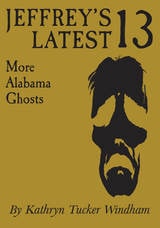
Jeffrey's Latest Thirteen
More Alabama Ghosts, Commemorative EditionKathryn Tucker Windham
University of Alabama Press, 2016
A deluxe, commemorative edition of a beloved collection of ghostly stories from famed southern author and folklorist Kathryn Tucker Windham’s home state of Alabama.
Accompanied by her faithful companion, Jeffrey, a friendly spirit who resided in her home in Selma, Alabama, Kathryn Tucker Windham traveled the South, visiting the sites of spectral legends in Mississippi, Georgia, and Tennessee, among other places. In Jeffrey’s Latest Thirteen: More Alabama Ghosts, a sequel to her landmark Thirteen Alabama Ghosts and Jeffrey, Windham introduces readers to thirteen more of Jeffrey's ghostly acquaintances, each with the charm and universal appeal that has created hundreds of thousands of Jeffrey fans.
Among the other hair-raising tales in this collection, Windham spotlights the apparitions of academia. From the three Yankee soldiers who haunt the University of Alabama’s Civil War–era Little Round House to the Confederate soldier who resides in the University Chapel at Auburn University, Alabama’s institutions of higher learning seem to have more than a few paranormal pupils.
Photographs of the sites about which Windham writes are one of the best-loved features of her series of “Jeffrey the Ghost” books. Jeffrey’s Latest Thirteen features the image of a beautiful child who, though not photographed in life, reappeared long enough to be photographed with his bereaved father's borrowed camera. Bewitched readers will find the startling photograph of the child in the next-to-last chapter, just pages before he book’s photograph of Windham’s own spectral muse, Jeffrey.
This commemorative edition returns Windham’s thrilling classic to its original 1982 keepsake quality and includes a new afterword by the author’s children.

Luminaries
Kristin Keane
Omnidawn, 2021
Luminaries is the winner of the Omnidawn Fabulist Fiction Novelette/Chapbook Prize, selected by Kellie Wells.
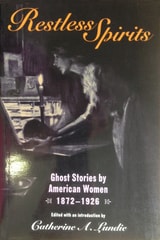
Restless Spirits
Ghost Stories by American Women, 1872-1926Catherine A. Lundie
University of Massachusetts Press, 1996
Originally published in popular magazines, the twenty-two stories in this collection are set in all corners of the United States and were written by a range of authors known and unknown, including Edith Wharton, Kate Chopin, and Zora Neale Hurston. Whether depicting a servant who helps save the reputation of her master's dead first wife, a ghostly mother who haunts a stranger until he agrees to adopt her orphaned daughter, or a ghost who revisits her beloved husband only to discover his long-standing preference for her sister, these tales possess great psychological richness and offer first-rate entertainment even as they explore the social and psychological realities of women's lives. Each story is preceded by a biographical headnote.

Spirits and Wine
Susan Newhof
University of Michigan Press, 2011
"A graceful, elegantly told ghost story that is at times frightening, at times heartwarming, often quite funny, and always an engrossing and fascinating read."
---Rodney Vaccaro, Emmy Award–winning Hollywood screenwriter and producer
"I started Friday night and got up Saturday morning with a desire to get back to it to finish. In my experience, if I wake up and the first thing on my mind is getting back to a book, it's a good book."
---Bryan Uecker, co-owner of The Book Nook & Java Shop, Montague, Michigan
"A spellbinding mystery of timeless love, loss, and a house that held all the answers. I couldn't put it down."
---Judith Evans Thomas, coauthor of the Born to Shop travel books
"Living in a 100-year old Michigan farmhouse myself, I was totally pulled into the real possibilities Newhof's characters found themselves in. Ghosts and real life haunts made for a compelling read."
---Robbyn Smith van Frankenhuyzen, author of the series Hazel Ridge Farm Stories
"Spirits and Wine is a can't-put-down novel that feels less like fiction and more like sharing a glass of wine with your best friends who go on to disclose the deeply disturbing, deadly things occurring in the lovely old house they planned to restore. Susan Newhof writes truthfully and with beautiful care, evoking the icy appeal of a small lakeshore town in Michigan while revealing the wretched secrets that cling to one dwelling. After reading this harrowing tale in one sitting, I am dying to ask the author---did these menacing events really happen . . . to you?"
---Jerrilyn Farmer, author of the best-selling Madeline Bean Mysteries
"If only the walls could talk---and they do in Susan Newhof's thrilling Spirits and Wine. Readers, be prepared for an absorbing adventure into John and Anna's journey to solve a century-old mystery wrapped within the walls of their newly purchased 'dream home.' Told creatively in tandem, the couple's story of life in pursuit of truth will leave you wondering just where the fact ends and the fiction begins. Keep the lights on and enjoy!"
---Beckey Burgoyne, author of Perfectly Amanda: Gunsmoke's "Miss Kitty"---To Dodge and Beyond
It's a mystery and a ghost story, all wrapped up in one.
A newly married couple buys an old house in a small lakeshore town in West Michigan and finds it haunted by the dramatic secrets of its past inhabitants. As the couple settles in, disturbing events prompt them to investigate who those residents were, what happened to them, and why one spirit remains active. Could the Spanish influenza epidemic in the region, which resulted in the deaths of an unprecedented number of young, healthy adults in Michigan and elsewhere in 1918---19, and the resulting slew of orphans, have something to do with the spirit now haunting their house?
They are determined to discover the truth about their house, even if it jeopardizes their own safety.
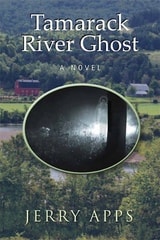
Tamarack River Ghost
A NovelJerry Apps
University of Wisconsin Press, 2012
Josh’s big story is that a corporation that plans to establish an enormous hog farm has bought a lot of land along the Tamarack River in bucolic Ames County. Some of the local residents and officials are excited about the jobs and tax revenues that the big farm will bring, while others worry about truck traffic, porcine aromas, and manure runoff polluting the river. And how would the arrival of a large agribusiness affect life and traditions in this tightly knit rural community of family farmers? Josh strives to provide impartial agricultural reporting, even as his newspaper is replaced by a new Internet-only version owned by a former New York investment banker. And it seems that there may be another force in play: the vengeful ghost of a drowned logger who locals say haunts the valley of the Tamarack River.
The Agony of the Ghost
And Other StoriesHasan Azizul Huq
Seagull Books, 2018
The Ambrose J. and Vivian T. Seagrave Museum of 20th Century American Art
Matthew Kirkpatrick
Acre Books, 2019
A strange museum, an even stranger curator, the deceased artist who haunts him, and the mystery surrounding the museum founders’ daughter, lost at sea as a child . . . The Ambrose J. and Vivian T. Seagrave Museum of 20th Century American Art is by turns a dark comedy, a ghost story, a romance, a whodunit, a family saga, and an exhibition catalog.
Through museum exhibit labels, as well as the interior musings of an elderly visitor wandering through its galleries, the novel’s numerous dramas gradually unfold. We learn of the powerful Seagrave family’s tragic loss of their daughter, the suspicious circumstances surrounding her disappearance during a violent storm, and of the motley conclave of artists (some accomplished, some atrocious) who frequented the Seagrave estate, producing eclectic bodies of work that betray the artists’ own obsessions, losses, and peculiarities. We learn about the curator’s rise to power, his love affair with a deeply troubled ghost—and when a first-time visitor to the museum discovers unexpected connections between the works on exhibit and her painful past, we are plunged into a meditation on the nature of perception, fabrication, memory, and time.
The Boo Baby Girl
Meets the Ghost of Mable's GableJim May
Parkhurst Brothers, Inc., 2014
Something of a quest story for the picture book set, this playful horror tale sets young protagonists against “the Ghost of of Mable’s Gable.” In Jim May’s version of a story from children’s folklore, eighth grade boys swagger but fail, only to be followed by outdone by an unlikely heroine, “the Boo Baby Girl,” a toddler who will not be denied.
The Businessman
A Tale of TerrorThomas M. Disch
University of Minnesota Press, 2010

The Ghost Trio
Clyde Derrick
Omnidawn, 2022
The great love of your life is dead, but that doesn’t stop him from communicating with you—or luring you to join him in the afterlife. To remain safe in this world, you accept the help of a professional medium who develops his own emotional agenda.
The Ghost Trio that emerges takes us to pre- and post-World War II Prague where a poignant and chilling love triangle finds its resolution. There we meet great Czech creators of the past including Leoš Janácek and Karel Capek. Inspired by the ghost stories of Henry James and Daphne du Maurier, Clyde Derrick introduces three characters whose passions defy time and the accepted boundaries between the dead and the living. The author, who has lived in and visited purportedly haunted sites in advance of writing this novella, contends that this story and its characters found him. Meanwhile, his portrayal of two Pragues—one poised to fall to Hitler’s army, the other muted by Communist oppression—offers us insights into the past and reminds us to stay vigilant against dangerous politics. The Ghost Trio is a spiritual excursion in which we ponder the limitations and hazards of romantic love as well as the possibility of other lives in other times.
The Ghost Trio is the winner of the 2020 Omnidawn Fabulist Fiction Chapbook / Novelette Contest, chosen by Molly Gloss.
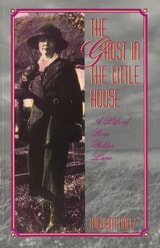
The Ghost in the Little House
A Life of Rose Wilder LaneWilliam Holtz
University of Missouri Press, 1995
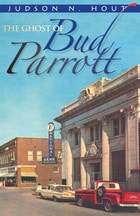
The Ghost of Bud Parrott
a novelJudson N Hout
Parkhurst Brothers, Inc., 2010
A teen’s life is complicated. Add an overworked dad, a distraught mom.
Enter an old man from the wrong side of the tracks.
He knows things. He’s there when you need him.
This happens to someone; it’s not a maybe thing. People get hurt. People die. There’s a dad who loves his kid but works all the time. When he doesn’t work, he drinks. When he drinks he’s out of control.
There’s a mom. She knows dad is overworked, a good man carrying too much responsibility.
The kid turns to the handy man to learn a man’s skills. In the old man from the wrong side of the tracks, the kid finds unusual skills and terrible—but true—lessons. He finds that his own safety comes at a cost to his unfortunate friend. He finds growing up comes at a cost to himself. This is the story of such a kid, told by himself after he has lived much of his life, come to terms with his parents’ weaknesses, and learned that seemingly insignificant people carry more pain than he can imagine, though he has already seen plenty.
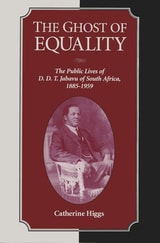
The Ghost of Equality
The Public Lives of D. D. T. Jabavu of South Africa, 1885–1959Catherine Higgs
Ohio University Press, 1996
Davidson Don Tengo Jabavu was born in the Cape Colony in British southern Africa on October 20, 1885, when a few African men could vote and the prospects for black equality with the ruling whites seemed promising. He died on August 3, 1959, in the Cape Province of the Union of South Africa, eleven years after the apartheid state had begun stripping blacks of their rights and exorcising the ‘ghost of equality’ with a completeness unparalleled in the country’s history. The ‘ghost of equality was the last vestige of the Cape liberal tradition — itself best summed up by the dictum ’equal rights for all civilized men‘ — finally erased in 1959 with the passage of legislation that would, the following year, remove from parliament the last elected white representatives of Africans.…
If D.D.T. Jabavu’s life reveals anything about South Africa’s political history, it is that this history was not monolithic. It was not simply a lengthly confrontation between a black elite represented by the African National Congress and the white segregationist state. Rather, there was a range of black political opinion and activity, of which Jabavu, an active participant in virtually every government-sponsored and every major extraparliamentary conference between 1920 and the late 1940s, represented one prominent historical strain.
This book, however, is about more than D.D.T. Javavu’s politics; it is about his public life, or perhaps more accurately, his public lives. The book is arranged thematically, divided according to the parts Jabavu played: student, teacher, Methodist, and politician.
— from the introduction by the author
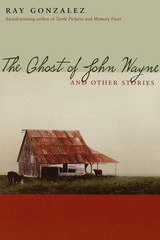
The Ghost of John Wayne
and Other StoriesRay Gonzalez
University of Arizona Press, 2001
The vast Texas borderland is a place divided, a land of legends and lies, sanctification and sinfulness, history and amnesia, haunted by the ghosts of the oppressed and the forgotten, who still stir beneath the parched fields and shimmering blacktops. It is a realm filled with scorpion eaters and mescal drinkers, cowboys and Indians, Anglos and Chicanos, spirit horses and beat-up pickups, brujos and putas, aching passion and seething rage, apparitions of the Virgin and bodies in the Rio Grande.
In his first collection of short fiction, award-winning poet, editor, and anthologist Ray Gonzalez powerfully evokes both the mystery and the reality of the El Paso border country where he came to manhood.
Here, in a riverbed filled with junked cars and old bones, a young boy is given a dark vision of a fiery future. Under the stones of the Alamo, amid the gift shops and tour buses, the wraiths of fallen soldiers cry out to be remembered. By an ancient burial site at the bottom of a hidden canyon, two lovers come face to face with their own dreams and fears.
In these stories, Ray Gonzalez is a literary alchemist, blending contemporary culture with ancient tradition to give a new voice to the peoples of the border.
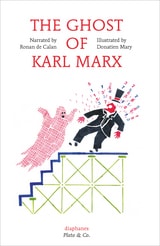
The Ghost of Karl Marx
Ronan de Calan and Donatien Mary
Diaphanes, 2015
In The Ghost of Karl Marx, the philosopher is saddened when the town weavers must sell their cloth cheaply to compete with machines. The farmers too cannot sell their crops and have no money to buy new seeds. Forced to leave their work, the townspeople form an angry crowd in front of the factories, but what is to be done when there are so many hungry people and so few jobs to pay for food to eat? Concealed in one of the weavers’ sheets, the philosopher makes a solemn vow to give this story a happy ending by finding the Market, that infernal magician, and ridding the town of him once and for all.
Plato & Co.’s clear approach and charming illustrations make this series the perfect addition to any little library.
The Ghost of Meter
Culture and Prosody in American Free VerseAnnie Finch
University of Michigan Press, 1993
Population and environment are topics of intense current discussion and international action. Population growth rates have given rise to the metaphor of an exploding bomb, and accounts of oil spills, droughts, and rainforest destruction appear daily in the news. Despite the crowded agenda, observes Gayl Ness, the relationships between population and the environment still defy clear and comprehensive understanding. While they are closely intertwined in real life, they are separate in much of our thought and action. The contributors to this volume explore the basis of this separation and offer ways to integrate these closely interconnected areas, providing a forum for dialogue between those who support the interests of each. Topics covered include population-environment dynamics in historical perspective; constraints on sustainable growth in agricultural production; population as concept and parameter in the modeling of deforestation; powers and limits of the state and technology; resource control, fertility, and migration; and an ecosystem approach to the study of coastal areas.
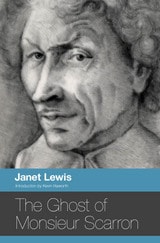
The Ghost of Monsieur Scarron
Janet Lewis
Ohio University Press, 2013
This historical novel is the third and final book in American poet and fiction writer Janet Lewis’s Cases of Circumstantial Evidence series, based on legal case studies compiled in the nineteenth century. In The Ghost of Monsieur Scarron, Lewis returns to her beloved France, the setting of The Wife of Martin Guerre, her best-known novel and the first in the series. As Swallow Press executive editor Kevin Haworth relates in a new introduction, Monsieur Scarron shifts the reader into the center of Paris in 1694, during the turbulent reign of the Sun King, Louis XIV. The junction of this time and place gives Monsieur Scarron an intriguing political element not apparent in either The Wife of Martin Guerre or The Trial of Sören Qvist.
The Ghost of Monsieur Scarron begins in a small bookbinder’s shop on a modest Paris street, but inexorably expands to encompass a tumultuous affair, growing social unrest, and the conflicts between a legal system based on oppressive order and a society about to undergo harsh changes. With its domestic drama set against a larger political and historical backdrop, Monsieur Scarron is considered by some critics and readers to be the most intricately layered and fully realized book of Lewis’s long career. Originally published in 1959, Monsieur Scarron has remained in print almost continuously ever since.
The Last Journey of Ago Ymeri
Bashkim Shehu
Northwestern University Press, 2007
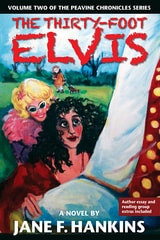
The Thirty-Foot Elvis
A novelJane F. Hankins
Parkhurst Brothers, Inc., 2013
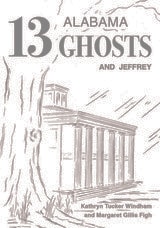
Thirteen Alabama Ghosts and Jeffrey
Commemorative EditionKathryn Tucker Windham
University of Alabama Press, 1969
Step into Alabama’s haunted history—one story at a time.
One of the best-known and widely shared books about the South, Thirteen Alabama Ghosts and Jeffrey has haunted the imaginations of generations of delighted young readers since it was first published in 1969. Written by nationally acclaimed folklorists Kathryn Tucker Windham and Margaret Gillis Figh, the book recounts Alabama’s thirteen most ghoulish and eerie ghost legends.
Curated with loving expertise, these thirteen tales showcase both Windham and Figh’s masterful selection of stories and their artful and suspenseful writing style. In crafting stories treasured by children and adults alike, the authors tell much more than ghost tales. Embedded in each is a wealth of fact and folklore about Alabama history and the old South. “I don’t care whether you believe in ghosts,” Windham was fond of saying. “The good ghost stories do not require that you believe in ghosts.”
Millions of readers cherish memories of being chilled as teachers and parents read them unforgettable stories like “The Unquiet Ghost at Gaineswood,” about the ghost of Evelyn Carter, who fills this Demopolis antebellum mansion with midnight musical lamentations because her body wasn’t returned to her native Virginia, and “The Phantom Steamboat of the Tombigbee,” about the wreck of the steamboat Eliza Battle, which caught fire on the way to Mobile and sank one February night in 1858. People who live along the river say the flaming steamboat wreck still rises on cold nights, its cotton cargo blazing across the waves while its terrified survivors cry for help from the icy water.
The title’s “Jeffrey” refers to a friendly ghost who resides in the Windham home and who served as Windham’s unofficial collaborator in this work and the subsequent books in this popular series, all of which are now available in high-quality reproductions of their spooky originals.
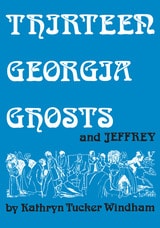
Thirteen Georgia Ghosts and Jeffrey
Commemorative EditionKathryn Tucker Windham
University of Alabama Press, 1987
Haunting tales from Georgia—where history lingers in every shadow.
Petrifying the Peach State, hosts of haints have beset the state of Georgia throughout its storied history. In Thirteen Georgia Ghosts and Jeffrey, best-selling folklorist Kathryn Tucker Windham, along with her trusty spectral companion Jeffrey, introduce thirteen of Georgia’s most famous ghost stories.
Windham won hearts across the nation in her regular radio broadcasts and many public appearances. The South’s most prolific raconteur of revenants, Windham, giving new meaning to the phrase “ghost-writer,” does more than tell ghost stories—she captures the true spirit of the place.
Evoking Georgia’s colonial era, “The Eternal Dinner Party” explains why the sounds of an elegant dinner soirée still waft from the grove of Savannah’s Bonaventure estate. At the onset of the Revolution, the Tattnall family abandoned Bonaventure and slipped away to England. Young Josiah Tattnall eventually returned to fight in the Revolution, restored Bonaventure, and later became Georgia’s governor. One holiday eve, when the mansion was bedecked with magnolia and holly and crowded with visitors, a fire too large to control swept through the old house. Tattnall, exhibiting his cool head and impeccable manners, ordered the massive dinner table carried out to the garden where he enjoined his holiday revelers to continue their stately meal. The melancholy strains of Tattnall’s dinner guests still echo through Bonaventure’s ancient oaks on moonlight nights.
In “The Ghost of Andersonville,” Windham takes visitors near the woebegone Confederate prisoner-of-war camp. A plaque there still recounts the tale of Swiss immigrant and Confederate captain Henry Wirz. Convicted—many thought wrongly—of war crimes, Wirz’s restless ghost still perambulates the highways of south Georgia. Writing for the Georgia Historical Commission, Miss Bessie Lewis quips in her preface to this beloved collection, “Who should be better able to tell of happenings long past than the ghosts of those who had a part in them?”
A perennial favorite, this commemorative edition restores Thirteen Georgia Ghosts and Jeffrey to the ghastly grandeur of its original 1973 edition.
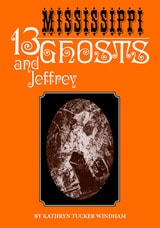
Thirteen Mississippi Ghosts and Jeffrey
Commemorative EditionKathryn Tucker Windham
University of Alabama Press, 2015
A deluxe, commemorative edition of famed southern author and folklorist Kathryn Tucker Windham’s introduction to Mississippi’s thirteen most famous haunted houses and ghostly visitations.
For as long as Mississippi has existed (and then some), flocks of phantoms have haunted the mortal inhabitants of the Magnolia State. In Thirteen Mississippi Ghosts and Jeffrey, best-selling folklorist Kathryn Tucker Windham, along with her trusty spectral companion Jeffrey, introduces thirteen of the state’s most famous ghost stories.
Although stories about Mississippi’s spirits seemingly outnumber the ghosts themselves, Windham observes that “Southern ghost tales are disappearing because people no longer sit around on the porch on summer nights and tell stories. The old folks who grew up with these stories are dying now, and the stories are dying with them.”
Fortunately for us, Windham was a writer dedicated to preserving these tales in print. The veteran author spent many years tracking down these stories and chronicling the best ones. From the ghost of Mrs. McEwen still wearing her beloved cameo pin and keeping a watchful eye over Featherston Place, her home in Holly Springs, where, she swore, she would stay forever, to the ghostly visage fixed permanently on the bedroom window pane of Catherine McGehee, who searched the horizon ardently for her unrequited love to come to her as promised at Cold Spring Plantation in Pinckneyville, Windham’s stories cover the breadth and depth of Mississippi—at times more moonlight than magnolia.
An enduring classic, this commemorative edition restores Thirteen Mississippi Ghosts and Jeffrey to the ghastly grandeur of its original 1974 edition.
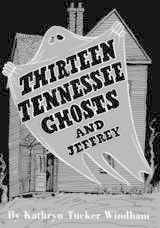
Thirteen Tennessee Ghosts and Jeffrey
Commemorative EditionKathryn Tucker Windham
University of Alabama Press, 2016
A deluxe, commemorative edition of famed southern author and folklorist Kathryn Tucker Windham’s introduction to the Volunteer State’s most enduring ghost stories.
In Thirteen Tennessee Ghosts and Jeffrey, beloved and best-selling folklorist Kathryn Tucker Windham presents a spine-tingling collection of Tennessee’s eeriest ghost tales. Accompanied by her faithful companion, Jeffrey, a friendly spirit who resided in her home, Windham traveled from the mysterious muds of Memphis to the haunted hollow’s of east Tennessee to collect the spookiest collection of Volunteer State revenants ever written.
In these perennial favorites, Windham captures the gentle folk humor of native Tennesseans as well as fascinating facts about the state’s rich history. In “The Dark Legend,” Windham recounts the story of explorer Merriwether Lewis, who met an untimely end on the Natchez Trace 1809 and whose spirit, it is said, still treads through Tennessee’s forests. Windham also visits central Tennessee’s Chapel Hill, where people who know the town say those who stand on the train tracks on dark, lonely nights can often see a disembodied light floating along the tracks. Neighbors say it’s the ghost of a headless flagman who returns to cavort with night-time guests.
High in Tennessee’s Appalachian mountains, Windham encounters Martin, the phantom fiddler of Johnson County. Legend has it that in life Martin’s musical skills so mesmerized the snakes of the Stone Mountains that they would slither from their dens to listen tamely to his fiddling. Intrepid visitors to the rocky tops of northeast Tennessee’s mountains say you can still hear Martin’s ghost fiddling in the hollows.
This handsome, new commemorative hardback edition returns Windham’s suspenseful classic to its original keepsake quality and includes a new afterword by the author’s children.

You Are a Ghost
Katherine Guinness
University of Minnesota Press, 2027
A ghost story where you are the ghost
What if the ghost haunting the present is you? In You Are a Ghost, Katherine Guinness offers a provocative new theory of “negative hauntology,” arguing that ghostliness is not a metaphor but the defining condition of life under late capitalism. Through compelling readings of films such as The Sixth Sense, Ghost, Beetlejuice, and The Others, alongside television, immersive performance, and contemporary art about platform surveillance and automated intelligence, Guinness reveals how today’s culture reflects a world where futurity, agency, and even humanity have already been lost.
Yet, rather than ending in nihilism, You Are a Ghost imagines a new form of collective consciousness grounded in our shared condition. Bold, accessible, and deeply original, this book rethinks social death, capitalism, and political solidarity, offering readers a new way to understand contemporary culture—and how to haunt it.
Retail e-book files for this title are screen-reader friendly.