Results by title
4 books match the query 'Gig Economy'
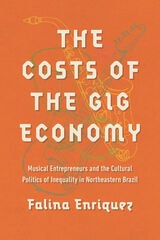
The Costs of the Gig Economy
Musical Entrepreneurs and the Cultural Politics of Inequality in Northeastern BrazilFalina Enriquez
University of Illinois Press, 2022
Drawing on years of fieldwork, Enriquez shows how forcing artists to adopt “neutral” market solutions reinforces, and generates, overlapping racial and class-based inequalities. Lacking the social and financial resources of their middle-class peers, working-class musicians find it difficult to uphold institutional goals of connecting the city’s cultural roots to global markets and consumers. Enriquez also links the artists’ situation to that of cultural and creative workers around the world. As she shows, musical sponsorship in Recife and the contemporary gig economy elsewhere employ processes that, far from being neutral, uphold governmental and corporate ideologies that produce social stratification.
Rich and vibrant, The Costs of the Gig Economy offers a rare English-language portrait of the changing musical culture in Recife.
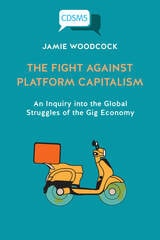
The Fight Against Platform Capitalism
An Inquiry into the Global Struggles of the Gig EconomyJamie Woodcock
University of Westminster Press, 2021
“The book rewards readers with interesting first-hand accounts of protests and pickets that are typically absent from academic discussions of the digital economy.” - https://blogs.lse.ac.uk/lsereviewofbooks/2021/03/17/book-review-the-fight-against-platform-capitalism-an-inquiry-into-the-global-struggles-of-the-gig-economy-by-jamie-woodcock/
So far, platform work has been an important laboratory for capital. Management techniques, like the use of algorithms, are being tested with a view to exporting across the global economy and it is argued that automation is undermining workers’ agency. Although the contractual trick of self-employment has allowed platforms to grow quickly and keep their costs down, yet it has also been the case also that workers have also found they can strike without following the existing regulations.
This book develops a critique of platforms and platform capitalism from the perspective of workers and contributes to the ongoing debates about the future of work and worker organising. It presents an alternative portrait returning to a focus on workers’ experience, focusing on solidarity, drawing out a global picture of new forms of agency. In particular, the book focuses on three dynamics that are driving struggles in the platform economy: the increasing connections between workers who are no longer isolated; the lack of communication and negotiation from platforms, leading to escalating worker action around shared issues; and the internationalisation of platforms, which has laid the basis for new transnational solidarity.
Focusing on transport and courier workers, online workers and freelancers author Jamie Woodcock concludes by considering how workers build power in different situations. Rather than undermining worker agency, platforms have instead provided the technical basis for the emergence of new global struggles against capitalism.
The Many Futures of Work
Rethinking Expectations and Breaking MoldsEdited by Peter A. Creticos, Larry Bennett, Laura Owen, Costas Spirou, and Maxine Morphis-Riesbeck
Temple University Press, 2021
What will work eventually look like? This is the question at the heart of this timely collection. The editors and contributors—a mix of policy experts, academics, and advocates—seek to reframe the typical projections of the “future” of work. They examine the impact of structural racism on work, the loss of family‑sustaining jobs, the new role of gig work, growing economic inequality, barriers to rewarding employment such as age, gender, disability, and immigration status, and the business policies driving these ongoing challenges.
Together the essays present varied and practical insights into both U.S. and global trends, discuss the role of labor activism in furthering economic justice, and examine progressive strategies to improve the experience of work, wages, and the lives of workers. The Many Futures of Work offers a range of viable policies and practices that can promote rewarding employment and steer our course away from low-wage, unstable jobs toward jobs that lead to equitable prosperity and economic inclusion.
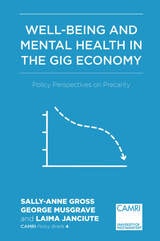
Well-Being and Mental Health in the Gig Economy
Policy Perspectives on PrecaritySally-Anne Gross, George Musgrave and Laima Janciute
University of Westminster Press, 2018
A response is needed to the numerous issues spurred by the expansion of the gig economy, where flexible patterns of employment prevail in contrast to permanent jobs. In this context of the exponential growth of the digital economy and underlying business models the largest nationwide study of its kind into the impact of the working conditions in the UK music industry ‘Can Music Make You Sick?’ has been conducted by MusicTank/University of Westminster.
This research suggests the need to consider the future of work not only from an economic or employment law perspective but from a mental health one too. What are the psychological implications of precarious work and how are factors such as financial instability, the feedback economy and personal relationships reflected in mental health outcomes or connected to the business relationships most musicians and other gig economy participants work under?
Authors Sally-Anne Gross, George Musgrave and Laima Janciute consider which policy measures may help or harm gig economy workers including the taxation of self-employed workers, a universal basic income, education around mental health issues and access to mental health support.