Results by title
7 books match the query 'Glancy, Diane'
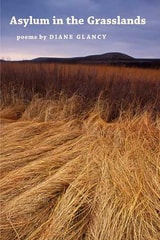
Asylum in the Grasslands
Diane Glancy
University of Arizona Press, 2007
In her new collection of poems, Glancy explores the history of loss that has marked the Cherokee community. In a voice that is as economical as it is eloquent and as sophisticated as it is exhilarating, she describes the loss of family, the loss of cultural heritage, and the loss of old worlds as new ones encroach. In one poem, a farm auction becomes an auction of culture, of heritage, of the past. In others, ancestors meet in a twenty-four-hour café, lunch is shared with a great-grandmother who has been traveling the universe, Christ appears as a cowboy in an apocalyptic vision, and Clytemnestra is discovered in a snakeskin. Some of the poems are as campy as a duck-decoy Custer in a shooting gallery. Some glitter with dime-store glue. Others speak with the reflection of sunlight off a stream. Sometimes the verse produces a shortstop language on the baseline of experience. In whatever form they take, Glancy’s poems stimulate and challenge the reader with their unfettered, unadorned, and unpretty purity. This collection is not only a spirited ride across the Great Plains, it is also an important addition to the literature of white–Native American cultural relationships.

Monkey Secret
Diane Glancy
Northwestern University Press, 1995
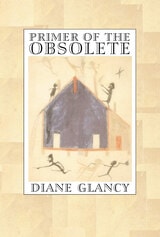
Primer of the Obsolete
Diane Glancy
University of Massachusetts Press, 2004
The poems have roots in history, religion, and illiteracy. They are inspired by folk artists who use materials and textures at hand—enamel and cornmeal on plywood, house paint on tar and tin, model airplane paint on corrugated scrap metal. The resulting lyrics walk the boundary between worlds, weaving remnants of the old way of viewing the world with pieces of the new world, such as a clapper that turns lights on and off. The experimental text revisits the gap between past and present. The past is just beneath a newly painted surface. The newly painted surface is not quite dry.
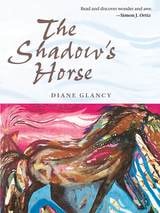
The Shadow’s Horse
Diane Glancy
University of Arizona Press, 2003
The Shadow's Horse is a new collection of poems in which Glancy walks the margin between her white and Indian heritage. In poems that conjure the persistence of fallen leaves or juxtapose images of Christ and the stockyards, she powerfully evokes place and spirit to address with intelligence and beauty issues of family, work, and faith.
In some of these poems Glancy recalls growing up with her Cherokee father, who worked in a stockyard, radically applying Christian theology to the slaughter of non-human creatures: The cattle go up the ramp
dragging their crosses.
Their voices are Gregorian chants
rising to the blue sky,
the cold clouds.
In others she examines the walk of history through the ordinary details of life-history seen from two points of view, early Euro-American and contemporary Native American. She sees her Native heritage as shortlived and fragile, yet as enduring as leaves, and she asks, "If you line up all the leaves that fall / how many times will they go around the earth?"
Writing in a cross-boundaried, fragmented voice—a voice based on the memory of the way language sounded when it was stretched across the cultures or walked in both worlds—Glancy has fashioned a book about speaking oneself into existence. The Shadow's Horse is the story of one culture made to sing the song of another until the Native voice is so erased it is nearly an illusion. Yet as readers of these poems will discover, the shadow of the past is as real as the horse it rides.
The West Pole
Diane Glancy
University of Minnesota Press, 0
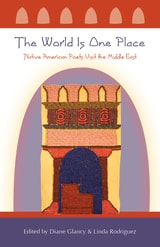
The World Is One Place
Native American Poets Visit the Middle EastDiane Glancy
BkMk Press, 2017
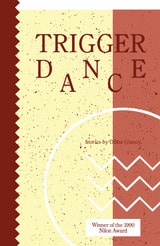
Trigger Dance
Diane Glancy
University of Alabama Press, 1991
1990 Winner of the Mildren P. Nilon Award for Minority Fiction
In Trigger Dance, her first collection of stories, Diane Glancy takes us to uneasy places where both the environment and the characters are at risk, where even the animals grieve. Sometimes the author's voice, sometimes the voices of the characters, tell us about their migrations, symbolic or literal. Diane Glancy's characters walk in two worlds and try to build a middle ground between white and native cultures. They are the offspring of those who survived the Trail of Tears. Some of the young men dance at powwows in tune with the dead. Filo and Parnetta buy a fridge at the Hardware Store on Muskogee Street, in Tahleqah, Oklahoma. Farther west, near Chickasha, Keyo can't read, while Joseph Sink, an Indian hermit, learns a word a day. Anna America remembers her shortcomings as a mother and her hard life as she waits in the Northeastern Cherokee County Shelter for her wings to unfold so she can leave this earth. In the title story, Roan mourns the fact that human beings have the power to destroy the earth. He's astonished that creation and cremation could be so closely linked. Even his father, when he feels death approach, demands to be cremated because "it's autumn in outer space." Roan's final vision in the sweat lodge is of the air red as leaves. He admonishes his people to be strong and responsible, to acknowledge that life is a sizeable endeavor. it.