Results by title
5 books match the query 'Glaser, Elton'

Here and Hereafter
PoemsElton Glaser
University of Arkansas Press, 2005
The poems in celebrated poet Elton Glaser’s sixth collection journey through the seasons, from spring to spring, a pilgrimage down to the South, over the Midwest of snow and roses, and across the Romance countries of Europe. If the poet often finds himself “[h]alfway between grief and longing,” that may be his natural condition, rooted in this world against the pull of the next, his faith in the “purple evidence of plums, the testimony of wild persimmon” weathering the stormy preachers and the droughts of middle age.
Within that tension, the range of tones is unlimited, sometimes in the same poem, from the serious to the sublime, from anguish to awe. Holding everything together is Glaser’s unmistakable voice, a warm idiom made pungent by wintry wit: “my tongue of odd American, my mongrel sublime.” Whether the poems speak of ripe pears or minor prophets, they invite the reader to a feast of language that lets us taste how it feels to live on this earth, in the shadow of the afterlife.
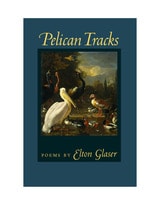
Pelican Tracks
Elton Glaser
Southern Illinois University Press, 2003
Pelican Tracks is a book of poems with a homing instinct. Elton Glaser travels a restless circuit between his native Louisiana and his adopted home of Ohio, from the “spice and license of the lowlands” to the “streets of Akron cobbled in ice.” These reflections, leavened with a fierce wit and moving bravura of language, are extracted from the origins and ends of the poet’s life—his birth in the final spasms of the second World War, the fears and excitements of youth, the death of parents, and the unexpected losses of adulthood. Marking his tracks between the Pelican State and the Buckeye State, Glaser records the damaged beauty of “everything sinking, everything rising again in the mind.”
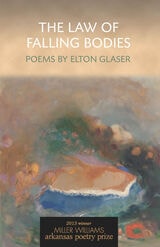
The Law of Falling Bodies
PoemsElton Glaser
University of Arkansas Press, 2013

Tropical Depressions
Elton Glaser
University of Iowa Press, 1988
Robert Frost's ovenbird question was, "What to make of a diminished thing?" This new volume of poetry by Elton Glaser answers that question on a personal level, by broadening the sense of loss and exile until it envelops our common concerns of the twentieth century: the loss of love, faith, civility—all the old verities diminished and distorted.
While the first two sections of the book raise exuberant laments for the domestic, artistic, amatory, and religious life, the third section of poems moves beyond complaint to celebration. The complainer, purged of his grievances, leaves behind a northern exile and moves somewhere closer to home. In these final poems, Glaser returns to the South and his native city of New Orleans. Without nostalgia for the romance of moonlit magnolias, without denial of the region's dark past, he voices a more measured, more settled view of the world, one of balance and hard-won acceptance.
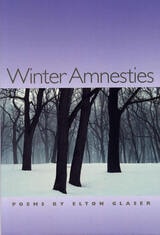
Winter Amnesties
Elton Glaser
Southern Illinois University Press, 2000
Winter Amnesties is a book of origins and endings, griefs and reconciliations. Each poem addresses the dilemma posed by G. K. Chesterton: “One must somehow find a way of loving the world without trusting it.” The poems revisit the past, assess the present, and stare hard into the future. At middle age, Glaser remembers his youth in Louisiana and settles into the long stretch of his adult years in Ohio; he makes his peace with “the life that allows.” As son, as father, as poet, he looks to his legacy, whatever dim remnant of himself might continue after “all flesh falls back to salt and cinder.”
But these are poems of brio and bitter wit, not of self-pity and surrender. They take a jaunty stance towards life and welcome whatever the days may bring, confident that, like crows in the harvest cornfield, we can live on “the shocks and waste of this world” and “wring gold grain from the ruin.”