Results by title
9 books match the query 'Global Governance'
Claiming Impartiality
Peacebuilding Organizations as Actors in Multiple Fields of Global GovernanceAndrea Warnecke
University of Michigan Press, 2026
Drawing on and expanding a Bourdieusian field perspective, the book examines international organizations as actors in multiple fields of global governance. Using the case studies of Bosnia and Herzegovina and Timor-Leste, it traces the emergence and transformation of peacebuilding practices by leading international and bilateral organizations during the first two decades of the field’s existence. The organizational lens highlights the tensions that exist between the objectives of simultaneously acting as a peacebuilding organization and as a peacekeeping, humanitarian, or development organization whose practices are to varying degrees committed to observing the twin principles of impartiality and neutrality. By thinking through these sometimes contradictory roles, the book offers new insights into how these organizations sideline questions of political agency in favor of expanding their influence into related fields of global governance. Claiming Impartiality discusses the future of peacebuilding and explores avenues for addressing political challenges to peace itself.

Global Governance in Question
Empire, Class and the New Common Sense in Managing North-South RelationsSusanne Soederberg
Pluto Press, 2006
William I. Robinson, University of California-Santa Barbara
"[An] acute and revealing examination of the economic difficulties facing the American empire."
Ronnie D. Lipschutz, Professor of Politics, University of California, Santa Cruz
"Indispensable for students of international polical economy and a must for political activists." Professor Elmar Altvater, Department of Political Science, Free University, Berlin
Like many buzzwords, 'global governance' is as poorly understood as it is popular. In contrast to most mainstream accounts, this book examines global economic governance as an integral moment of contemporary capitalism -- presenting a critical insight into its real nature and the interests that it serves.
This book begins by asking what has not been discussed in the mainstream debates and why. Drawing on a Marxist perspective, Soederberg explores neglected issues including transnational debt and the increasingly coercive nature of US aid to so-called Œfailed states'. Soederberg argues that mainstream understandings fail to engage with the wider contradictions that characterise global capitalism. In consequence, there is no explanation of the changing nature of American empire and capitalist power in the world. Furthermore, Soederberg argues that global governance acts to normalise and legitimise increasingly austere forms of capitalist expansion, which may be regarded as a deepening and broadening of neoliberalism.
Susanne Soederberg is a Canada Research Chair in Global Political Economy and Associate Professor in International Development Studies at Queen's University, Kingston, Canada. She is author of The Politics of the New International Financial Architecture: Reimposing Neoliberal Domination in the Global South (Zed, 2005).
Human Rights at Risk
Global Governance, American Power, and the Future of DignitySalvador Santino F. Regilme Jr. and Irene Hadiprayitno
Rutgers University Press, 2022
Making Human
World Order and the Global Governance of Human DignityMatthew S. Weinert
University of Michigan Press, 2015
Power in Concert
The Nineteenth-Century Origins of Global GovernanceJennifer Mitzen
University of Chicago Press, 2013
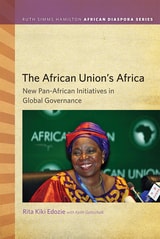
The African Union's Africa
New Pan-African Initiatives in Global GovernanceRita Kiki Edozie
Michigan State University Press, 2014

The Life Cycles of Global Governance
How Institutions Emerge, Evolve, and EndureJulia Gray
University of Michigan Press, 2027
International organizations influence nearly every aspect of global life—from aid and finance to law, security, and development. At a moment when the liberal international order is widely described as being in decline, this volume offers a corrective. International organizations do not simply rise and fall; they are always in motion—adapting, fragmenting, or being repurposed in response to shifting conditions. A life-cycle perspective reveals that what appears as decline may instead reflect transformation. Although they are often treated as fixed landmarks of global politics, institutions rarely follow a linear path from creation to maturity. This interdisciplinary edited volume brings together scholars from law, political science, sociology, and international relations to reveal the life cycles of these institutions: their false starts, early challenges, periods of drift, moments of revitalization, and even their afterlives.
Spanning cases from the 19th century to the present and covering diverse issue areas, the book offers a fresh perspective on why some organizations adapt while others stagnate or disappear. The volume shows how shifting political pressures, bureaucratic agency, and global shocks shape the fortunes of organizations from the UN, WTO, and World Bank to regional bodies and informal networks. By tracing these trajectories across disciplines and domains, The Life Cycles of Global Governance provides an accessible, richly textured account of how global cooperation actually unfolds—and why understanding institutional change is essential in today’s shifting international order.
The Politics of Expertise
Competing for Authority in Global GovernanceOle Jacob Sending
University of Michigan Press, 2015
Drawing on insights from sociology, political science, and institutional theory, Sending challenges theories centered on particular actors’ authority, whether it is the authority of so-called epistemic communities, the moral authority of advocacy groups, or the rational-legal authority of international organizations. Using in-depth and historically oriented case studies of population and peacebuilding, he demonstrates that authority is not given nor located in any set of particular actors. Rather, continuous competition for recognition as an authority to determine what is to be governed, by whom, and for what purpose shapes global governance in fundamental ways.
Advancing a field-based approach, Sending highlights the political stakes disguised by the technical language of professionals and thus opens a broader public debate over the key issues of our time.
World Rule
Accountability, Legitimacy, and the Design of Global GovernanceJonathan GS Koppell
University of Chicago Press, 2010
Dilemmas from climate change to financial meltdowns make it clear that global interconnectedness is the norm in the twenty-first century. As a result, global governance organizations (GGOs)—from the World Trade Organization to the Forest Stewardship Council—have taken on prominent roles in the management of international affairs. These GGOs create and promulgate rules to address a host of pressing problems. But as World Rule reveals, they struggle to meet two challenges: building authority despite limited ability to impose sanctions and maintaining legitimacy while satisfying the demands of key constituencies whose support is essential to a global rulemaking regime.
Through a novel empirical study of twenty-five GGOs, Jonathan GS Koppell provides a clearer picture of the compromises within and the competition among these influential institutions by focusing attention on their organizational design. Analyzing four aspects of GGO organization in depth—representation and administration, the rulemaking process, adherence and enforcement, and interest group participation—Koppell describes variation systemically, identifies patterns, and offers explanations that link GGO design to the fundamental challenge of accountability in global governance.