Results by title
12 books match the query 'Global History'
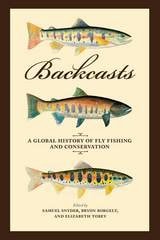
Backcasts
A Global History of Fly Fishing and ConservationEdited by Samuel Snyder, Bryon Borgelt, and Elizabeth Tobey
University of Chicago Press, 2016
Though Maclean writes of an age-old focus of all anglers—the day’s catch—he may as well be speaking to another, deeper accomplishment of the best fishermen and fisherwomen: the preservation of natural resources.
Backcasts celebrates this centuries-old confluence of fly fishing and conservation. However religious, however patiently spiritual the tying and casting of the fly may be, no angler wishes to wade into rivers of industrial runoff or cast into waters devoid of fish or full of invasive species like the Asian carp. So it comes as no surprise that those who fish have long played an active, foundational role in the preservation, management, and restoration of the world’s coldwater fisheries. With sections covering the history of fly fishing; the sport’s global evolution, from the rivers of South Africa to Japan; the journeys of both native and nonnative trout; and the work of conservation organizations such as the Federation of Fly Fishers and Trout Unlimited, Backcasts casts wide.
Highlighting the historical significance of outdoor recreation and sports to conservation in a collection important for fly anglers and scholars of fisheries ecology, conservation history, and environmental ethics, Backcasts explores both the problems anglers and their organizations face and how they might serve as models of conservation—in the individual trout streams, watersheds, and landscapes through which these waters flow.
Burning Up
A Global History of Fossil Fuel ConsumptionSimon Pirani
Pluto Press, 2018
In Burning Up, Simon Pirani recounts the history of the relentless rise of fossil fuels in the past half century, and lays out the ways in which the expansion of the global capitalist economy has driven it forward. Dispelling common explanations that foreground Western consumerism, as well as arguments about unsustainable population growth, Pirani offers instead an insightful intervention in what is arguably the crisis of our time.
Coffee Is Not Forever
A Global History of the Coffee Leaf RustStuart McCook
Ohio University Press, 2019
The global coffee industry, which fuels the livelihoods of farmers, entrepreneurs, and consumers around the world, rests on fragile ecological foundations. In Coffee Is Not Forever, Stuart McCook explores the transnational story of this essential crop through a history of one of its most devastating diseases, the coffee leaf rust. He deftly synthesizes agricultural, social, and economic histories with plant genetics and plant pathology to investigate the increasing interdependence of the world’s coffee-producing zones. In the process, he illuminates the progress and prognosis of the challenges—especially climate change—that pose an existential threat to a crop that global consumers often take for granted. And finally, in putting a tropical plant disease at the forefront, he has crafted the first truly global environmental history of coffee, pushing its study and the discipline in bold new directions.
Feminisms
A Global HistoryLucy Delap
University of Chicago Press, 2020
Feminism’s origins have often been framed around a limited cast of mostly white and educated foremothers, but the truth is that feminism has been and continues to be a global movement. For centuries, women from all walks of life have been mobilizing for gender justice. As the last decade has reminded even the most powerful women, there is nothing “post-feminist” about our world. And there is much to be learned from the passion and protests of the past.
Historian Lucy Delap looks to the global past to give us a usable history of the movement against gender injustice—one that can help clarify questions of feminist strategy, priority and focus in the contemporary moment. Rooted in recent innovative histories, the book incorporates alternative starting points and new thinkers, challenging the presumed priority of European feminists and ranging across a global terrain of revolutions, religions, empires and anti-colonial struggles.
In Feminisms, we find familiar stories—of suffrage, of solidarity, of protest—yet there is no assumption that feminism looks the same in each place or time. Instead, Delap explores a central paradox: feminists have demanded inclusion but have persistently practiced their own exclusions. Some voices are heard and others are routinely muted. In amplifying the voices of figures at the grassroots level, Delap shows us how a rich relationship to the feminist past can help inform its future.
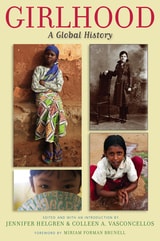
Girlhood
A Global HistoryHelgren, Jennifer
Rutgers University Press, 2010
Spanning a broad time frame from 1750 to the present, essays illuminate the various continuities and differences in girls' lives across culture and region--girls on all continents except Antarctica are represented. Case studies and essays are arranged thematically to encourage comparisons between girls' experiences in diverse locales, and to assess how girls were affected by historical developments such as colonialism, political repression, war, modernization, shifts in labor markets, migrations, and the rise of consumer culture.
Hockey
A Global HistoryStephen H. Hardy, Andrew C. Holman
University of Illinois Press, 2018
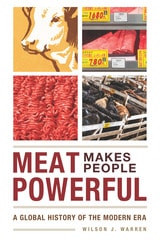
Meat Makes People Powerful
A Global History of the Modern EraWilson J. Warren
University of Iowa Press, 2018
From large-scale cattle farming to water pollution, meat— more than any other food—has had an enormous impact on our environment. Historically, Americans have been among the most avid meat-eaters in the world, but long before that meat was not even considered a key ingredient in most civilizations’ diets. Labor historian Wilson Warren, who has studied the meat industry for more than a decade, provides this global history of meat to help us understand how it entered the daily diet, and at what costs and benefits to society.
Spanning from the nineteenth century to current and future trends, Warren walks us through the economic theory of food, the discovery of protein, the Japanese eugenics debate around meat, and the environmental impact of livestock, among other topics. Through his comprehensive, multifaceted research, he provides readers with the political, economic, social, and cultural factors behind meat consumption over the last two centuries. With a special focus on East Asia, Meat Makes People Powerful reveals how national governments regulated and oversaw meat production, helping transform virtually vegetarian cultures into major meat consumers at record speed.
As more and more Americans pay attention to the sources of the meat they consume, Warren’s compelling study will help them not only better understand the industry, but also make more informed personal choices. Providing an international perspective that will appeal to scholars and nutritionists alike, this timely examination will forever change the way you see the food on your plate.

Mennonite Farmers
A Global History of Place and SustainabilityRoyden Loewen
University of Manitoba Press, 2021
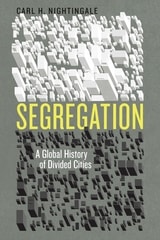
Segregation
A Global History of Divided CitiesCarl H. Nightingale
University of Chicago Press, 2012
When we think of segregation, what often comes to mind is apartheid South Africa, or the American South in the age of Jim Crow—two societies fundamentally premised on the concept of the separation of the races. But as Carl H. Nightingale shows us in this magisterial history, segregation is everywhere, deforming cities and societies worldwide.
Starting with segregation’s ancient roots, and what the archaeological evidence reveals about humanity’s long-standing use of urban divisions to reinforce political and economic inequality, Nightingale then moves to the world of European colonialism. It was there, he shows, segregation based on color—and eventually on race—took hold; the British East India Company, for example, split Calcutta into “White Town” and “Black Town.” As we follow Nightingale’s story around the globe, we see that division replicated from Hong Kong to Nairobi, Baltimore to San Francisco, and more. The turn of the twentieth century saw the most aggressive segregation movements yet, as white communities almost everywhere set to rearranging whole cities along racial lines. Nightingale focuses closely on two striking examples: Johannesburg, with its state-sponsored separation, and Chicago, in which the goal of segregation was advanced by the more subtle methods of real estate markets and housing policy.
For the first time ever, the majority of humans live in cities, and nearly all those cities bear the scars of segregation. This unprecedented, ambitious history lays bare our troubled past, and sets us on the path to imagining the better, more equal cities of the future.
The Global History of Black Girlhood
Edited by Corinne T. Field and LaKisha Michelle Simmons
University of Illinois Press, 2022
Thought-provoking and original, The Global History of Black Girlhood opens up new possibilities for understanding Black girls in the past while offering useful tools for present-day Black girls eager to explore the histories of those who came before them.
Contributors: Janaé E. Bonsu, Ruth Nicole Brown, Tara Bynum, Casidy Campbell, Katherine Capshaw, Bev Palesa Ditsie, Sarah Duff, Cynthia Greenlee, Claudrena Harold, Anasa Hicks, Lindsey Jones, Phindile Kunene, Denise Oliver-Velez, Jennifer Palmer, Vanessa Plumly, Shani Roper, SA Smythe, Nastassja Swift, Dara Walker, Najya Williams, and Nazera Wright
The International Jewish Labor Bund after 1945
Toward a Global HistorySlucki, David
Rutgers University Press, 2012
The Jewish Labor Bund was one of the major political forces in early twentieth-century Eastern Europe. But the decades after the Second World War were years of enormous difficulty for Bundists. Like millions of other European Jews, they faced the challenge of resurrecting their lives, so gravely disrupted by the Holocaust. Not only had the organization lost many members, but its adherents were also scattered across many continents. In this book, David Slucki charts the efforts of the surviving remnants of the movement to salvage something from the wreckage.
Covering both the Bundists who remained in communist Eastern Europe and those who emigrated to the United States, France, Australia, and Israel, the book explores the common challenges they faced—building transnational networks of friends, family, and fellow Holocaust survivors, while rebuilding a once-local movement under a global umbrella. This is a story of resilience and passion—passion for an idea that only barely survived Auschwitz.
Welfare for Markets
A Global History of Basic IncomeAnton Jäger and Daniel Zamora Vargas
University of Chicago Press, 2023
A sweeping intellectual history of the welfare state’s policy-in-waiting.
The idea of a government paying its citizens to keep them out of poverty—now known as basic income—is hardly new. Often dated as far back as ancient Rome, basic income’s modern conception truly emerged in the late nineteenth century. Yet as one of today’s most controversial proposals, it draws supporters from across the political spectrum.
In this eye-opening work, Anton Jäger and Daniel Zamora Vargas trace basic income from its rise in American and British policy debates following periods of economic tumult to its modern relationship with technopopulist figures in Silicon Valley. They chronicle how the idea first arose in the United States and Europe as a market-friendly alternative to the postwar welfare state and how interest in the policy has grown in the wake of the 2008 credit crisis and COVID-19 crash.
An incisive, comprehensive history, Welfare for Markets tells the story of how a fringe idea conceived in economics seminars went global, revealing the most significant shift in political culture since the end of the Cold War.