Results by title
67 books match the query 'Global Warming & Climate Change' and 4 start with a
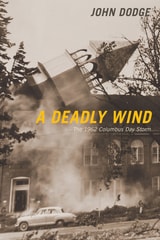
A Deadly Wind
The 1962 Columbus Day StormJohn Dod
Oregon State University Press, 2018
The Columbus Day Storm of 1962 was a freak of nature, a weather outlier with deadly winds topping one hundred miles per hour. The storm killed dozens, injured hundreds, damaged more than fifty thousand homes, and leveled enough timber to build one million homes. To find an equally ferocious storm of its kind, fast-forward fifty years and cross the continent to Superstorm Sandy’s 2012 attack on the East Coast. While Superstorm Sandy was predicted days in advance, the Columbus Day Storm caught ill-equipped weather forecasters by surprise.
This unrivalled West Coast windstorm fueled the Asian log export market, helped give birth to the Oregon wine industry, and influenced the 1962 World Series. It remains a cautionary tale and the Pacific Northwest benchmark for severe windstorms in this era of climate change and weather uncertainty. From its genesis in the Marshall Islands to its final hours on Vancouver Island, British Columbia, the storm plowed an unparalleled path of destruction.
In A Deadly Wind, veteran journalist John Dodge tells a compelling story spiced with human drama, Cold War tension, and Pacific Northwest history. This is a must-read for the tens of thousands of storm survivors, for history buffs, and for anyone interested in the intersection of severe weather events and climate change.
A Sense of Urgency
How the Climate Crisis Is Changing RhetoricDebra Hawhee
University of Chicago Press, 2023
Why is it difficult to talk about climate change? Debra Hawhee argues that contemporary rhetoric relies on classical assumptions about humanity and history that cannot conceive of the present crisis. How do we talk about an unprecedented future or represent planetary interests without privileging our own species? A Sense of Urgency explores four emerging answers, their sheer novelty a record of both the devastation and possible futures of climate change. In developing the arts of magnitude, presence, witness, and feeling, A Sense of Urgency invites us to imagine new ways of thinking with our imperiled planet.
American Agriculture, Water Resources, and Climate Change
Edited by Gary D. Libecap and Ariel Dinar
University of Chicago Press, 2024
A collection of the most advanced and authoritative agricultural-economic research in the face of increasing water scarcity.
Agriculture has been critical in the development of the American economy. Except in parts of the western United States, water access has not been a critical constraint on agricultural productivity, but with climate change, this may no longer be the case. This volume highlights new research on the interconnections between American agriculture, water resources, and climate change. It examines climatic and geologic factors that affect the agricultural sector and highlights historical and contemporary farmer responses to varying conditions and water availability. It identifies the potential effects of climate change on water supplies, access, agricultural practices, and profitability, and analyzes technological, agronomic, management, and institutional adjustments. Adaptations such as new crops, production practices, irrigation technologies, water conveyance infrastructure, fertilizer application, and increased use of groundwater can generate both social benefits and social costs, which may be internalized with various institutional innovations. Drawing on both historical and present experiences, this volume provides valuable insights into the economics of water supply in American agriculture as climate change unfolds.
Arcticness
Power and Voice from the NorthIlan Kelman
University College London, 2017