Results by title
2 books match the query 'Globalized Age'
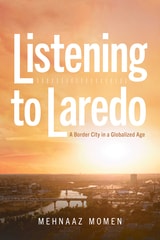
Listening to Laredo
A Border City in a Globalized AgeMehnaaz Momen
University of Arizona Press, 2023
Nestled between Texas and Tamaulipas, Laredo was once a quaint border town, nurturing cultural ties across the border, attracting occasional tourists, and serving as the home of people living there for generations. In a span of mere decades, Laredo has become the largest inland port in the United States and a major hub of global trade. Listening to Laredo is an exploration of how the dizzying forces of change have defined this locale, how they continue to be inscribed and celebrated, and how their effects on the physical landscape have shaped the identity of the city and its people.
Bringing together issues of growth, globalization, and identity, Mehnaaz Momen traces Laredo’s trajectory through the voices of its people. In contrast to the many studies of border cities defined by the outside—and seldom by the people who live at the border—this volume collects oral histories from seventy-five in-depth interviews that collectively illuminate the evolution of the city’s cultural and economic infrastructure, its interdependence with its sister city across the national boundary, and, above all, the strength of its community as it adapts to and even challenges the national narrative regarding the border. The resonant and lively voices of Laredo’s people convey proud ownership of an archetypal border city that has time and again resurrected itself.
Bringing together issues of growth, globalization, and identity, Mehnaaz Momen traces Laredo’s trajectory through the voices of its people. In contrast to the many studies of border cities defined by the outside—and seldom by the people who live at the border—this volume collects oral histories from seventy-five in-depth interviews that collectively illuminate the evolution of the city’s cultural and economic infrastructure, its interdependence with its sister city across the national boundary, and, above all, the strength of its community as it adapts to and even challenges the national narrative regarding the border. The resonant and lively voices of Laredo’s people convey proud ownership of an archetypal border city that has time and again resurrected itself.
[more]
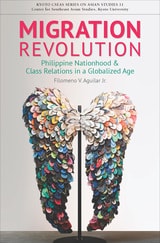
Migration Revolution
Philippine Nationhood and Class Relations in a Globalized AgeFilomeno V. Aguilar Jr.
National University of Singapore Press, 2014
Since the 1960s, overseas migration has become a major factor in the economy of the Philippines. It has also profoundly influenced the sense of nationhood of both migrants and nonmigrants. Migrant workers learned to view their home country as part of a plural world of nations, and they shaped a new sort of Filipino identity while appropriating the modernity of the outside world, where at least for a while they operated as insiders.
The global nomadism of Filipino workers brought about some fundamental reorientations. It revolutionized Philippine society, reignited a sense of nationhood, imposed new demands on the state, reconfigured the class structure, and transnationalized class and other social relations, even as it deterritorialized the state and impacted the destinations of migrant workers.
Philippine foreign policy now takes surprising turns in consideration of migrant workers and Filipinos living abroad. Many tertiary education institutions aim deliberately at the overseas employability of local graduates. And the “Fil-foreign” offspring of unions with partners from other nationalities add a new inflection to Filipino identity.
[more]