Results by title
3 books match the query 'Globes'
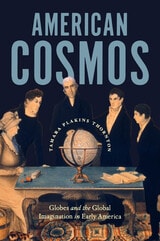
American Cosmos
Globes and the Global Imagination in Early AmericaTamara Plakins Thornton
University of Chicago Press, 2027
The first book to explore the forgotten terrestrial and celestial globes of early America—and the global imagination they shaped.
Ranging from early modern Europe to the modern United States, American Cosmos introduces the objects, people, practices, and ideas that constituted the long-forgotten world of globes. As Tamara Plakins Thornton shows, paired terrestrial and celestial globes were important components of early American social, cultural, and intellectual life. They served as markers of learnedness and social status, provided a material vision of a human-centered cosmos, and as 3-D problem-solving devices, offered distinctive imaginative perspectives on global connections and human difference. Only some had access to these globes—including genteel families, men of science, navigators, and students in colleges, academies, and missionary schools—but in the nineteenth century, many more encountered mass-produced, stripped-down globes in common school classrooms and parlors. Yet with new cultural concerns taking root, these modern globes assumed a much-diminished role in American life and thought, and an older world of globes, rich with meaning and possibility, disappeared.
As we increasingly encounter global-scale experience—climate change, pandemics, human migrations, the economy—and as American historians strive to look beyond national borders, we can learn about the origins of American global thinking by looking at globes themselves and the people who used them.
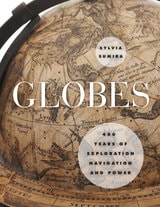
Globes
400 Years of Exploration, Navigation, and PowerSylvia Sumira
University of Chicago Press, 2014
Showcasing the impressive collection of globes held by the British Library, Sumira traces the inception and progression of globes during the period in which they were most widely used—from the late fifteenth century to the late nineteenth century—shedding light on their purpose, function, influence, and manufacture, as well as the cartographers, printers, and instrument makers who created them. She takes readers on a chronological journey around the world to examine a wide variety of globes, from those of the Renaissance that demonstrated a renewed interest in classical thinkers; to those of James Wilson, the first successful commercial globe maker in America; to those mass-produced in Boston and New York beginning in the 1800s. Along the way, Sumira not only details the historical significance of each globe, but also pays special attention to their materials and methods of manufacture and how these evolved over the centuries.
A stunning and accessible guide to one of the great tools of human exploration, Globes will appeal to historians, collectors, and anyone who has ever examined this classroom accessory and wondered when, why, and how they came to be made.
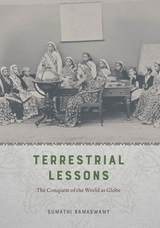
Terrestrial Lessons
The Conquest of the World as GlobeSumathi Ramaswamy
University of Chicago Press, 2017
In Terrestrial Lessons, Ramaswamy provides the first in-depth analysis of the globe’s history in and impact on the Indian subcontinent during the colonial era and its aftermath. Drawing on a wide array of archival sources, she delineates its transformation from a thing of distinction possessed by elite men into that mass-produced commodity used in classrooms worldwide—the humble school globe. Traversing the length and breadth of British India, Terrestrial Lessons is an unconventional history of this master object of pedagogical modernity that will fascinate historians of cartography, science, and Asian studies.