Results by title
30 books match the query 'Gold'
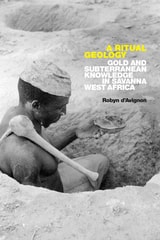
A Ritual Geology
Gold and Subterranean Knowledge in Savanna West AfricaRobyn d'Avignon
Duke University Press, 2022
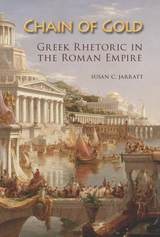
Chain of Gold
Greek Rhetoric in the Roman EmpireSusan C. Jarratt
Southern Illinois University Press, 2019
Through allusions to classical Greek literature, sophists such as Dio Chrysostom, Aelius Aristides, and Philostratus slipped oblique challenges to empire into otherwise innocuous works. Such figures protected their creators from the danger of direct confrontation but nonetheless would have been recognized by elite audiences, Roman and Greek alike, by virtue of their common education. Focusing on such moments, Jarratt presents close readings of city encomia, biography, and texts in hybrid genres from key second sophistic figures, setting each in its geographical context. Although all the authors considered are male, the analyses here bring to light reflections on gender, ethnicity, skin color, language differences, and sexuality, revealing an underrecognized diversity in the rhetorical activity of this period.
While US scholars of ancient rhetoric have focused largely on the pedagogical, Jarratt brings a geopolitical lens to her study of the subject. Her inclusion of fourth-century texts—the Greek novel Ethiopian Story, by Heliodorus, and the political orations of Libanius of Antioch—extends the temporal boundary of the period. She concludes with speculations about the pressures brought to bear on sophistic political subjectivity by the rise of Christianity and with ruminations on a third sophistic in ancient and contemporary eras of empire.
Cities of Gold
Legendary Kingdoms, Quixotic Quests, and Fantastic New World WealthBill Yenne
Westholme Publishing, 2011
A History of Exploration for Real and Mythical Treasures in the Americas
For half a millennium, stories of vast treasures—El Dorado, Manoa, the Seven Cities of Cibola, the Lost Dutchman Mine—have been part of the lore of the Americas. Long before the Europeans set foot in the New World, myths and rumors of fabulous wealth in distant lands, such as the kingdom of Prester John, were told and retold so often that they were assumed to be true. When Spanish explorers first made contact with the Aztec and Inca civilizations, they found cultures that were literally dripping with gold. This evidence made it easy to believe the native stories of even greater wealth just beyond the horizon. In these uncharted lands, dreamers sought their fortunes: Francisco de Coronado ranged over the North American plains in search of the elusive Quivira; Gonzalo Pizarro, brother of the Incan conqueror, and Lope Aguirre, the “Wrath of God,” were both part of ill-fated expeditions in search of El Dorado; and Leonard Clark walked out of the Amazon after World War II with gold and claimed he had found that fabled kingdom.
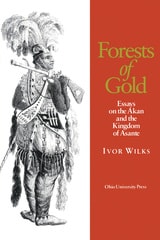
Forests of Gold
Essays on the Akan and the Kingdom of AsanteIvor Wilks
Ohio University Press, 1995
Forests of Gold is a collection of essays on the peoples of Ghana with particular reference to the most powerful of all their kingdoms: Asante. Beginning with the global and local conditions under which Akan society assumed its historic form between the fifteenth and seventeenth centuries, these essays go on to explore various aspects of Asante culture: conceptions of wealth, of time and motion, and the relationship between the unborn, the living, and the dead. The final section is focused upon individuals and includes studies of generals, of civil administrators, and of one remarkable woman who, in 1831, successfully negotiated peace treaties with the British and the Danes on the Gold Coast. The author argues that contemporary developments can only be fully understood against the background of long-term trajectories of change in Ghana.
Frankincense, Gold, and Myrrh
A Christmas ChrestomathyJoseph Bottum
St. Augustine's Press, 2024
There’s the comic: “Tinsel. No one needs tinsel. Even the word is a tinselly kind of word.” There’s the sentimental: “Her hair was the same thin shade of gray as the weather-beaten pickets of the fence around her frozen garden.” There’s the reminiscent: “Christmas was books, and books Christmas, in those days now mostly washed down to the cold sea.” Along the way, there’s the theological, the learned, the mystical, and the musical.
“Tastefulness is just small-mindedness pretending to be art,” he writes in praise of mad and cluttered holidays. “Christmas will not be defined by our failures to apply its lessons and carols,” he explains about Yuletide poetry. To see these essays and short stories gathered in one place—in a beautiful illustrated edition from St. Augustine’s Press—is to see the whole of the vision that Joseph Bottum has been painting for decades: a picture of Christmas as a thin place in the wall between the natural and the numinous, where a burning grace slips into a cold winter world.
Ghouls, Gimmicks, and Gold
Horror Films and the American Movie Business, 1953–1968Kevin Heffernan
Duke University Press, 2004
Heffernan argues that major cultural and economic shifts in the production and reception of horror films began at the time of the 3-d film cycle of 1953–54 and ended with the 1968 adoption of the Motion Picture Association of America’s ratings system and the subsequent development of the adult horror movie—epitomized by Rosemary’s Baby. He describes how this period presented a number of daunting challenges for movie exhibitors: the high costs of technological upgrade, competition with television, declining movie attendance, and a diminishing number of annual releases from the major movie studios. He explains that the production and distribution branches of the movie industry responded to these trends by cultivating a youth audience, co-producing features with the film industries of Europe and Asia, selling films to television, and intensifying representations of sex and violence. Shining through Ghouls, Gimmicks, and Gold is the delight of the true horror movie buff, the fan thrilled to find The Brain that Wouldn’t Die on television at 3 am.
Grains of Gold
Tales of a Cosmopolitan TravelerGendun Chopel
University of Chicago Press, 2013
Green Russell and Gold
By Elma Dill Russell Spencer
University of Texas Press, 1966
The family history of the Russells of Georgia is a saga of the Westward Movement during the middle fifty years of the nineteenth century. The "Russell boys," as prospectors and miners, moved with the frontier as it followed fresh discoveries of gold, from Georgia to California to Colorado. Then, after the interlude of the Civil War, they settled in the new territories, turning their abilities and ruggedness of character to the development of careers on other frontiers—ranching, farming, land development, medicine—in Montana, Colorado, and Texas.
Elma Dill Russell Spencer, a descendant of one of these unusual brothers, relates their story as she learned it from family tradition transmitted by Grandma Russell, from family letters, from public documents, and from historical accounts of the exciting era.
The reader of her narrative sees the evolution of Western society in the vast wasteland of mountain and prairie from the viewpoint of the people who were making history, people too engrossed in their own problems to realize the far-reaching significance of their achievement. The reader sees the struggle to wrest gold from the streams and hills with primitive tools and techniques; the development of tent villages into populous towns affording most of the comforts of the East; the evolution of a code of mining laws, of protection from violence and crime; the building of schools; the emergence of sectional problems and divided loyalties; the Civil War, mostly through noncombatants' eyes; the progressive changes in transportation, until the railroads tied the West to the East. The reader also encounters Indians, who ride in and out of these pages, and other fascinating types of characters associated with "the wild, varied, and always unpredictable" frontier.
The odyssey of the Russell brothers as they struggle home to Georgia from Union-sympathizing Denver is particularly full of action, with tense moments in the account of narrowly escaped death—at the hands of Indians, through the ravages of disease, and from the enmity of Yankee foes.
This book was originally published as Gold Country in 1958; the University of Texas Press edition was completely revised and first published in 1966.
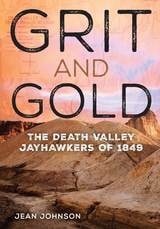
Grit and Gold
The Death Valley Jayhawkers of 1849Jean Johnson
University of Nevada Press, 2018
After leaving Salt Lake City to break a road south to the Pacific Coast that would eliminate crossing the snowy Sierra Nevada, the party veered off the Old Spanish Trail in southern Utah to follow a mountaineer’s map portraying a bogus trail that claimed to cut months and hundreds of miles off their route to the gold country. With winter coming, however, they found themselves hopelessly lost in the mountains and dry valleys of southern Nevada and California. Abandoning everything but the shirts on their backs and the few oxen that became their pitiful meals, they turned their dreams of gold to hopes of survival.
Utilizing William Lorton’s 1849 diary of the trek from Illinois to southern Utah, the reminiscences of the Jayhawkers themselves, the keen memory of famed pioneer William Lewis Manly, and the almost daily diary of Sheldon Young, Johnson paints a lively but accurate portrait of guts, grit, and determination.
HEARTS OF GOLD
a novel by J. McHenry Jones, edited by John Ernest and Eric Gardner
West Virginia University Press, 2010
J. McHenry Jones’s Hearts of Gold is a gripping tale of post-Civil War battles against racism and systemic injustice. Originally published in 1896, this novel reveals an African American community of individuals dedicated to education, journalism, fraternal organizations, and tireless work serving the needs of those abandoned by the political process of the white world. Jones challenges conventional wisdom by addressing a range of subjects—from interracial relationships to forced labor in coal mines—that virtually no other novelist of the time was willing to approach. With the addition of an introduction and appendix, this new edition reveals the difficult foundations upon which African Americans built a platform to address injustice; generate opportunities; and play a prominent role in American social, economic, and political life.
Hearts of Gold
John Ernest
University of Delaware Press, 0
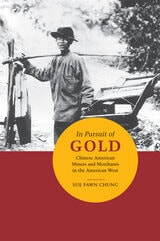
In Pursuit of Gold
Chinese American Miners and Merchants in the American WestSue Fawn Chung
University of Illinois Press, 2011
Both a history of an overlooked community and a well-rounded reassessment of prevailing assumptions about Chinese miners in the American West, In Pursuit of Gold brings to life in rich detail the world of turn-of-the-century mining towns in the Northwest. Sue Fawn Chung meticulously recreates the lives of Chinese immigrants, miners, merchants, and others who populated these towns and interacted amicably with their white and Native American neighbors, defying the common perception of nineteenth-century Chinese communities as insular enclaves subject to increasing prejudice and violence.
While most research has focused on Chinese miners in California, this book is the first extensive study of Chinese experiences in the towns of John Day in Oregon and Tuscarora, Island Mountain, and Gold Creek in Nevada. Chung illustrates the relationships between miners and merchants within the communities and in the larger context of immigration, arguing that the leaders of the Chinese and non-Chinese communities worked together to create economic interdependence and to short-circuit many of the hostilities and tensions that plagued other mining towns.
Peppered with fascinating details about these communities from the intricacies of Chinese gambling games to the techniques of hydraulic mining, In Pursuit of Gold draws on a wealth of historical materials, including immigration records, census manuscripts, legal documents, newspapers, memoirs, and manuscript collections. Chung supplements this historical research with invaluable first-hand observations of artifacts that she experienced in archaeological digs and restoration efforts at several of the sites of the former booming mining towns.
In clear, analytical prose, Chung expertly characterizes the movement of Chinese miners into Oregon and Nevada, the heyday of their mining efforts in the region, and the decline of the communities due to changes in the mining industry. Highlighting the positive experiences and friendships many of the immigrants had in these relatively isolated mining communities, In Pursuit of Gold also suggests comparisons with the Chinese diaspora in other locations such as British Columbia and South Africa.
In the Realms of Gold
Pioneering in African HistoryRoland Oliver
University of Wisconsin Press, 1997
In the Realms of Gold is Oliver’s account of his life and work. He writes in a deft and lively style about the circumstances of his early life that shaped his education and outlook: his childhood on a river houseboat in Kashmir, the influential teachers and friends met at Stowe and Cambridge, and his service in World War II as a cryptographer in British intelligence, where he met his first wife, Caroline Linehan. His interest in church history while at Cambridge led him to study the historical effects of Christian missionaries in Africa, and thus his career began.
The core of the book is Oliver’s account of his research travels throughout tropical Africa from the 1940s to the 1980s; his efforts to train and foster African graduate students to teach in African universities; his role in establishing conferences and journals to bring together the work of historians and archaeologists from Europe and Africa; his encounters with political and religious leaders, scholars, soldiers, and storytellers; and the political and economic upheavals of the continent that he witnessed.
Kelso
The Horse of GoldLinda Kennedy
Westholme Publishing, 2007
Praise for Kelso: The Horse of Gold:
“Ms. Kennedy has captured the grandeur of the horse in a simple, straightforward way that will charm and excite those who saw Kelso run and remember his stirring deeds. . . . Kelso's racing record through eight seasons is simply breathtaking.”—Wall Street Journal
“In this concise, entertaining account, Kennedy tells the story of Kelso, a scrawny ungainly gelding who just happened to be one of the greatest Thoroughbreds that ever lived.”—Publishers Weekly
“An excellent portrayal... so intense that one has the sensation of being right there with the crowd and cheering Kelso on.”—Tom Trotter, Former New York Racing Secretary
“He was the greatest horse I ever rode.”—Eddie Arcaro, rider of Triple Crown champions Whirlaway, Assault, and Citation
At his three-year debut in June 1960, no one could know that Mrs. Allaire DuPont’s small, deerlike gelding named Kelso would come to dominate American racing like no other horse before or since. For five unprecedented years, he would reign as Horse of the Year, setting records and endearing himself to millions of fans. Always considered among the top four horses of all time—with Man O' War, Secretariat, and Citation—for many, Kelso is the greatest racehorse, since he won at sprints and endurance races, won on turf and dirt, carried unprecedented handicap weights, and raced both foreign and national thoroughbreds. Kelso was crowned champion of the Jockey Gold Cup, one of the most prestigious racing events, an astounding five straight times. Like Seabiscuit, Kelso was not earmarked as a contender and missed the Triple Crown races. But Kelso's greatness was decisive: he regularly defeated Triple Crown race winners. In Kelso: The Horse of Gold, Linda Kennedy tells the remarkable story of one of the greatest athletes of the ages, recreating the excitement of "Kelly's" unique and brilliant career while placing his unparalleled achievements in the context of racing history.
Las hormigas de oro / Ants of Gold
Poemas / PoemsEduardo Urios-Aparisi
Swan Isle Press, 2000
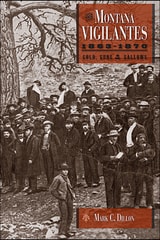
Montana Vigilantes 1863–1870
Gold,Guns and GallowsMark C. Dillon
Utah State University Press, 2016
Using newspaper articles, diaries, letters, biographies, invoices, and books that speak to the compelling history of Montana’s vigilantism in the 1860s, Dillon examines the conduct of the vigilantes in the context of the due process norms of the time. He implicates the influence of lawyers and judges who, like their non-lawyer counterparts, shaped history during the rush to earn fortunes in gold.
Dillon’s perspective as a state Supreme Court justice and legal historian uniquely illuminates the intersection of territorial politics, constitutional issues, corrupt law enforcement, and the basic need of citizenry for social order. This readable and well-directed analysis of the social and legal context that contributed to the rise of Montana vigilante groups will be of interest to scholars and general readers interested in Western history, law, and criminal justice for years to come.

My Life with the Green & Gold
Tales from 20 Years of SportscastingJessie Garcia
Wisconsin Historical Society Press, 2013
Ever wonder what it’s like to interview famous athletes and coaches? For twenty years, sportscaster Jessie Garcia has done just that. In My Life with the Green & Gold she brings fans to the sidelines at Lambeau Field, inside the locker room, aboard the Packers bus, and into the host’s chair at The Mike McCarthy Show.
A self-proclaimed “terrible athlete” born without sports in her blood, Garcia reported on Wisconsin’s beloved Green Bay Packers during the Holmgren, Rhodes, Sherman, and McCarthy years. She’s been a Packers sideline reporter for preseason games and covered the team during their Super Bowl showdowns against the Patriots, Broncos, and Steelers. She’s traveled with the team to Tokyo and the White House and to schools and retirement homes, where the gridiron heroes interacted with their fans. She’s visited the hometowns of players and coaches, she’s met their proud parents and their pets, she’s interviewed the team trainer about their strength exercises. My Life with the Green & Gold also features up-close and personal stories about other teams and athletes she’s covered, from the Badgers and Brewers to Wisconsin Olympians such as Bonnie Blair and Casey FitzRandolph.
Garcia’s expertise is capturing behind-the-scenes, human-interest stories. In My Life with the Green & Gold, she shares a personal and humorous insider’s look at many Wisconsin sports heroes from the perspective of a female sports journalist who has ridden the adrenaline rush to be on the air at 5:00 a.m., 10:00 p.m., and any hour in between, while also juggling the many demands of family life. Not many parents can say they’ve changed their child’s diaper in the tunnel at Lambeau, but Jessie Garcia can.
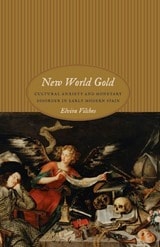
New World Gold
Cultural Anxiety and Monetary Disorder in Early Modern SpainElvira Vilches
University of Chicago Press, 2010
The discovery of the New World was initially a cause for celebration. But the vast amounts of gold that Columbus and other explorers claimed from these lands altered Spanish society. The influx of such wealth contributed to the expansion of the Spanish empire, but also it raised doubts and insecurities about the meaning and function of money, the ideals of court and civility, and the structure of commerce and credit. New World Gold shows that, far from being a stabilizing force, the flow of gold from the Americas created anxieties among Spaniards and shaped a host of distinct behaviors, cultural practices, and intellectual pursuits on both sides of the Atlantic.
Elvira Vilches examines economic treatises, stories of travel and conquest, moralist writings, fiction, poetry, and drama to reveal that New World gold ultimately became a problematic source of power that destabilized Spain’s sense of trust, truth, and worth. These cultural anxieties, she argues, rendered the discovery of gold paradoxically disastrous for Spanish society. Combining economic thought, social history, and literary theory in trans-Atlantic contexts, New World Gold unveils the dark side of Spain’s Golden Age.
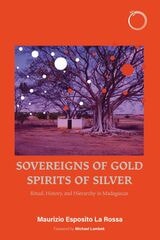
Sovereigns of Gold, Spirits of Silver
Ritual, History, and Hierarchy in MadagascarMaurizio Esposito La Rossa
HAU, 2026
How the inhabitants of Western Madagascar reshape their collective identity and negotiate their place within contemporary society through royal rituals and the reinterpretation of the past.
In a postcolonial republic marked by recurrent crises, royal hierarchy continues to frame social inequalities. Within this context, both the descendants of slaves and the newly rich seek to claim or legitimize new hierarchical positions by reformulating historical narratives and establishing them through royal rituals. Focusing on a cult dedicated to the spirits of the ancestors of the Silver Dynasty, Maurizio Esposito La Rossa investigates the categories of “silver” and “gold” that structure the hierarchy of the Sakalava monarchy and are also mobilized by politicians to legitimize their power.
Through multi-sited ethnography, the book offers a broader reflection on the link between narratives and places and on contrasting ways of conceiving history. Whereas Western historiography—and the rise of the nation-state—tends to produce unified historical narratives, the Sakalava monarchies conceive of history as rooted in specific places and social groups, where multiple versions coexist and contend. Combining the divergent demands of a historical anthropology and an anthropology of history, this book endeavors to recount another history of the Sakalava monarchy, without neglecting the polyphony that characterizes it. By tracing how the past is mobilized, transformed, and contested in the present, the book speaks to anthropologists, historians, and readers interested in the intricate entanglements of history, ritual, and political power in postcolonial settings.
The Anthropology of Slavery
The Womb of Iron and GoldClaude Meillassoux
University of Chicago Press, 1991

The Big Reset Revised Edition
War on Gold and the Financial EndgameWillem Middelkoop
Amsterdam University Press, 2016
- James Rickards on the first edition. Rickards is the author of The Death of Money and Currency Wars, a National Bestseller.
A system reset seems imminent. The world's financial system will need to find a new anchor before the year 2020. Since the beginning of the credit crisis, the US realized the dollar will lose its role as the world's reserve currency, and has been planning for a monetary reset. According to Willem Middelkoop, this reset will be designed to keep the US in the driver's seat, allowing the new monetary system to include significant roles for other currencies such as the euro and China's renminbi.
PREPARE FOR THE COMING RESET
In all likelihood gold will be re-introduced as one of the pillars of this next phase in the global financial system. The prediction is that gold could be revalued at $ 7,000 per troy ounce. By looking past the American 'smokescreen' surrounding gold and the dollar long ago, China and Russia have been accumulating massive amounts of gold reserves, positioning themselves for a more prominent role in the future to come. The reset will come as a shock to many. The Big Reset will help everyone who wants to be fully prepared.
This fully revised edition of Middelkoop's book takes into account developments since its original publication, which have only strengthened the case for the coming return of gold.

The German Texas Frontier
Ferdinand Lindheimer’s Newspaper Accounts of the Environment, Gold, and IndiansDaniel J. Gelo
University of North Texas Press, 2024
The Gold in the Rings
The People and Events That Transformed the Olympic GamesStephen R. Wenn and Robert K. Barney
University of Illinois Press, 2019
Entertaining and expert, The Gold in the Rings maps the Olympics' course from paragon of purity to billion-dollar profits.
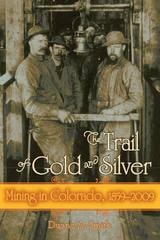
The Trail of Gold and Silver
Mining in Colorado, 1859-2009Duane A. Smith
University Press of Colorado, 2009
Written in a lively manner by one of Colorado's preeminent historians, this book honors the 2009 sesquicentennial of Colorado's gold rush. Smith's narrative will appeal to anybody with an interest in the state's fascinating mining history over the past 150 years.
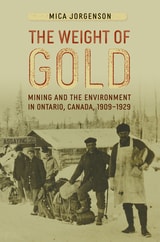
The Weight of Gold
Mining and the Environment in Ontario, Canada, 1909-1929Mica Jorgenson
University of Nevada Press, 2023
Mining in North America has long been criticized for its impact on the natural environment. Mica Jorgenson’s The Weight of Gold explores the history of Ontario, Canada’s rise to prominence in the gold mining industry, while detailing a series of environmental crises related to extraction activities. In Ontario in 1909, the discovery of exceptionally rich hard rock gold deposits in the Abitibi region in the north precipitated industrial development modeled on precedents in Australia, South Africa, and the United States. By the late 1920s, Ontario’s mines had reached their maturity, and in 1928, Minister of Mines Charles McRae called Canada “the mineral treasure house to [the] world.”
Mining companies increasingly depended upon their ability to redistribute the burdens of mining onto surrounding communities—a strategy they continue to use today—both at home and abroad. Jorgenson connects Canadian gold mining to its international context, revealing that Ontario’s gold mines informed extractive knowledge which would go on to shape Canada’s mining industry over the next century.
Traces of Gold
California's Natural Resources and the Claim to Realism in Western American LiteratureNicolas Witschi
University of Alabama Press, 2001
Artfully demonstrates the linkage of American literary realism to the texts, myths, and resources of the American West
From Gold Rush romances to cowboy Westerns, from hard-boiled detective thrillers to nature writing, the American West has long been known mainly through hackneyed representations in popular genres. But a close look at the literary history of the West reveals a number of writers who claim that their works represent the “real” West. As Nicolas Witschi shows, writers as varied as Bret Harte, John Muir, Frank Norris, Mary Austin, and Raymond Chandler have used claims of textual realism to engage, replicate, or challenge commonly held assumptions about the West, while historically acknowledged realists like William Dean Howells and Mark Twain have often relied on genre-derived impressions about the region.
The familiar association of the West with nature and the “great outdoors” implies that life in the West affords an unambiguous relationship with an unalloyed, non-human, real nature. But through a combination of textual scholarship, genre criticism, and materialist cultural studies, Witschi complicates this notion of wide-open spaces and unfettered opportunity. The West has been the primary source of raw materials for American industrial and economic expansion, especially between the California Gold Rush and World War II, and Witschi argues that the writers he examines exist within the intersections of cultural and material modes of production. Realistic depictions of Western nature, he concludes, must rely on the representation of the extraction of material resources like minerals, water, and oil.
With its forays into ecocriticism and cultural studies, Traces of Gold will appeal to students and scholars of American literature, American studies, and western history.
Trail Of Gold & Silver
D Smith
University Press of Colorado, 2009
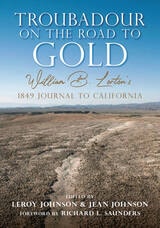
Troubadour on the Road to Gold
William B. Lorton's 1849 Journal to CaliforniaEdited by LeRoy Johnson and Jean Johnson, Foreword by Richard Saunders
University of Utah Press, 2020
Lorton’s work is revealing and entertaining. It captures glimpses of a growing Salt Lake City, the hardships of Death Valley, and the extraordinary and mundane aspects of daily life on the road to gold. With resilience and a droll sense of humor, Lorton shares accounts of life-threatening stampedes, dangerous hailstorms, mysteriously moving rocks, and slithering sidewinders. The inclusion of images, maps, and the editors’ detailed notes make this a volume that will entertain and inform.
Wax and Gold
Tradition and Innovation in Ethiopian CultureDonald N. Levine
University of Chicago Press, 1965
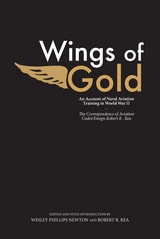
Wings of Gold
An Account of Naval Aviation Training in World War II, The Correspondence of Aviation Cadet/Ensign Robert R. ReaWesley Phillips Newton
University of Alabama Press, 1987
Millions of Americans underwent military training during World War II, and contemporary historians and readers have begun to recognize the significance and value of primary sources related not only to combat but also to training and preparedness.