Results by title
3 books match the query 'González, Roberto J.'

Anthropologists in the Public Sphere
Speaking Out on War, Peace, and American PowerEdited by Roberto J. González
University of Texas Press, 2004
Anthropologists have a long tradition of prescient diagnoses of world events. Possessing a knowledge of culture, society, and history not always shared by the media's talking heads, anthropologists have played a crucial role in educating the general reader on the public debates from World War I to the second Gulf War.
This anthology collects over fifty commentaries by noted anthropologists such as Margaret Mead, Franz Boas, and Marshall Sahlins who seek to understand and explain the profound repercussions of U.S. involvement in the Middle East, Asia, Africa, and Latin America. Frequently drawing on their own fieldwork, the anthropologists go beyond the headlines to draw connections between indigenous cultures, corporate globalization, and contemporary political and economic crises. Venues range from the op-ed pages of internationally renowned newspapers such as the New York Times and the Washington Post to magazine articles and television interviews. Special sections entitled "Prelude to September 11" and "Anthropological Interpretations of September 11" include articles that provided many Americans with their first substantial introduction to the history of Islam, Central Asia, and the Middle East. Each article includes a brief introduction contextualizing the commentary.

Militarization
A ReaderRoberto J. González, Hugh Gusterson, and Gustaaf Houtman, editors
Duke University Press, 2019
In collaboration with Catherine Besteman, Andrew Bickford, Catherine Lutz, Katherine T. McCaffrey, Austin Miller, David H. Price, David Vine
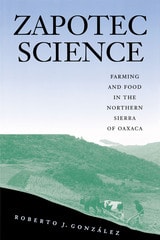
Zapotec Science
Farming and Food in the Northern Sierra of OaxacaBy Roberto J. González
University of Texas Press, 2001
2003 — Julian Steward Award – Anthropology & Environment Section, American Anthropological Association
2002 — A CHOICE Outstanding Academic Book
How Zapotec agricultural and dietary theories and practices constitute a valid local science.
Zapotec farmers in the northern sierra of Oaxaca, Mexico, are highly successful in providing their families with abundant, nutritious food in an ecologically sustainable fashion, although the premises that guide their agricultural practices would be considered erroneous by the standards of most agronomists and botanists in the United States and Europe. In this book, Roberto González convincingly argues that in fact Zapotec agricultural and dietary theories and practices constitute a valid local science, which has had a reciprocally beneficial relationship with European and United States farming and food systems since the sixteenth century.
González bases his analysis upon direct participant observation in the farms and fields of a Zapotec village. By using the ethnographic fieldwork approach, he is able to describe and analyze the rich meanings that campesino families attach to their crops, lands, and animals. González also reviews the history of maize, sugarcane, and coffee cultivation in the Zapotec region to show how campesino farmers have intelligently and scientifically adapted their farming practices to local conditions over the course of centuries. By setting his ethnographic study of the Talea de Castro community within a historical world systems perspective, he also skillfully weighs the local impact of national and global currents ranging from Spanish colonialism to the 1910 Mexican Revolution to NAFTA. At the same time, he shows how, at the turn of the twenty-first century, the sustainable practices of "traditional" subsistence agriculture are beginning to replace the failed, unsustainable techniques of modern industrial farming in some parts of the United States and Europe.