Results by title
18 books match the query 'Good and evil'
Aquinas and the Cry of Rachel
John F.X. Knasas
Catholic University of America Press, 2013
Generally speaking, possible philosophical accounts for evil are two kinds: cosmological or personal. The cosmological account has evils rebounding to the perfection of creation. The personal account would have evils suffered rebounding to the good of the sufferer. Knasas argues that for Aquinas no philosophical resolution of these two kinds of accounts
is possible. This argument is based upon Aquinas's understanding of the human as an intellector of analogical being. Such an understanding establishes two truths. First, the human is by nature only a principal part of the created whole. Second, there is the philosophically discernible possibility of supernatural elevation by the creator.
Hence, as far as philosophy can discern, evil may have a natural explanation or it may have a supernatural one. The Thomistic philosopher has no answer as to why evil exists because that philosopher discerns too many possible ones. In that respect, Aquinas's thinking on evil is similar to his thinking about the philosophical knowledge of the biblical
truth of the world's creation in time. Such a creation is one metaphysical possibility among others. Some authors that Aquinas and the Cry of Rachel considers are: Anthony Flew and Albert Camus, Jacques Maritain and Charles Journet, William Rowe, Marily McCord Adams, William Hasker, John Hick, David Ray Griffin, David Hume, Diogenes Allen, J. L. Mackie, Alvin Plantinga, Richard Swinburne, Bruce Reichenbach,
Brian Davies, and Eleonore Stump.
Cooperation with Evil
Thomistic Tools of AnalysisKevin L. Flannery, SJ
Catholic University of America Press, 2019
Courting the Abyss
Free Speech and the Liberal TraditionJohn Durham Peters
University of Chicago Press, 2005
A mesmerizing account of the role of public communication in the Anglo-American world, Courting the Abyss shows that liberty's earliest advocates recognized its fraternal relationship with wickedness and evil. While we understand freedom of expression to mean "anything goes," John Durham Peters asks why its advocates so often celebrate a sojourn in hell and the overcoming of suffering. He directs us to such well-known sources as the prose and poetry of John Milton and the political and philosophical theory of John Locke, Adam Smith, John Stuart Mill, and Oliver Wendell Holmes Jr., as well as lesser-known sources such as the theology of Paul of Tarsus. In various ways they all, he shows, envisioned an attitude of self-mastery or self-transcendence as a response to the inevitable dangers of free speech, a troubled legacy that continues to inform ruling norms about knowledge, ethical responsibility, and democracy today.
A world of gigabytes, undiminished religious passion, and relentless scientific discovery calls for a fresh account of liberty that recognizes its risk and its splendor. Instead of celebrating noxious doctrine as proof of society's robustness, Courting the Abyss invites us to rethink public communication today by looking more deeply into the unfathomable mystery of liberty and evil.

Dostoevsky, Tolstoy, and Nietzsche
Lev Shestov
Ohio University Press, 1969
In the essays brought together in this volume Shestov presents a profound and original analysis of the thought of three of the most brilliant literary figures of nineteenth-century Europe—Dostoevsky, Tolstoy, and Nietzsche—all of whom had a decisive influence on the development of his own philosophy.
According to Shestov, the greatness of these writers consists in their deep probing into the question of the meaning of life and the problems of human suffering, evil, and death. That all three of them at times abandoned their probing and lapsed into the banality of preaching does not diminish their stature but shows only that there are limits to man’s capacity for looking unflichingly at reality.
Dostoevsky, Tolstoy, and Nietzsche are united, in Shestov’s view, by their common insight into the essential tragedy of human life—a tragedy which no increase in scientific knowledge and no degree of political and social reform can significantly mitigate but which can ultimately be redeemed only by faith in the omnipotent God proclaimed by the Bible.
In all three of his subjects Shestov sees a rebellion against the tyranny of idealist systems of philosophy, as well as a recognition that the supposedly universal and necessary laws discovered by science and the moral principles for which autonomous ethics claims eternal validity do not liberate man but rather crush and destroy him. This rebellion and this recognition are often suppressed by Dostoevsky, Tolstoy, and Nietzsche, byt they break forth again and again with overwhelming power.
In this provocative discussion of the novels and stories of the two celebrated Russian writers and of the essays and aphorisms of the solitary German philosopher whose genius was finally extinguished by insanity, Shestov finds ideas and insights that other critics have overlooked or the important of which they have not adequately understood. The value of his achievement has been widely recognized. Prince Mirsky, for example, does not hesitate to say in his authorative history of Russian literature that, as far as Dostoevsky is concerned, Shestov is undoubtedly his greatest commentator.
The reader will find in these remarkable studies of the men who exercised the strongest intellectual influence on the young Shestov the beginnings of the Russian philosopher’s own lifelong polemic against idealism, scientism, and conventional morality, as well as the first gropings of the quest for faith in the Biblical God that was to become the leitmotif of all his thinking and writing in the last decades of his life.

Good and Evil Actions
A Journey through Saint Thomas AquinasSteven J. Jensen
Catholic University of America Press, 2010
Identity/Difference
Democratic Negotiations of Political ParadoxWilliam E. Connolly
University of Minnesota Press, 2002
A new edition of this classic work on the idea of difference.
In this foundational work in contemporary political theory, William Connolly makes a distinctive contribution to our understanding of the relationship between personal identity and democratic politics, particularly in the domains of religion, ethics, sexuality, and ethnicity. Every identity, Connolly argues, whether individual or social, presents us with a fundamental and troubling paradox: an identity establishes itself in relation to a set of differences, and it operates under powerful pressures to fix, regulate, or exclude some of these differences as otherness. The dignity of a people or political regime, and the quality of democratic culture, depends on the acknowledgment and ethos cultivated in response to these pressures.
In a substantial new essay, Connolly responds to the heated controversy surrounding his ideas when Identity\Difference was first published in 1991, while augmenting his discussion of the virtues of critical responsiveness. The issues of identity and difference cannot be ignored, he contends, and are ubiquitous in modern life.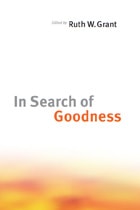
In Search of Goodness
Edited by Ruth W. Grant
University of Chicago Press, 2011
The recent spate of books and articles reflecting on the question of evil might make one forget that the question of just what constitutes goodness is no less urgent or perplexing. Everyone wants to think of him- or herself as good. But what does a good life look like? And how do people become good? Are there multiple, competing possibilities for what counts as a good life, all equally worthy? Or, is there a unified and transcendent conception of the good that should guide our judgment of the possibilities? What does a good life look like when it is guided by God? How is a good life involved with the lives of others? And, finally, how good is good enough?
These questions are the focus of In Search of Goodness, the product of a year-long conversation about goodness. The eight essays in this volume challenge the dichotomies that usually govern how goodness has been discussed in the past: altruism versus egoism; reason versus emotion; or moral choice versus moral character. Instead, the contributors seek to expand the terms of the discussion by coming at goodness from a variety of perspectives: psychological, philosophic, literary, religious, and political. In each case, they emphasize the lived realities and particulars of moral phenomena, taking up examples and illustrations from life, literature, and film. From Achilles and Billy Budd, to Oskar Schindler and Shel Silverstein’s The Giving Tree, to Iris Murdoch and the citizens of Flagstaff, Arizona, readers will find a wealth of thought-provoking insights to help them better understand this most basic, but complex, element of human life and happiness.
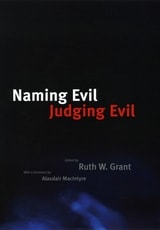
Naming Evil, Judging Evil
Edited by Ruth W. Grant
University of Chicago Press, 2006
Is it more dangerous to call something evil or not to? This fundamental question deeply divides those who fear that the term oversimplifies grave problems and those who worry that, to effectively address such issues as terrorism and genocide, we must first acknowledge them as evil. Recognizing that the way we approach this dilemma can significantly affect both the harm we suffer and the suffering we inflict, a distinguished group of contributors engages in the debate with this series of timely and original essays.
Drawing on Western conceptions of evil from the Middle Ages to the present, these pieces demonstrate that, while it may not be possible to definitively settle moral questions, we are still able—and in fact are obligated—to make moral arguments and judgments. Using a wide variety of approaches, the authors raise tough questions: Why is so much evil perpetrated in the name of good? Could evil ever be eradicated? How can liberal democratic politics help us strike a balance between the need to pass judgment and the need to remain tolerant? Their insightful answers exemplify how the sometimes rarefied worlds of political theory, philosophy, theology, and history can illuminate pressing contemporary concerns.
Philosophical Witnessing
The Holocaust as PresenceBerel Lang
Brandeis University Press, 2012
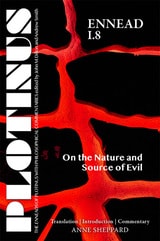
Plotinus Ennead I.8
On the Nature and Source of Evil: Translation with an Introduction and CommentaryAnne Sheppard
Parmenides Publishing, 2025
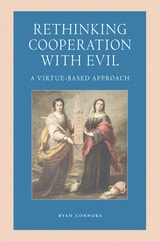
Rethinking Cooperation with Evil
A Virtue-Based ApproachRyan Connors
Catholic University of America Press, 2023
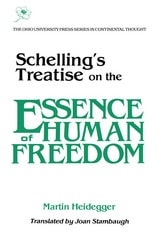
Schelling’s Treatise on the Essence of Human Freedom
On Essence Human FreedomMartin Heidegger
Ohio University Press, 1985
Heidegger’s lectures delivered at the University of Freiburg in 1936 on Schelling’s Treatise On Human Freedom came at a crucial turning point in Heidegger’s development. He had just begun his study to work out the term “Ereignis.” Heidegger’s interpretation of Schelling’s work reveals a dimension of his thinking which has never been previously published in English.
While Schelling’s philosophy is less known than that of the other major German Idealists, Fichte and Hegel, he is one of the thinker with whom Heidegger has the most affinity, making this study fruitful for an understanding of both philosophers. Heidegger’s interpretation of On Human Freedom is the most straightforward of the studies to have appeared in English on the Treatise, and is the only work that is devoted to Schelling in Heidegger’s corpus. The basic problems at stake in Schelling’s Treatise lie at the very heart of the idealist tradition: the question of the compatibility of the system and individual freedom, the questions of pantheism and the justification of evil. Schelling was the first thinker in the rationalist-idealist tradition to grapple seriously with the problem of evil.
These are the great questions of the philosophical tradition. They lead Schelling and, with him, Heidegger, to possibilities that come very close to the boundaries of the idealist tradition. For example, Schelling’s concept of the “groundless”—what reason can no longer ground and explain—points back to Jacob Boehme and indirectly forward to the direction of Heidegger’s own inquiry into “Being.” Heidegger’s reading of Schelling, especially of the topics of evil and freedom, clearly shows Schelling’s influence on Heidegger’s views.
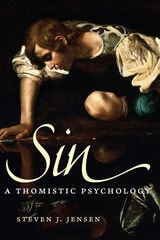
Sin
A Thomistic PsychologySteven J. Jensen
Catholic University of America Press, 2018
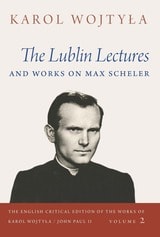
The Lublin Lectures and Works on Max Scheler
Karol Wojtyla
Catholic University of America Press, 2023
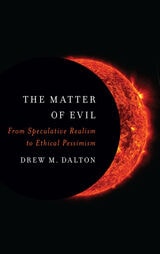
The Matter of Evil
From Speculative Realism to Ethical PessimismDrew M. Dalton
Northwestern University Press, 2024
In this radical reconsideration of ethical reasoning in contemporary European philosophy, Drew M. Dalton makes the case for an absolutely grounded account of ethical normativity developed from a scientifically informed and purely materialistic metaphysics. Expanding on speculative realist arguments, Dalton argues that the limits placed on the nature of ethical judgments by Kant’s critique can be overcome through a moral evaluation of the laws of nature—specifically, the entropic principle that undergirds the laws of physics, chemistry, and biology. In order to extract a moral meaning from this simple material fact, Dalton scrutinizes the presumptions of classical accounts and traditional understandings of good and evil within the history of Western philosophy and ultimately asserts that ethical normativity can be reestablished absolutely without reverting to dogmatism.
By overturning our assumptions about the nature and value of reality, The Matter of Evil: From Speculative Realism to Ethical Pessimism presents a provocative new model of ethical responsibility that is both logically justifiable and scientifically sound. Dalton argues for “ethical pessimism,” a position previously marginalized in the West, as a means to cultivate an account of ethical responsibility and political activism that takes seriously the unbecoming of being and the moral horror of existence.
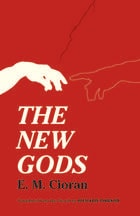
The New Gods
E. M. Cioran
University of Chicago Press, 1974
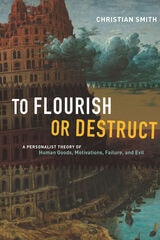
To Flourish or Destruct
A Personalist Theory of Human Goods, Motivations, Failure, and EvilChristian Smith
University of Chicago Press, 2015
In his 2010 book What Is a Person?, Christian Smith argued that sociology had for too long neglected this fundamental question. Prevailing social theories, he wrote, do not adequately “capture our deep subjective experience as persons, crucial dimensions of the richness of our own lived lives, what thinkers in previous ages might have called our ‘souls’ or ‘hearts.’” Building on Smith’s previous work, To Flourish or Destruct examines the motivations intrinsic to this subjective experience: Why do people do what they do? How can we explain the activity that gives rise to all human social life and social structures?
Smith argues that our actions stem from a motivation to realize what he calls natural human goods: ends that are, by nature, constitutionally good for all human beings. He goes on to explore the ways we can and do fail to realize these ends—a failure that can result in varying gradations of evil. Rooted in critical realism and informed by work in philosophy, psychology, and other fields, Smith’s ambitious book situates the idea of personhood at the center of our attempts to understand how we might shape good human lives and societies.
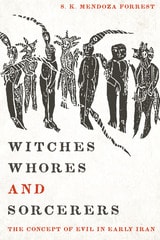
Witches, Whores, and Sorcerers
The Concept of Evil in Early IranBy S. K. Mendoza Forrest
University of Texas Press, 2011
Early Iranians believed evil had to have a source outside of God, which led to the concept of an entity as powerful and utterly evil as God is potent and good. These two forces, good and evil, which have always vied for superiority, needed helpers in this struggle. According to the Zoroastrians, every entity had to take sides, from the cosmic level to the microcosmic self.
One of the results of this battle was that certain humans were thought to side with evil. Who were these allies of that great Evil Spirit? Women were inordinately singled out. Male healers were forbidden to deal with female health disorders because of the fear of the polluting power of feminine blood. Female healers, midwives, and shamans were among those who were accused of collaborating with the Evil Spirit, because they healed women. Men who worked to prepare the dead were also suspected of secret evil. Evil even showed up as animals such as frogs, snakes, and bugs of all sorts, which scuttled to the command of their wicked masters.
This first comprehensive study of the concept of evil in early Iran uncovers details of the Iranian struggle against witchcraft, sorcery, and other "evils," beginning with their earliest texts.