Results by title
5 books match the query 'Goodness'
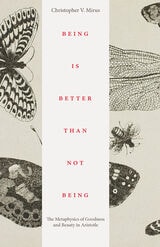
Being is Better Than Not Being
The Metaphysics of Goodness and Beauty in AristotleChristopher V. Mirus
Catholic University of America Press, 2022
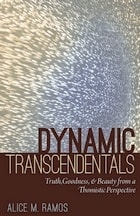
Dynamic Transcendentals
Truth, Goodness, and Beauty from a Thomistic PerspectiveAlice M. Ramos
Catholic University of America Press, 2012
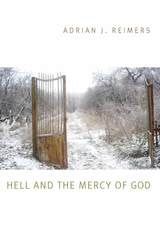
Hell and the Mercy of God
Adrian J. Reimers
Catholic University of America Press, 2017
Catholic philosopher Adrian Reimers takes on these challenges in Hell and the Mercy of God, drawing on relevant sources from Aristotle to Aquinas, from Dante to Tolkien, from Wagner to John Paul II, along with Billie Holliday, The Godfather, and the music of George Gershwin. He presents a philosophical theology, grounded in Scripture, of the nature of goodness and evil, exploring various types of pain, the seven capital sins, the resurrection of the body, the meaning of mammon, the core meaning of idolatry, the psychology of Satan and those who choose his path, and the moral responsibility of the human person.
These reflections illuminate the intelligibility of orthodox Catholic teachings on the goodness of God and the reality of hell. Hell is not an arbitrary imposition set up for human rule-breakers but a continuation of a freely chosen way of life manifest even in this world. Examples from history, art, and contemporary culture lead the author to conclude that anyone who does not believe in the reality of hell is not paying enough attention. And yet, mercy and hope remain triumphant, because, just as Christ offers entrance into paradise to the “good thief” Dismas on the cross, God continues to offer repentance and salvation to all who live.
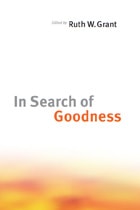
In Search of Goodness
Edited by Ruth W. Grant
University of Chicago Press, 2011
The recent spate of books and articles reflecting on the question of evil might make one forget that the question of just what constitutes goodness is no less urgent or perplexing. Everyone wants to think of him- or herself as good. But what does a good life look like? And how do people become good? Are there multiple, competing possibilities for what counts as a good life, all equally worthy? Or, is there a unified and transcendent conception of the good that should guide our judgment of the possibilities? What does a good life look like when it is guided by God? How is a good life involved with the lives of others? And, finally, how good is good enough?
These questions are the focus of In Search of Goodness, the product of a year-long conversation about goodness. The eight essays in this volume challenge the dichotomies that usually govern how goodness has been discussed in the past: altruism versus egoism; reason versus emotion; or moral choice versus moral character. Instead, the contributors seek to expand the terms of the discussion by coming at goodness from a variety of perspectives: psychological, philosophic, literary, religious, and political. In each case, they emphasize the lived realities and particulars of moral phenomena, taking up examples and illustrations from life, literature, and film. From Achilles and Billy Budd, to Oskar Schindler and Shel Silverstein’s The Giving Tree, to Iris Murdoch and the citizens of Flagstaff, Arizona, readers will find a wealth of thought-provoking insights to help them better understand this most basic, but complex, element of human life and happiness.
Plato's Critique of Impure Reason
On Goodness and Truth in the RepublicD. C. Schindler
Catholic University of America Press, 2008