Results by title
2 books match the query 'Gosiute Indians'
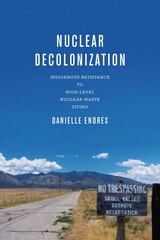
Nuclear Decolonization
Indigenous Resistance to High-Level Nuclear Waste SitingDanielle Endres
The Ohio State University Press, 2023
Honorable Mention, 2024 NCA Public Address Division’s Marie Hochmuth Nichols Award
Honorable Mention, 2025 Association for the Rhetoric of Science, Technology, and Medicine Book Award
While research demonstrates how Indigenous populations have been disproportionately affected by the global nuclear production complex, less attention has been given to tactics that have successfully resisted such projects. Danielle Endres’s Nuclear Decolonization shifts the conversation around nuclear colonialism in important ways, offering an account of how the Western Shoshone, Southern Paiute, and Skull Valley Goshute peoples and nations prevented two high-level nuclear waste sites from being built on their lands.
Using a decolonial approach, Endres highlights two sets of rhetorical tactics—Indigenous Lands rhetorics and national interest rhetorics—used to fight nuclear colonialism. The book reframes nuclear decolonization as fundamentally a struggle for the return of Indigenous lands while also revealing how Native activists selectively move between Indigenous nationhood and US citizenship in order to resist settler decision-making. Working at the intersection of Indigenous antinuclear advocacy, Indigenized environmental justice, and decolonization, Nuclear Decolonization centers Native activism and voices while amplifying the power and resilience of Indigenous peoples and nations.
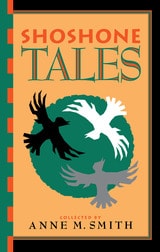
Shoshone Tales
Anne Smith
University of Utah Press, 1993
The tales in this volume are set primarily in the "Time when Animals Were People," the legendary past when animals had the power of speech and established human customs though their adventures (and misadventures). Trickster tales figure prominently, with obscenity and blunt delivery common humorous devices. These tale were prized for their educational as well as entertainment value, and storytelling ability was highly respected. Thus, Smith was careful to credit individual storytellers of their versions of favorite Basin tales, avoiding the dryness of generic anthologies.