Results by title
11 books match the query 'Gothic'

Dissecting Stephen King
From the Gothic to Literary NaturalismHeidi Strengell
University of Wisconsin Press, 2005
Ultimately, Strengell shows how King shatters our illusions of safety and control: "King places his decent and basically good characters at the mercy of indifferent forces, survival depending on their moral strength and the responsibility they may take for their fellow men."

Frankenstein, or the Modern Prometheus
The 1818 TextMary Wollstonecraft Shelley
University of Chicago Press, 1982
When Mary Shelley published Frankenstein in 1818, she created a legend that, like the monster of her story, grew far beyond anything she could ever have dreamed of, or that anyone could ever control. With one book, she founded the field of science fiction, pushed the gothic into new territory, and gave us an unforgettable character capable of being monster, man, and metaphor, a symbol simultaneously of the potential and perils of science--even of humanity itself.
The novel was originally published in three volumes in March 1818. In 1831, a different publisher issued a single-volume edition that had been heavily rewritten by an older Mary Shelley. That edition served as the standard Frankenstein for well over a century. In recent decades, however, growing awareness of the role of Shelley's husband, Percy Bysshe Shelley, in the revision process, and corresponding interest in giving readers access to the original text from Mary Shelley's hand, has led to increasing attention to the original 1818 edition.
This edition reproduces the text of the 1818 edition with the addition, clearly indicated within the book, of minor changes that Mary Shelley made by hand in 1823. It also preserves the original three-volume structure within this single book, helping readers better understand the symmetries within the story as Shelley constructed it. Explanatory notes, meanwhile, explain references and provide historical and cultural context.
The result is a new look at a lasting classic, one that has as much to say to readers today as it did when first published more than two centuries ago.
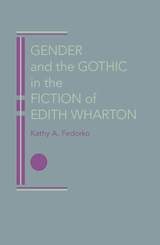
Gender and the Gothic in the Fiction of Edith Wharton
Kathy A. Fedorko
University of Alabama Press, 1995
Revealing the Gothic foundations of Edith Wharton's vision of gender and identity.
Gender and the Gothic in the Fiction of Edith Wharton is an innovative study that provides fresh insights into Wharton’s male characters while at the same time showing how Wharton’s imagining of a fe/male self evolves throughout her career. Using feminist archetypal theory and theory of the female Gothic, Kathy A. Fedorko shows how Wharton, in sixteen short stories and six major novels written during four distinct periods of her life, adopts and adapts Gothic elements to explore the nature of feminine and masculine ways of knowing and being and to dramatize the tension between them.
Edith Wharton’s contradictory views of women and men—her attitudes toward the feminine and the masculine—reflect a complicated interweaving of family and social environment, historical time, and individual psychology. Studies of Wharton have exhibited this same kind of contradiction, with some seeing her as disparaging men and the masculine and others depicting her as disparaging women and the feminine. The use of Gothic elements in her fiction provided Wharton, who was often considered the consummate realist, with a way to dramatize the conflict between feminine and masculine selves as she experienced them and to evolve an alternative to the dualism.
Fedorko’s work is unique in its careful consideration of Wharton’s sixteen Gothic works, which are seldom discussed. Further, the revelation of how these Gothic stories are reflected in her major realistic novels. In the novels with Gothic texts, Wharton draws multiple parallels between male and female protagonists, indicating the commonalities between women and men and the potential for a female self. Eventually, in her last completed novel and her last short story, Wharton imagines human beings who are comfortable with both gender selves.
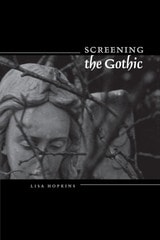
Screening the Gothic
By Lisa Hopkins
University of Texas Press, 2005
Filmmakers have long been drawn to the Gothic with its eerie settings and promise of horror lurking beneath the surface. Moreover, the Gothic allows filmmakers to hold a mirror up to their own age and reveal society's deepest fears. Franco Zeffirelli's Jane Eyre, Francis Ford Coppola's Bram Stoker's Dracula, and Kenneth Branagh's Hamlet are just a few examples of film adaptations of literary Gothic texts. In this ground-breaking study, Lisa Hopkins explores how the Gothic has been deployed in these and other contemporary films and comes to some surprising conclusions. For instance, in a brilliant chapter on films geared to children, Hopkins finds that horror resides not in the trolls, wizards, and goblins that abound in Harry Potter, but in the heart of the family.
Screening the Gothic offers a radical new way of understanding the relationship between film and the Gothic as it surveys a wide range of films, many of which have received scant critical attention. Its central claim is that, paradoxically, those texts whose affiliations with the Gothic were the clearest became the least Gothic when filmed. Thus, Hopkins surprises readers by revealing Gothic elements in films such as Sense and Sensibility and Mansfield Park, as well as exploring more obviously Gothic films like The Mummy and The Fellowship of the Ring. Written in an accessible and engaging manner, Screening the Gothic will be of interest to film lovers as well as students and scholars.
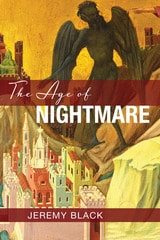
The Age of Nightmare
The Gothic and British Culture, 1750–1900Jeremy Black
St. Augustine's Press, 2022
Black's understanding of the Gothic writer is a remarkable contribution to the legacy of British literature and the novel at large. Once again, in Black thoroughness meets fidelity and the reader is overcome with his own insights into the period on the merit of Black's efforts.
In The Weight of Words Series, Black is devoted to the preservation of the memory of British literary genius, and in so doing he is carving out a niche for himself. As in the Gothic novel where landscapes give quarter to influences that seem to interact with the human fates that freely wander in, reading Black is an experience of suddenly finding oneself in possession of an education, and his allure takes a cue from the horrific Gothic tempt.
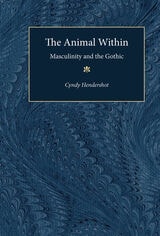
The Animal Within
Masculinity and the GothicCyndy Hendershot
University of Michigan Press, 1998
The book's keen critical insight, meticulous close readings and cross-cultural comparisons interrogate the historically situated function of masculinity in texts and films that range across the two-hundred year history of the Gothic. Matthew Lewis's The Monk is compared to Philip Kaufman's Invasion of the Body Snatchers to reveal the "hauntedness" of the male body. Hawthorne's short story "The Birthmark" is juxtaposed with J. S. Le Fanu's "Green Tea" to ground the fantastic qualities of the scientific imagination. Conrad's Heart of Darkness converses with Jean Rhys's Wide Sargasso Sea about the nature of imperialism. And Jane Campion's film The Piano is figured as an imaginative foray into new forms of masculinity. Utilizing the insights of Lacanian theory, Hendershot demonstrates how the Gothic realm of ghosts, demons, and hidden passages continues to suggest alternative realities to claustrophobic cultural imaginations.
"Masculinity and the Gothic combines solid literary critical insight and close readings in a detailed and lively survey of various manifestations of the gothic within British and American cultural traditions, and admirably explores the connections between various cultural discourses. It will make a fine complement to the numerous recent publications of issues of femininity in the gothic." --Sharon Willis, University of Rochester
Cyndy Hendershot is Assistant Professor of English, Arkansas State University.
The Centenary Edition of the Works of Nathaniel Hawthorne
VOL. II, THE HOUSE OF THE SEVEN GABLESNathaniel Hawthorne
The Ohio State University Press, 1965

The Centenary Edition of the Works of Nathaniel Hawthorne
VOL. IV, THE MARBLE FAUNNathaniel Hawthorne
The Ohio State University Press, 1969
Hawthorne's 'International Novel' dramatizes the confrontation of the Old World and the New and the uncertain relationship between the 'authentic' and the 'fake' in life as in art. The author's evocative descriptions of classic sites made The Marble Faun a favorite guidebook to Rome for Victorian tourists, but this richly ambiguous symbolic romance is also the story of a murder, and a parable of the Fall of Man. As the characters find their civilized existence disrupted by the awful consequences of impulse, Hawthorne leads his readers to question the value of Art and Culture and addresses the great evolutionary debate which was beginning to shake Victorian society.
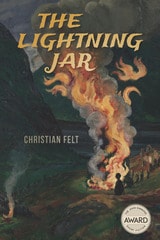
The Lightning Jar
Christian Felt
University of Iowa Press, 2018
The Lightning Jar is about lonely children. It may be more about lonely children than any other book. These children are good at making imaginary friends but have trouble keeping them. For instance, there’s the Morra, who plunges the world into eternal winter. But she also teaches Mons the meaning of love and helps him burn down his house after some Gypsies turn it into a middle school.
Then there’s the Gorbel. Amanda invented it to scare the Guest, but it ended up liking him best. A bit like a cat but more like a spider, it turned out a lot cuter than she’d intended.
And the Wisps—they’re pretty unhappy about being dead. Karl accidentally turned his smallest cousin into a Wisp. They were trying to catch some lightning in a jar, but they caught the smallest cousin’s ghost instead. Karl had to drown it for its own good. Something similar happened with his grandma Astrid and a rock named Melisande.
But the loneliest character is probably Christian. He insists on being from Jämtland, where Karl and Amanda live. When his cousin Eskild got married, Christian rewrote their past so it’s like The Little Mermaid, except Eskild drowns and Christian doesn’t earn a soul.
In the spirit of Tove Jansson, William Blake, and Calvin & Hobbes, The Lightning Jar contains a volatile mix of innocence and experience, faith and doubt, nostalgia and a sense of all there is to gain by accepting reality on fresh terms.
The Nature of Remains
Ginger Eager
New Issues Poetry and Prose, 2020
Set during the 2009 recession, The Nature of Remains rests at the intersection of class, gender, education and place. Through extended geological metaphor, readers witness the orogeny, crystallization, and weathering of the human soul. Doreen’s journey reveals the ways even a woman’s most precious connections—her children, her grandchildren, her lover—operate within larger social structures capable of challenging her sovereignty.
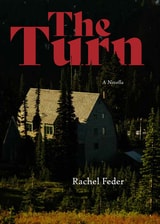
The Turn
A NovellaRachel Feder
Northwestern University Press, 2026
A contemporary gothic delving into the power of unmoored lust and familial bonds
When Baxter, a young writer and recent college graduate, accepts a live-in nanny position for an affluent professor’s family in the foothills of the Rocky Mountains, she rapidly becomes aware of strange happenings orbiting the family and their children, Quinn and Thebes. After the father becomes estranged and the mother disappears into the night with only one child, Baxter is left utterly lost and in charge of the baby, Thebes, as she struggles to make sense of the bizarre occurrences within the family, the house, and even her own body. But the unnatural occurrences are far from over, and as Baxter stumbles in the dark to protect the child, something sinister stalks the night, looking to sink in its teeth.
For fans of gothic classics such as The Turn of the Screw and Carmilla, The Turn is an eerie and magnificent modern gothic tale about the monstrous bond of love between caregiver and child.