Results by title
6 books match the query 'Governor'

A Governor and His Image in Baroque Brazil
The Funereal Eulogy of Afonso Furtado de Castro do Rio de MendoncaJuan Sierra
University of Minnesota Press, 1979
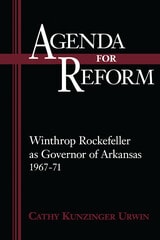
Agenda for Reform
Winthrop Rockefeller as Governor of Arkansas, 1967–71Cathy Kunzinger Urwin
University of Arkansas Press, 1991
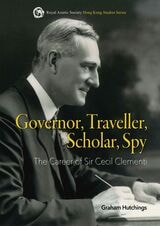
Governor, Traveller, Scholar, Spy
The Career of Sir Cecil ClementiGraham Hutchings
Hong Kong University Press, 2026
Governor, Traveller, Scholar, Spy traces the life and career of the talented colonial administrator Sir Cecil Clementi, who rose to become governor of Hong Kong and then the Straits Settlements. He governed Hong Kong at a time of revolutionary upheaval in China which brought the city to its economic knees and threatened Britain’s possession of the territory. Clementi strongly objected to London’s attempts to come to terms with Chiang Kai-shek’s Nationalist government and sought to protect Hong Kong from the intellectual currents sweeping through the mainland by making the city a bastion of traditional Chinese culture. As Governor of Straits Settlements and High Commissioner of the Federated Malay States, he championed the traditional rights of the Malay rulers and suppressed national sentiment among Malaya’s swelling Chinese population. Alarmed by his determination to press ahead with such policies despite opposition, the government in London forced Clementi into early retirement.
This is the first full-length biography of a highly gifted colonial administrator who spent half of his roughly 30-year career in Hong Kong and played a major role in the city’s history. As a young official, Clementi quickly mastered Chinese and published translations of Cantonese poetry. He undertook epic journeys across China on intelligence-gathering missions, was closely involved in the land settlement in the New Territories, and the creation of Hong Kong University. As governor, he championed the development of Kai Tak airport and the provision of Hong Kong’s water supply. He also appointed the first Chinese member of the city’s Executive Council. Yet he resisted reforms to the controversial mui-tsai system under which Chinese girls served as housemaids to Chinese families on the grounds that it was a Chinese "tradition." This study of his career, in which he was also posted to British Guiana and Ceylon, sheds light on how Britain administered the far-flung territories that formed its empire.
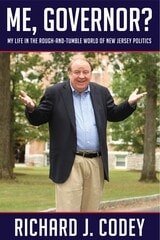
Me, Governor?
My Life in the Rough-and-Tumble World of New Jersey PoliticsRichard J. Codey
Rutgers University Press, 2011
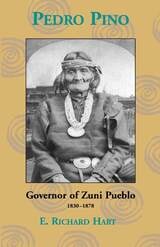
Pedro Pino
Governor of Zuni Pueblo, 1830-1878E. Richard Hart
Utah State University Press, 2003
Pedro Pino, or Lai-iu-ah-tsai-lu (his Zuni name) was for many years the most important Zuni political leader. He served during a period of tremendous change and challenges for his people. Born in 1788, captured by Navajos in his teens, he was sold into a New Mexican household, where he obtained his Spanish name. When he returned to Zuni, he spoke three languages and brought with him a wealth of knowledge regarding the world outside the pueblo. For decades he ably conducted Zuni foreign relations, defending the pueblo's sovereignty and lands, establishing trade relationships, interacting with foreigners-from prominent military and scientific expeditions to common emigrants-and documenting all in a remarkable archive. Steeped in Zuni traditions, he was known among other things for his diplomatic savvy, as a great warrior, for his oratory, and for his honesty and hospitality.
More than a biography, Richard Hart's work provides a history of Zuni during an especially significant period. Also the author of Zuni and the Courts: A Struggle for Sovereign
Land Rights and the co-author of A Zuni Atlas, Hart originally wrote the manuscript in 1979 after a decade of historical work for Zuni Pueblo. He then set it aside but continued to pursue research about and for Zuni. Its publication, at last, inscribes an important contribution to Pueblo history and biography and a testimonial to a remarkable Native American leader. In an afterword written for this publication, Hart discusses his original intentions in writing about Pedro Pino and Zuni and situates the biography in relation to current scholarship.
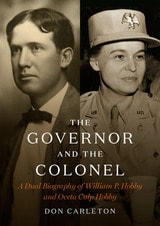
The Governor and the Colonel
A Dual Biography of William P. Hobby and Oveta Culp HobbyBy Don Carleton
University of Texas Press, 2020
William P. “Will” Hobby Sr. and Oveta Culp Hobby were one of the most influential couples in Texas history. Both were major public figures, with Will serving as governor of Texas and Oveta as the first commander of the Women’s Army Corps and later as the second woman to serve in a presidential cabinet. Together, they built a pioneering media empire centered on the Houston Post and their broadcast properties, and they played a significant role in the transformation of Houston into the fourth largest city in the United States. Don Carleton’s dual biography details their personal and professional relationship—defined by a shared dedication to public service—and the important roles they each played in local, state, and national events throughout the twentieth century.
This deeply researched book not only details this historically significant partnership, but also explores the close relationships between the Hobbys and key figures in twentieth-century history, from Texas legends such as LBJ, Sam Rayburn, and Jesse Jones, to national icons, including the Roosevelts, President Eisenhower, and the Rockefellers. Carleton's chronicle reveals the undeniable impact of the Hobbys on journalistic and political history in the United States.