Results by title
3 books match the query 'Graham, Mark'
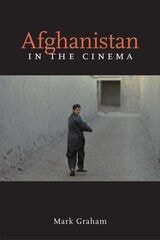
Afghanistan in the Cinema
Mark Graham
University of Illinois Press, 2010
The book considers a range of films, beginning with the 1970s epics The Man Who Would Become King and The Horsemen and following the shifts in representation of the Muslim world during the Russian War in films such as The Beast and Rambo III. Graham then moves on to Taliban-era films such as Kandahar, Osama, and Ellipsis, the first Afghan film directed by a woman. Lastly, the book discusses imperialist nostalgia in films such as Charlie Wilson's War and destabilizing visions represented in contemporary works such as The Kite Runner.
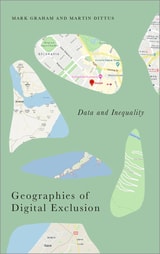
Geographies of Digital Exclusion
Data and InequalityMark Graham
Pluto Press, 2021
Today's urban environments are layered with data and algorithms that fundamentally shape how we perceive and move through space. But are our digitally dense environments continuing to amplify inequalities rather than alleviate them? This book looks at the key contours of information inequality, and who, what and where gets left out.
Platforms like Google Maps and Wikipedia have become important gateways to understanding the world, and yet they are characterized by significant gaps and biases, often driven by processes of exclusion. As a result, their digital augmentations tend to be refractions rather than reflections: they highlight only some facets of the world at the expense of others.
This doesn't mean that more equitable futures aren't possible. By outlining the mechanisms through which our digital and material worlds intersect, the authors conclude with a roadmap for what alternative digital geographies might look like.
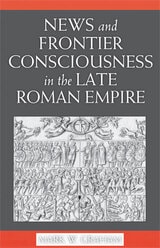
News and Frontier Consciousness in the Late Roman Empire
Mark W. Graham
University of Michigan Press, 2006
Approaching Roman frontiers with the aid of media studies as well as anthropological and sociological methodologies, Mark W. Graham chronicles and documents this significant transition in ancient thought, which coincided with, but was not necessarily dependent on, the Christianization of the Roman world.
Mark W. Graham is Assistant Professor of History at Grove City College.