Results by title
15 books match the query 'Grasses'
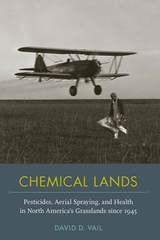
Chemical Lands
Pesticides, Aerial Spraying, and Health in North America’s Grasslands since 1945David D. Vail
University of Alabama Press, 2018
An exploration of the elaborate relationship between farmers, aerial sprayers, agriculturalists, crop pests, chemicals, and the environment.
The controversies in the 1960s and 1970s that swirled around indiscriminate use of agricultural chemicals—their long-term ecological harm versus food production benefits—were sparked and clarified by biologist Rachel Carson’s Silent Spring (1962). This seminal publication challenged long-held assumptions concerning the industrial might of American agriculture while sounding an alarm for the damaging persistence of pesticides, especially chlorinated hydrocarbons such as DDT, in the larger environment.
In Chemical Lands: Pesticides, Aerial Spraying, and Health in North America’s Grasslands since 1945 David D. Vail shows, however, that a distinctly regional view of agricultural health evolved. His analysis reveals a particularly strong ethic in the North American grasslands where practitioners sought to understand and deploy insecticides and herbicides by designing local scientific experiments, engineering more precise aircraft sprayers, developing more narrowly specific chemicals, and planting targeted test crops. Their efforts to link the science of toxicology with environmental health reveal how the practitioners of pesticides evaluated potential hazards in the agricultural landscape while recognizing the production benefits of controlled spraying.
Chemical Lands adds to a growing list of books on toxins in the American landscape. This study provides a unique Grasslands perspective of the Ag pilots, weed scientists, and farmers who struggled to navigate novel technologies for spray planes and in the development of new herbicides/insecticides while striving to manage and mitigate threats to human health and the environment.
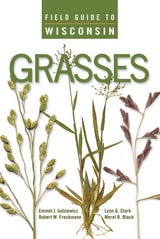
Field Guide to Wisconsin Grasses
Emmet J. Judziewicz , Robert W. Freckmann, Lynn G. Clark, Merel R. Black
University of Wisconsin Press, 2014
The book includes:
• drawings of most species
• chapters on grass morphology and grasses in natural communities
• keys to all species, including an illustrated key to genera
• a glossary of grass terminology.
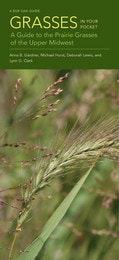
Grasses in Your Pocket
A Guide to the Prairie Grasses of the Upper MidwestAnna B. Gardner, Michael Hurst, Deborah Lewis, and Lynn G. Clark
University of Iowa Press, 2014
The authors have organized species into groups by their most easily noted field characteristics. Are the flowering heads branched or unbranched? Are the branches dense, narrow, or fingerlike? For each species, its native or exotic status is followed by the months of flowering, abundance, general habitat, height, diagnostic features, geographic range, and, if relevant, threatened or endangered status.
Even amateur naturalists can identify big and little bluestem and prairie dropseed in the field, but both professional and amateur naturalists find certain grasses harder to identify, especially the less common or rare species such as cluster fescue and sand reedgrass. The photographs and descriptions in Grasses in Your Pocket will be an invaluable reference for outdoor expeditions in midwestern grasslands.
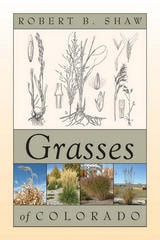
Grasses of Colorado
Robert B. Shaw
University Press of Colorado, 2008
Colorado's elevation range of more than 11,000 feet creates a wide variety of habitats that supports a spectacular diversity of grasses. With 335 known species, Colorado has one of the most diverse and extensive grass floras in the United States.
Comprehensive coverage, useful keys, and detailed species descriptions in Grasses of Colorado will make this volume the standard reference for years to come. Robert B. Shaw provides overviews of Colorado's physiography and ecoregions and introduces the grass plant in plain, enjoyable text. He includes a checklist of Colorado grasses, a bibliography, and a glossary of terms that may be unfamiliar to nonspecialists. Line drawings, state distribution maps, and habitat notes for each species enable accurate plant identification, familiarity with regional ecogeography, and increased understanding of plant ecology of the Rocky Mountains.
A monumental accomplishment certain to become the standard work on the subject, Grasses of Colorado synthesizes existing literature and incorporates recent scientific findings to offer a complete, current reference.
Grasses of Wisconsin
The Taxonomy, Ecology, and Distribution of the Gramineae Growing in the State without CultivationNorman C. Fassett
University of Wisconsin Press, 1997
Grasses of the Intermountain Region
Laurel K. Anderton and Mary E. Barkworth
Utah State University Press, 2009
Grasses of the Northeast
A Manual of the Grasses of New England and Adjacent New YorkDennis W. Magee
University of Massachusetts Press, 2014
This book is designed to serve as a reference work, classroom textbook, and field manual for botanists, naturalists, and students interested in learning to identify and learn about the distinguishing features of grasses of the northeastern United States. Included are more than 380 species of grasses that have been documented as occurring in the region. The volume contains 246 range maps and 269 line drawings that clarify descriptions used in the keys and illustrate characteristics of the various kinds of grasses. Dennis Magee also provides a description of each genus and species along with synonyms and habitats. For anyone interested in an up-to-date treatment of the grasses of greater New England, this volume will be an invaluable resource. It is the only comprehensive technical guide devoted exclusively to the grasses of this region and presents a wealth of information in a precise, clear format.
The geographic scope of the work extends from the Canadian border south through Long Island and west to the Hudson River. But given the considerable overlap with the grass flora to the adjacent north, south, and west, the book will also be useful beyond New England and the bordering New York counties.
The volume includes an illustrated glossary of essential terms and concepts and a “how to use this manual” section. A CD-ROM with a multiple-entry identification guide, and hundreds of accompanying photographic images of individual species, is provided in a sleeve inside the back cover of the book.
Grasses, Pods, Vines, Weeds
Decorating with Texas NaturalsQuentin Steitz
University of Texas Press, 1987
Purple three-awn.
Tree of heaven.
Alamo vine.
Narrowleaf cattail.
These exotic and fanciful names conjure up visions of lush foliage, colorful grasses, and dense plant life. They are, in fact, names of native and naturalized Texas plants—grasses, pods, vines, and weeds. Lovely and all-too-often overlooked in nature, they become ornamental delights when used imaginatively and decoratively.
Grasses, Pods, Vines, Weeds introduces 44 of Texas' most common and important naturals. Quentin Steitz shows how to recognize them and discover their aesthetic wealth. By taking the reader through all of the steps involved in utilizing naturals—from harvest to design—her book becomes an important tool for floral and landscape designers, decorators, horticulturalists, home gardeners, botanists: all those people who enjoy hands-on experience with Texas' vast array of native and naturalized plants.
The book presents clear and concise descriptions of many Texas naturals, accompanied by approximately 150 full-color photographs showing each in one or more stages of growth and also in a design. The reader can see the plant as it looks not only in the wild but also in an arrangement. The author offers techniques on how the species can be prepared for display, discussing drying and arranging. And a chapter on cultivation and conservation suggests to outdoor enthusiasts species they can grow for decorative natural materials as well as conserve and appreciate in the wild.
Grasses, Pods, Vines,Weeds is enhanced by flora selected, collected, prepared, and dried by the author. These hand-culled materials have been used in designs contributed by some nineteen notable floral designers as well as the author. The text and designs combine to reveal the fresh, creative applications of Texas' decorative naturals and to increase our pleasure in the wonders of natural Texas.
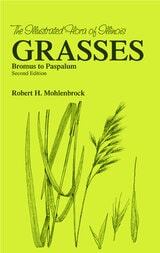
Grasses
Bromus to Paspalum, Second EditionRobert H. Mohlenbrock
Southern Illinois University Press, 2002
Since the publication of the first edition of Grasses: Bromus to Paspalumin 1972, twenty-two additional taxa of grasses have been discovered in Illinois that are properly placed in this volume. In addition, numerous nomenclatural changes have occurred for plants previously discovered, and many distributional records have been added. New keys have been prepared for each genus where additional species from Illinois are known. For new species, full-page illustrations are provided. This second edition updates the status of Illinois grasses. The book features 263 figures from the first edition plus 21 new figures for this edition by Paul W. Nelson.
Genera of grasses included in this work are Aegilops, Agropyron, Agrostis, Aira, Alopecurus, Anthoxanthum, Avena, Beckmannia, Briza, Bromus, Calamagrostis, Cinna, Dactylis, Deschampsia, Elyhordeum, Elymus, Elytrigia, Festuca, Hierochloe, Holcus, Hordeum, Koeleria, Lolium, Milium, Paspalum, Pennisetum, Phalaris, Phleum, Poa, Puccinellia, Sclerochloa, Secale, Sphenopholis, Torreyochloa, Triticum, and Vulpia.
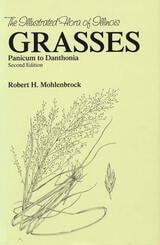
Grasses
Panicum to Danthonia, Second EditionRobert H. Mohlenbrock
Southern Illinois University Press, 2001
Since the publication of the first edition of Grasses: Panicum to Danthonia in 1973, twenty additional taxa of grasses have been discovered in Illinois that are properly placed in this volume. In addition, numerous nomenclatural changes have occurred for plants already known from the state, and many distributional records have been added. This second edition updates the status of grasses in Illinois. Paul W. Nelson has provided illustrations for all of the additions.
Because the nature of grass structures is generally so different from that of other flowering plants, a special terminology is applied to them. In his introduction, Robert H. Mohlenbrock cites these terms, with descriptions that make the identification of unknown specimens possible. Mohlenbrock’s division of the grass family into subfamilies and tribes is a major departure from the sequence usually found in most floristic works in North America.
Synonyms that have been applied to species in the northeastern United States are given under each species. A description based primarily on Illinois material covers the more important features of the species. The common names—Paflic Grass, Billion Dollar Grass or Japanese Millett, Thread Love Grass, and Goose Grass—are the ones used locally in the state. The habitat designation and dot maps showing county distribution of each grass are provided only for grasses in Illinois, but the overall range for each species is also given.

How to Identify Grasses and Grasslike Plants
Sedges and RushesH. D. Harrington
Ohio University Press, 1977
There is no easy way to identify grasses. And no one understands this better than H.D. Harrington, who observed thousands of students struggle and learn. His clear, concise, and well-organized guide will continue to be a basic and essential text for use in the classroom or in the field. The book contains over 500 drawings and an illustrated glossary.
Identification Guide to Grasses and Bamboos in Madagascar
Maria Vorontsova
Royal Botanic Gardens, Kew, 2018
Manual of Grasses for North America
Mary E. Barkworth, Laurel K. Anderton Kathleen M. Capels, Sandy Long, and Michael B. Piep
Utah State University Press, 2007
The Manual of Grasses for North America is designed as a successor to the classic volume by Hitchcock and Chase. It reflects current taxonomic thought and includes keys, illustrations, and distribution maps for the nearly 900 native and 400 introduced species that have been found in North America north of Mexico. In addition, it presents keys and illustrations for several species that are known only in cultivation or are of major agricultural significance, either as progenitors of bread wheat and corn or as a major threat to North American agriculture because of their ability to hybridize with crop species. The Manual is a major reference work for grasses that will retain its value for many years.
The Grasses of Missouri, Revised Edition
Clair L. Kucera
University of Missouri Press, 1998
Missouri's diverse landscapes, geology, and climate have endowed the state with a rich and varied grass flora. From tallgrass prairies to forested Ozarks to Mississippi lowlands, the state offers an array of grasses that can be classified into six subfamilies of the Poaceae, eighteen tribes, and eighty-seven genera.
Significant changes have been made in grass classification since the first edition of The Grasses of Missouri was published in 1961, resulting in an increased emphasis on phyletic criteria. Recognizing the recent advances in classification and changes in nomenclature, as well as new additions to the flora, this newly revised edition serves as a compilation of the native and naturalized species and subspecific taxa found in Missouri.
Formerly divided into two subfamilies, the Festucoideae and Panicoideae, the state's grass flora is now represented by six subfamilies. While the Panicoideae have remained intact, the traditional Festucoideae are now separated into smaller, more cohesive groupings. Further revisions have resulted in eighteen tribes compared to the twelve identified in the first edition.
Covering more than 275 species and subspecific entities, The Grasses of Missouri is an essential research tool for identifying grasses, complete with working keys, descriptions, line drawings, distributions, a glossary, and a bibliography. The professional and lay person alike will benefit from this indispensable manual.
The Tallgrass Prairie Center Guide to Seed and Seedling Identification in the Upper Midwest
Dave Williams
University of Iowa Press, 2010
Settlers crossing the tallgrass prairie in the early 1800s were greeted by a seemingly endless landscape of wildflowers and grasses, one of the most diverse ecosystems on our planet. Today, although the tallgrass prairie has been reduced to a tiny percentage of its former expanse, people are working to restore and reconstruct prairie communities. This lavishly illustrated guide to seeds and seedlings, crafted by Tallgrass Prairie Center botanist Dave Williams and illustrator Brent Butler, will insure that everyone from urban gardeners to grassland managers can properly identify and germinate seventy-two species of tallgrass wildflowers and grasses in eastern North Dakota, eastern South Dakota, southwestern Minnesota, southwestern Wisconsin, northern Illinois, northwestern Indiana, Iowa, eastern Nebraska, eastern Kansas, northwestern Missouri, and eastern Oklahoma.
Williams has created a brilliant, nearly foolproof system of identification and verification. Two primary keys lead to eleven secondary keys that link to characteristic groups of tallgrass plants: seven groups for wildflowers and four groups for grasses. To identify a seedling, use the primary key to discover its place in the secondary key, then turn to that characteristic group to find your seedling. Circles on each full seedling photograph correspond to close-up photographs; triangles on these close-ups illustrate information in the text to further pinpoint identification. Drawings of leaves illuminate exact identification, and enlarged photographs of each seed provide yet another way to confirm identification.
Thousands of seeds were sprouted in the Tallgrass Prairie Center’s greenhouse to provide seedlings close in size and development to those grown in the field near the end of their first season; research and photography took place over four years. Williams’s text for each species includes a thorough description, a comparison of similar species, and guidance for germination and growth. A complete glossary supports the text, which is concise but detailed enough to be accessible to beginning prairie enthusiasts.
Anyone in the Upper Midwest who wishes to preserve the native vegetation of prairie remnants or reconstruct a tallgrass prairie of whatever size—from home gardens to schoolyards to roadsides to large acreages—will benefit from the hundreds of photographs and drawings and the precise text in this meticulously prepared guide.