Results by title
6 books match the query 'Gray'
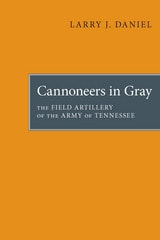
Cannoneers in Gray
The Field Artillery of the Army of TennesseeLarry J. Daniel
University of Alabama Press, 1989
This enlarged edition of Cannoneers in Gray provides new detail concerning the activities of artillery units operating in key campaigns of the western theater of the Civil War—at Stones River, Missionary Ridge, Kennesaw Mountain, Shiloh, Peachtree Creek. Larry Daniel traces the four-year history of the artillery branch of the Army of Tennessee from its organization through its demise at the war's end. He shows that Civil War cannons were of little consequence when used as offensive weapons but could be highly effective in defense.
Includes five new maps of campaigns and battles central to his discussion of larger issues, such as command and strategy on the western front.
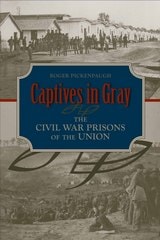
Captives in Gray
The Civil War Prisons of the UnionRoger Pickenpaugh
University of Alabama Press, 2009
“This is a vivid description of conditions and events rarely described: the imprisonment of captured Confederate soldiers during the Civil War. Its many parallels to circumstances in Andersonville are especially intriguing.” —Jimmy Carter, 39th President of the United States
Contains contemporary reports from prisoners and witnesses humanize the grim realities of the POW camps.
Captives in Gray is Civil War prison camp authority Roger Pickenpaugh’s acclaimed and definitive account of the Union’s POW camps. Combining his own extensive research into official records and a rich variety of letters and diaries with the best contemporary scholarship, Pickenpaugh covers every major northern camp.
Because the Union won few victories in 1861 and took few prisoners, the North had time to plan and build prison camps, an opportunity it largely squandered. Pickenpaugh gives illuminating accounts of the role and leadership of thrifty Lieutenant Colonel William Hoffman, the commissary general of prisoners for most of the conflict, and President Abraham Lincoln's secretaries of war, the incompetent Simon Cameron and the malignant Edwin M. Stanton.
Death came in many ways. Soldiers from the Deep South had no experience with extreme cold, and they died by the hundreds each winter. In one memorable freeze, Rock Island, Illinois, saw temperatures between twenty-eight and thirty-one degrees below zero. With insufficient fuel and inadequate shelter, clothing, and blankets, prisoners there and in other camps froze to death. Food rations varied widely. A few Confederates enjoyed better rations than they had in the CSA armies, but the majority supplemented their meager rations by eating rats, dogs, cats, and seagulls.
Poor medical care added to the death toll. Treatment was bad even by the standards of Civil War medicine, often due to Hoffman's reluctance to spend. Prisoners suffered from lice and scurvy, as well as pneumonia, measles, and a variety of fevers. As in both armies, diarrhea and dysentery were chronic. Smallpox epidemics killed many. Poor sanitation and drainage caused 385 deaths at Elmira, New York, in September 1864 alone.
During the war, over 12 percent of rebel prisoners, or 25,976 of the 214,865, died in captivity. Together with his Captives in Blue, Captives in Gray gives the fullest account of the experiences of prisoners of war in the American Civil War.
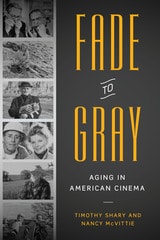
Fade to Gray
Aging in American CinemaTimothy Shary and Nancy McVittie
University of Texas Press, 2016
Winner, Choice Outstanding Academic Title, 2017
Americans are living longer and reinventing both work and retirement, but Hollywood movies barely hint at this reality of contemporary society. In many popular films, older characters fade into irrelevance, inactivity, or absurdity, or else they stay in the background as wise elders while younger characters provide the action. Most American films do not attempt to portray the rich variety of experiences or the sensitive aging issues that people confront in the years beyond fifty.
Fade to Gray offers one of the first extended studies of the portrayal of older people in American cinema from the silent era to the present. Writing in an accessible style for both general audiences and scholars, Timothy Shary and Nancy McVittie examine social attitudes toward aging through an analysis of hundreds of individual films, including such classics as You Can’t Take It With You (1938), Rosemary’s Baby (1968), Grumpy Old Men (1993), and Nebraska (2013). They show how representations of the aging process and depictions of older people embracing or enduring the various experiences of longer lives have evolved over the past century, as well as how film industry practices have both reflected and influenced perceptions of aging in American society. Exposing the social and political motivations for negative cinematic portrayals of the elderly, Fade to Gray also gives visibility to films that provide opportunities for better understanding and appreciation of the aged and the aging process.
How We See the Gray
A NovelRachel León
Northwestern University Press, 2026
A riveting story about parenthood, substance abuse, and the strength it takes to come back from our mistakes
Foster care is a disaster in Rockford, Illinois. Meredith, a social worker and single mom, is stretched beyond thin but determined to protect her kids: not only her son, but those on her caseload too. When the stress of the job has her breaking her sobriety, the foundations of her life begin to tremble. After drinking too much, she makes a mistake that puts her preschooler in jeopardy, and Meredith finds herself in a situation that mirrors her clients’ as she loses custody of her son. In her fight to get him back, Meredith experiences the system from the outside—while still working for the kids inside of it. Set over the course of a year, this riveting documentary-esque novel is told from multiple perspectives, including those of case workers, birth parents, foster parents, and foster children. Written with the working-class humor and heart that defines the Midwest, How We See the Gray is a story about mistakes, second chances, and trying to do better in a system that seems doomed to fail.
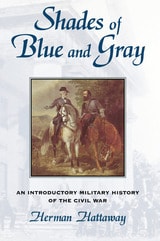
Shades of Blue and Gray
An Introductory Military History of the Civil WarHerman Hattaway
University of Missouri Press, 1997
An introductory military history of the American Civil War, Shades of Blue and Gray places the 1861-1865 conflict within the broad context of evolving warfare. Emphasizing technology and its significant impact, Hattaway includes valuable material on land and sea mines, minesweepers, hand grenades, automatic weapons, the Confederate submarine, and balloons. The evolution of professionalism in the American military serves as an important connective theme throughout. Hattaway extrapolates from recent works by revisionists William Skelton and Roy Roberts to illustrate convincingly that the development of military professionalism is not entirely a post-Civil War phenomenon.
The author also incorporates into his work important new findings of recent scholars such as Albert Castel (on the Atlanta Campaign), Reid Mitchell (on soldiers' motivation), Mark Grimsley (on "hard war"), Brooks D. Simpson (on Ulysses S. Grant), and Lauren Cook Burgess (on women who served as soldiers, disguised as men). In addition, Hattaway comments on some of the best fiction and nonfiction available in his recommended reading lists, which will both enlighten and motivate readers.
Informative and clearly written, enhanced by graceful prose and colorful anecdotes, Shades of Blue and Gray will appeal to all general readers.
Song of Gray
Asha Futterman
University Press of Colorado, 2025
These poems build new logic systems. Futterman stands at her grandmother’s grave and proclaims, “how powerful how dense and naked how inaccurate.” With quiet, deadpan, and piercing language, Song of Gray offers earnest, felt relationships to race, empathy, pleasure, and nonsense.
“There wasn’t a sunrise / just gray / then brighter gray.” In Song of Gray, blackness is not definite—it is an ambivalent hole as much as an area of hope. Blackness is a song of gray