Results by title
20 books match the query 'Great'
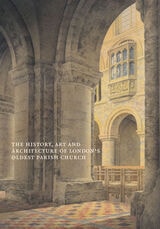
900 Years of St Bartholomew the Great
The History, Art and Architecture of London's Oldest Parish ChurchEdited by Charlotte Gauthier
Paul Holberton Publishing, 2022
The most comprehensive, updated history of St. Bartholomew the Great, the oldest parish church in London, as it celebrates its nine-hundred-year anniversary.
At the heart of the Smithfield area, with its pubs, restaurants, and market, is a church built when Henry I was King of England. Overlooking the fields where kings confronted rebellions, knights jousted, and heretics were burnt, St. Bartholomew’s Priory and Hospital played a central role in the history of medieval London.
The tale of St. Bartholomew’s is one of survival and renewal. Not only has the priory hosted many of London’s most famous (such as a young Benjamin Franklin), but it has also miraculously survived the tumults of the Reformation, the Civil War, the Great Fire of 1666, and the bomb raids of World Wars I and II.
Richly illustrated, 900 Years of St Bartholomew’s surveys the art, architecture, and deep historical significance of this enduring landmark.
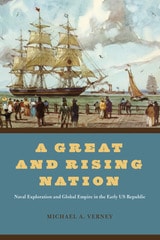
A Great and Rising Nation
Naval Exploration and Global Empire in the Early US RepublicMichael A. Verney
University of Chicago Press, 2022
Conventional wisdom holds that, until the Spanish-American War of 1898, the United States was a feeble player on the world stage, with an international presence rooted in commerce rather than military might. Michael A. Verney’s A Great and Rising Nation flips this notion on its head, arguing that early US naval expeditions, often characterized as merely scientific, were in fact deeply imperialist. Circling the globe from the Mediterranean to South America and the Arctic, these voyages reflected the diverse imperial aspirations of the new republic, including commercial dominance in the Pacific World, religious empire in the Holy Land, proslavery expansion in South America, and diplomatic prestige in Europe. As Verney makes clear, the United States had global imperial aspirations far earlier than is commonly thought.
A Great and Rising Nation
Naval Exploration and Global Empire in the Early US RepublicMichael A. Verney
University of Chicago Press, 2022
A Great and Rising Nation illuminates the unexplored early decades of the United States’ imperialist naval aspirations.
Conventional wisdom holds that, until the Spanish-American War of 1898, the United States was a feeble player on the world stage, with an international presence rooted in commerce rather than military might. Michael A. Verney’s A Great and Rising Nation flips this notion on its head, arguing that early US naval expeditions, often characterized as merely scientific, were in fact deeply imperialist. Circling the globe from the Mediterranean to South America and the Arctic, these voyages reflected the diverse imperial aspirations of the new republic, including commercial dominance in the Pacific World, religious empire in the Holy Land, proslavery expansion in South America, and diplomatic prestige in Europe. As Verney makes clear, the United States had global imperial aspirations far earlier than is commonly thought.
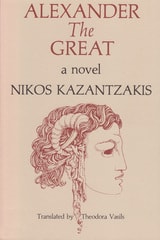
Alexander The Great
A NovelNikos Kazantzakis
Ohio University Press, 1982
Nikos Kazantzakis is no stranger to the heroes of Greek antiquity. In this historical novel based on the life of Alexander the Great, Kazantzakis has drawn on both the rich tradition of Greek legend and the documented manuscripts from the archives of history to recreate an Alexander in all his many-faceted images—Alexander the god; Alexander the descendant of Heracles performing the twelve labors; Alexander the mystic, the daring visionary destined to carry out a divine mission; Alexander the flesh-and-blood mortal who, on occasion, is not above the common soldier’s brawling and drinking.
The novel, which resists the temptation to portray Alexander in the mantle of purely romantic legend, covers his life from age fifteen to his death at age thirty-two. It opens with Alexander’s first exploit, the taming of the horse, Bucephalas, and is seen in great part through the eyes of his young neighbor who eventually becomes an officer in his army and follows him on his campaign to conquer the world.
The book, which was written primarily as an educational adjunct for young readers, is intended for the adult mind as well, and like the legends of old, is entertaining as well as instructive for readers of all ages. It was originally published in Greece in serial form in 1940, and was republished in a complete volume in 1979.
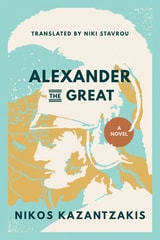
Alexander the Great
A NovelNikos Kazantzakis
Ohio University Press, 2025
Newly translated, this classic novel is sure to delight readers of all ages as it explores the legendary conqueror’s life, ambitions, and humanity.
Nikos Kazantzakis’s Alexander the Great is a biographical novel about one of antiquity’s greatest political and military leaders. In Kazantzakis’s story, Alexander of Macedonia does not conquer for conquest’s sake; instead, he seeks to spread the light of Hellenism to the known world, unite humanity through Greek ideals and culture, and bring together East and West.
The story begins in Pella, the lavish capital of Macedonia, in the fourth century BCE. A teenager named Stefanos rushes to the royal stadium for a remarkable event that has drawn every male citizen of this capital city: the taming of a wild and uniquely powerful horse named Bucephalus. Relying on raw strength and force, even seasoned generals fail to subdue Bucephalus; but through skill, kindness, and insight, the fifteen-year-old Alexander is able to befriend the beast. Alexander’s symbolic taming of chaos foretells his rise to power and demonstrates the qualities he will carry with him throughout his lifelong campaign of conquest.
Through the eyes of Stefanos, who becomes Alexander’s personal attendant and most trusted companion, Kazantzakis follows the Macedonian army through triumphant campaigns across Persia, Egypt, and India, greatly expanding the boundaries of the ancient Hellenic world. Kazantzakis presents Alexander not only as an ingenious military strategist but also as a reflective human being. Alexander oscillates between the human and the divine but will ultimately be betrayed by the former. Kazantzakis narrates Alexander’s struggles and conquests all the way to Babylon, where he meets his untimely death at just thirty-three years of age.
This iconic novel also explores Alexander’s profound relationship with his mentor, Aristotle, who instills in him a lifelong thirst for knowledge. Alexander the Great offers a compelling blend of history, myth, and philosophy and will appeal to readers fascinated by ancient Greece, epic heroes, and humanity’s timeless quest for the meaning of life.
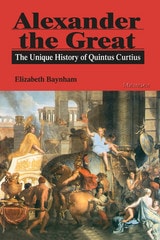
Alexander the Great
The Unique History of Quintus CurtiusElizabeth Baynham
University of Michigan Press, 2004
The reign and personality of Alexander the Great---one of the most romantic and powerful kings in history---have remained a source of fascination from antiquity to the present. But because the ancient information surrounding the conqueror is rich, contradictory, and complex, every historian of this near-mythical ruler-whether ancient or modern-invariably creates his or her own Alexander.
The unique work of one such ancient historian, Quintus Curtius, is the subject of Elizabeth Baynham's book. She mines Curtius' study of power for his contemporary perspective, historical methodology, and his portrait of the famous king and presents us with a brilliant, multifaceted study of this unique account regarding one of the most fascinating rulers in history.
Alfred the Great
The King and His EnglandEleanor Shipley Duckett
University of Chicago Press, 1958
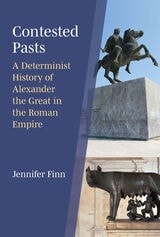
Contested Pasts
A Determinist History of Alexander the Great in the Roman EmpireJennifer Finn
University of Michigan Press, 2022
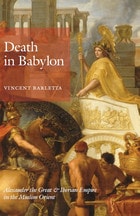
Death in Babylon
Alexander the Great and Iberian Empire in the Muslim OrientVincent Barletta
University of Chicago Press, 2010
Though Alexander the Great lived more than seventeen centuries before the onset of Iberian expansion into Muslim Africa and Asia, he loomed large in the literature of late medieval and early modern Portugal and Spain. Exploring little-studied chronicles, chivalric romances, novels, travelogues, and crypto-Muslim texts, Vincent Barletta shows that the story of Alexander not only sowed the seeds of Iberian empire but foreshadowed the decline of Portuguese and Spanish influence in the centuries to come.
Death in Babylon depicts Alexander as a complex symbol of Western domination, immortality, dissolution, heroism, villainy, and death. But Barletta also shows that texts ostensibly celebrating the conqueror were haunted by failure. Examining literary and historical works in Aljamiado, Castilian, Catalan, Greek, Latin, and Portuguese, Death in Babylon develops a view of empire and modernity informed by the ethical metaphysics of French phenomenologist Emmanuel Levinas. A novel contribution to the literature of empire building, Death in Babylon provides a frame for the deep mortal anxiety that has infused and given shape to the spread of imperial Europe from its very beginning.
Readings in Russian Civilization Volume I
Russia before Peter the Great, 900-1700Edited by Thomas Riha
University of Chicago Press, 1969
"The bibliographical headnotes have been enlarged, with the result that there are now approximately twice as many entries as in the old edition. New citations include not only works which have appeared since 1963, but also older books and articles which have come to the editor's attention."—From the Editor's Preface
". . . a judicious combination of seminal works and more recent commentaries that achieves the editor's purpose of stimulating curiosity and developing a point of view."—C. Bickford O'Brien, The Russian Review
"These three volumes cover quite well the main periods of Russian civilization. The choice of the articles and other material is made by a competent and unbiased scholar."—Ivan A. Lopatin, Professor of Asian and Slavic Studies, University of Southern California
Reclaiming Moral Agency
The Moral Philosophy of Albert the GreatStanley B. Cunningham
Catholic University of America Press, 2008
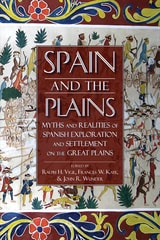
Spain and the Plains
Myths and Realities of Spanish Exploration and Settlement on the Great PlainsRalph H. Vigil
University Press of Colorado, 2007
Spain and the Plains introduces and documents Spanish exploration of and migration to the Plains, examines the myths that shaped Spanish exploration and the pragmatic realities of exploration and settlement, and documents racism and misrepresentation that Hispanic groups encountered in the nineteenth and twentieth centuries. Contributors show how early explorers, shaped by the intellectual context of the Renaissance, sought mythical locales: the fountain of youth, the straits of Anian, and the city of Quivira. They describe how exploration shifted to emphasize military and economic gains in the eighteenth and nineteenth centuries. Essays portray the diaspora of Spanish settlers and reconstruct daily life in their settlements on the Plains.
This unique collection paints a clear picture of a crucial but often misrepresented and neglected era in American and Spanish history.
The editors, all authors of previous books, are affiliated with the Center for Great Plains Studies at the University of Nebraska-Lincoln, where Frances W. Kaye is a professor of English, John R. Wunder is a professor of history and journalism, and Ralph H. Vigil is a professor emeritus of history and ethnic studies. Contributors include Félix D. Almaráz Jr., Thomas E. Chávez, Frances W. Kaye, Russell M. Magnaghi, Ralph H. Vigil, Waldo R. Wedel, and John R. Wunder.
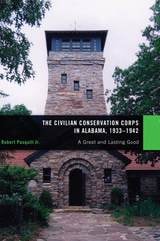
The Civilian Conservation Corps in Alabama, 1933–1942
A Great and Lasting GoodRobert Pasquill Jr.
University of Alabama Press, 2008
The Civilian Conservation Corps was one of the better known and most successful of the New Deal programs following the Great Depression. The causes of the Great Depression have been addressed and debated from a variety of perspectives through the years. However, the effects explained in terms of human suffering leave little room for debate. By March of 1933, there were more than 13.6 million unemployed, and more than 200,000 of them were wandering the country looking for work. Homes and families were fractured. President Roosevelt proposed to put 500,000 unemployed men from cities and towns into the woods to plant trees, reduce fire hazards, clear streams, check erosion, and improve the park system all across America. With unprecedented speed, national legislation was written, passed, and funded, creating a myriad of programs—referred to as alphabet projects—in hopes of generating useful work and necessary paychecks and creating a “great and lasting good” for the American public.
CCC projects in Alabama would initially employ 20,000 men with projects in all 13 state forests and seven state parks. This volume traces in great detail the work projects, the camp living conditions, the daily lives of the enrollees, the administration and management challenges, and the lasting effects of this Neal Deal program in Alabama. Through archives, government documents, and more than 125 interviews with former enrollees of the CCC, Pasquill has recounted the CCC program in Alabama and brought this humanitarian program to life in the Alabama countryside. It was a truly monumental win-win situation emerging from a national and international economic tragedy.
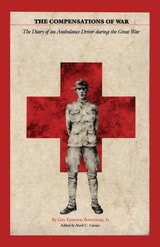
The Compensations of War
The Diary of an Ambulance Driver during the Great WarBy Guy Emerson Bowerman
University of Texas Press, 1983
In 1917, shortly after the United States’ declaration of war on Germany, Guy Emerson Bowerman, Jr., enlisted in the American army’s ambulance service. Like other young ambulance drivers—Hemingway, Dos Passos, Cummings, Cowley—Bowerman longed to “see the show.” He was glad to learn that the ambulance units were leaving for France right away.
For seventeen months, until the armistice of November 1918, Bowerman kept an almost daily diary of the war. To read his words today is to live the war with an immediacy and vividness of detail that is astonishing.
Only twenty when he enlisted, Bowerman was an idealistic, if snobbish, young man who exulted that his section was made up mostly of young “Yalies” like himself. But he expected the war to change him, and it did. In the end he writes that he and his compatriots scarcely remember a world at peace. "The old life was gone forever. . ."
Guy Bowerman’s unit was attached to a French infantry division stationed near Verdun. Sent to halt the German drive to Paris in 1918, the division participated in the decisive counterattack of July and tracked the routed Germans through Belgium. Then, “unwarned,” Bowerman and his comrades were “plunged into … a life of peace.” Into this life, he writes, they walked “bewildered,” like “men fearing ambush.”
This remarkable chronicle of one young man’s rite of passage is destined to become a classic in the literature of the Great War.
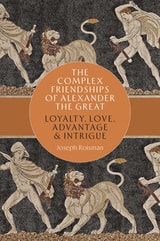
The Complex Friendships of Alexander the Great
Loyalty, Love, Advantage, and IntrigueJoseph Roisman
University of Texas Press, 2026
A first-of-its-kind study of Alexander the Great that examines the diverse manifestations and pivotal role of friendship in his campaigns, decisions, and enduring legacy.
Modern scholarship has illuminated nearly every aspect of Alexander the Great’s life and campaigns––but Joseph Roisman turns to a dimension of Alexander’s world that has yet to receive sustained analysis: the structure and function of friendship in the king’s regime. In this first-of-its-kind study, The Complex Friendships of Alexander the Great explores the central role friendship played in Alexander’s social, political, and cultural world. Moving beyond utilitarian perspectives, Roisman shows that friendship with the king involved affective, noninstrumental bonds that shaped his decisions, successes, and failures.
Using Aristotle’s philosophy of friendship as a starting point, Roisman examines the making, breaking, and remaking of bonds with Macedonian companions, including his closest allies, as well as with foreigners encountered during his campaigns. The book concludes with the first comprehensive list of Alexander’s friends drawn from ancient sources. Combining meticulous scholarship with new interpretive insight, this study reevaluates how we understand Alexander the Great’s leadership, social networks, and legacy.

The Future of Humanity (Third edition)
From Global Civilization to Great CivilizationZhouying Jin
Intellect Books, 2026
This study, now in its third edition and with an expanded chapter, explores the future trajectories of industrial civilization—and of futures studies itself.
From the perspective of sublating Eastern and Western cultures and civilizations, this book argues for the urgency of industrial civilization's transformation. Zhouying Jin explores the future trajectories of humanity, the world, and human civilization; puts forward for the first time the concepts of “global civilization” and “great civilization” as two forms of advanced future civilizations for humanity, elucidating their core significance and practical approaches; and advocates for integrating the values of global civilization into the practice of sustainable development.
This revised edition of Future of Humanity includes a substantially expanded chapter that addresses seven major contemporary topics in artificial intelligence, including setting red lines for AI development as well as the advantages and misconceptions of AI in education. A new appendix outlines major trends and methodologies in futures studies, bringing together contributions from one hundred thinkers, futurists, and thirty-five pioneering institutions.
The Future of Humanity
From Global Civilization to Great CivilizationZhouying Jin
Intellect Books, 2022
This book seeks to underscore the importance of dealing with our planet’s common crises—climate change, species extinction, land and food shortages, water pollution, and many more global catastrophes. In the face of these calamities, this book calls for the transformation of human development model and civilization paradigm: Promote the transformation from industrial civilization to global Civilization and then strive to realize the great civilization.
The far-reaching effects of the COVID-19 pandemic have gone beyond the fields of health, deeply impacting economic, social, and geopolitical affairs worldwide. The still-unfolding health crisis has forced many to rethink the axioms of what they know as “civilization.” In this book, Zhouying Jin contends that if the human beings who share the earth cannot guide the direction of technological innovation to create a more advanced human civilization, then they are doomed to move toward self-destruction. The Future of Humanity calls on human beings to prepare for the future by altering their destructive relationship with nature and abandoning people-centered thinking to promote an awakening of all mankind.
The Good, the Great, and the Unfriendly
A Librarian's Guide to Working with Friends GroupsSally Gardner Reed
American Library Association, 2017
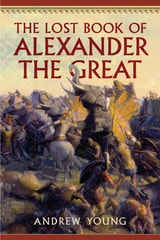
The Lost Book of Alexander the Great
Andrew Young
Westholme Publishing, 2022
Alexander the Great is well known as one of the first great empire builders of the ancient world. Among those fellow Macedonian officers who accompanied Alexander in his epic conquests from Greece to India was Ptolemy Lagides. Ptolemy served alongside Alexander from the Persian defeat at the Battle of Issus in modern-day Turkey and the journey to find the oracle that proclaimed Alexander to be Zeus incarnate, to the Battle of the Hydaspes River in 326 BC that opened India to the West. Following Alexander’s death, Ptolemy gained control of Egypt where he founded the dynasty in his name, created the great library of Alexandria, and was patron of the mathematician Euclid. Sometime during his rule in Egypt, Ptolemy wrote a history of Alexander’s conquests. Although it is probable that Ptolemy enhanced his own importance, sources indicate that it was regarded as an accurate and even-handed account of the campaigns of Alexander. However, Ptolemy’s book was lost—perhaps with the destruction of the library he founded—and not even an original fragment has survived. His book, however, was acknowledged as a primary source of information for later Roman historians.
In The Lost Book of Alexander the Great, Andrew Young explores the world of ancient writings about the Macedonian leader in order to determine whether any of Ptolemy’s writings can be recovered. Inspired by Stephen Greenblatt’s distinguished biography of Shakespeare, Will in the World, and written for the general reader, the author uses literary forensics to suggest which parts of later books about Alexander the Great, most notably the account by Arrian of Nicomedia, might be the words of Ptolemy. In addition to separating later Roman sensibilities from the original Greek of Ptolemy, the author re-creates the famous library of Alexandria, and takes the reader along on Alexander’s conquests as closely as we can to how Ptolemy may have recounted them.
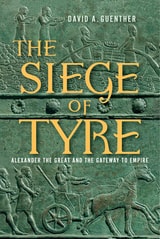
The Siege of Tyre
Alexander the Great and the Gateway to EmpireDavid A. Guenther
Westholme Publishing, 2024
The Siege of Tyre: Alexander the Great and the Gateway to Empire by David A. Guenther is the first book-length treatment of this critical and fascinating campaign, featuring catapults, triremes, religious invocations, close combat, and marvels of engineering, including a massive manmade causeway from the mainland to the island. The siege is thoroughly analyzed from the standpoint of what is plausible given the nature of the technology of the time and what we now know of the geology and physical fortifications of ancient Tyre. The book begins with the background leading up to the siege: Alexander’s army, his invasion of Asia Minor, the sieges of Miletus and Halicarnassus, and the battles of the Granicus and Issus. It also describes the culture, people, cities, and economy of ancient Phoenicia to place the story of the siege in a broader context. Critical to the siege were the evolving technologies in the ancient Mediterranean world, including innovations in catapult design, military engineering, and naval architecture. Guenther also takes into account recent scientific discoveries about the geology of the ancient seabed around Tyre and its effect on the siege. Finally, the book points out possible gender-biased views on topics such as sacred temple prostitution among the ancient Phoenicians and the fate of women in besieged cities of the ancient world. An engrossing blend of ancient wonder and historical and technological analysis, The Siege of Tyre is the remarkable story of Alexander the Great’s “masterpiece.”