Results by title
4 books match the query 'Greed'
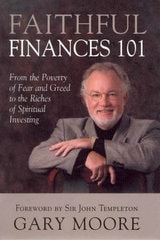
Faithful Finances 101
From the Poverty of Fear and Greed to the Riches of Spiritual InvestingGary Moore
Templeton Press, 2005
Faithful Finances 101 is a first-person narrative by an outspoken advocate of faith-based investing. A senior vice president of investments at Paine Webber before founding his own investment firm as "counsel to ethical and spiritual investors," Gary Moore warns that much of the economic advice emanating from some popular and influential evangelical authors and speakers is based on scare tactics and distortions of what the Bible has to say about finances. He draws on fifty years of studying the Bible, politics, and economics and presents insights for those who want to be faithful in their finances—to use 100 percent of the time, talent, and treasure with which they have been entrusted for the glory of God as well as for the benefit of others and themselves, and not just give 10 percent of their incomes to the church.
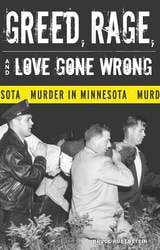
Greed, Rage, and Love Gone Wrong
Murder in MinnesotaBruce Rubenstein
University of Minnesota Press, 2006
Greed
From Gordon Gekko to David HumeStewart Sutherland
Haus Publishing, 2014
In Greed, Stewart Sutherland examines these conflicting notions and discusses how we might approach the problem of greed today. He looks at the concept of incentives, which are essential for achieving results, and whether the desire for money is really as dangerous as it might seem. Powerful and timely, Greed is a much-needed look at an attitude that, for better or worse, is an unavoidable driving force in modern society.
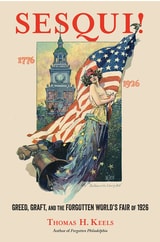
Sesqui!
Greed, Graft, and the Forgotten World's Fair of 1926Thomas H. Keels
Temple University Press, 2017
In 1916, Philadelphia department-store magnate John Wanamaker launched plans for a Sesqui-Centennial International Exposition in 1926. It would be a magnificent world's fair to celebrate the 150th anniversary of the Declaration of Independence. The “Sesqui” would also transform sooty, industrial Philadelphia into a beautiful Beaux Arts city.
However, when the Sesqui opened on May 31, 1926, in the remote, muddy swamps of South Philadelphia, the fair was unfinished, with a few shabbily built and mostly empty structures. Crowds stayed away in droves: fewer than five million paying customers attended, costing the city millions of dollars. Philadelphia became a national scandal—a city so corrupt that one political boss could kidnap an entire world’s fair.
In his fascinating history Sesqui!, noted historian Thomas Keels situates this ill-fated celebration—a personal boondoggle by the all-powerful Congressman William S. Vare—against the transformations taking place in America during the 1920s. Keels provides a comprehensive account of the Sesqui as a meeting ground for cultural changes sweeping the country: women’s and African-American rights, anti-Semitism, eugenics, Prohibition, and technological advances.