Results by title
9 books match the query 'Greek drama'
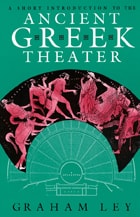
A Short Introduction to the Ancient Greek Theater
Graham Ley
University of Chicago Press, 1991
Contemporary productions on stage and film, and the development of theater studies, have created a new audience for ancient Greek drama. This volume fills the need for a clear, concise statement of what is known about the original conditions of production for tragedy, comedy, and satyr play in the age of Pericles and provides observations on all aspects of performance.
Reexamining the surviving plays of the tragic writers Aeschylus, Sophocles, and Euripides and of the comedian Aristophanes, Graham Ley discusses the actor's technique, the power and range of the chorus, the use of theatrical space, and parody in the plays. A series of diagrams relates the theater to the city and political life of ancient Athens, and photographic illustrations of scenes from Greek vases document the visualization of theatrical performance.
An ideal companion to The Complete Greek Tragedies (University of Chicago Press), Ley's work is a valuable user's guide to the critical assessment of modern translations and adaptations of tragedy and comedy. It is designed for all students of Greek drama with an interest in performance, and for theatrical practitioners who require a concise but informative introduction to one of the great periods of world drama.
[more]
A Short Introduction to the Ancient Greek Theater
Revised EditionGraham Ley
University of Chicago Press, 2007
Contemporary productions on stage and film, and the development of theater studies, continue to draw new audiences to ancient Greek drama. With observations on all aspects of performance, this volume fills their need for a clear, concise account of what is known about the original conditions of such productions in the age of Pericles.
Reexamining the surviving plays of Aeschylus, Sophocles, Euripides, and Aristophanes, Graham Ley here discusses acting technique, scenery, the power and range of the chorus, the use of theatrical space, and parody in their plays. In addition to photos of scenes from Greek vases that document theatrical performance, this new edition includes notes on ancient mime and puppetry and how to read Greek playtexts as scripts, as well as an updated bibliography. An ideal companion to The Complete Greek Tragedies, also published by the University of Chicago Press, Ley’s work is a concise and informative introduction to one of the great periods of world drama.
"Anyone faced with Athenian tragedy or comedy for the first time, in or out of the classroom, would do well to start with A Short Introduction to Ancient Greek Theater."—Didaskalia
[more]
Acting Like Men
Gender, Drama, and Nostalgia in Ancient GreeceKaren Bassi
University of Michigan Press, 1999
"Greek drama demands a story of origins," writes Karen Bassi in Acting Like Men. Abandoning the search for ritual and native origins of Greek drama, Bassi argues for a more secular and less formalist approach to the emergence of theater in ancient Greece. Bassi takes a broad view of Greek drama as a cultural phenomenon, and she discusses a wide variety of texts and artifacts that include epic poetry, historical narrative, philosophical treatises, visual media, and the dramatic texts themselves.
In her discussion of theaterlike practices and experiences, Bassi proposes new conceptual categories for understanding Greek drama as a cultural institution, viewing theatrical performance as part of what Foucault has called a discursive formation. Bassi also provides an important new analysis of gender in Greek culture at large and in Athenian civic ideology in particular, where spectatorship at the civic theater was a distinguishing feature of citizenship, and where citizenship was denied women.
Acting Like Men includes detailed discussions of message-sending as a form of scripted speech in the Iliad, of disguise and the theatrical body of Odysseus in the Odyssey, of tyranny as a theaterlike phenomenon in the narratives of Herodotus, and of Dionysus as the tyrannical and effeminate god of the theater in Euripides' Bacchae and Aristophanes' Frogs. Bassi concludes that the validity of an idealized masculine identity in Greek and Athenian culture is highly contested in the theater, where--in principle--citizens become passive spectators. Thereafter the author considers Athenian theater and Athenian democracy as mutually reinforcing mimetic regimes.
Acting Like Men will interest those interested in the history of the theater, performance theory, gender and cultural studies, and feminist approaches to ancient texts.
Karen Bassi is Associate Professor of Classics, University of California, Santa Cruz.
[more]
How to Stage Greek Tragedy Today
Simon Goldhill
University of Chicago Press, 2007
From the stages of Broadway and London to university campuses, Paris, and the bourgeoning theaters of Africa, Greek tragedy remains constantly in production. This global revival, in addition to delighting audiences, has highlighted both the promise and the pitfalls of staging ancient masterpieces in the modern age. Addressing the issues and challenges these performances pose, renowned classicist Simon Goldhill responds here to the growing demand for a comprehensive guide to staging Greek tragedy today.
In crisp and spirited prose, Goldhill explains how Aeschylus, Euripides, and Sophocles conceived their works in performance and then summarizes everything we know about how their tragedies were actually staged. The heart of his book tackles the six major problems facing any company performing these works today: the staging space and concept of the play; the use of the chorus; the actor’s role in an unfamiliar style of performance; the place of politics in tragedy; the question of translation; and the treatment of gods, monsters, and other strange characters of the ancient world. Outlining exactly what makes each of these issues such a pressing difficulty for modern companies, Goldhill provides insightful solutions drawn from his nimble analyses of some of the best recent productions in the United States, Britain, and Continental Europe.
One of the few experts on both Greek tragedy and contemporary performance, Goldhill uses his unique background and prodigious literary skill to illuminate brilliantly what makes tragedy at once so exciting and so tricky to get right. The result will inspire and enlighten all directors and performers—not to mention the growing audiences—of ancient Greek theater.
[more]
Musical Design in Aeschylean Theater
William C. Scott
Dartmouth College Press, 2000
Musical Design in Aeschylean Theater
[more]
Musical Design in Sophoclean Theater
William C. Scott
Dartmouth College Press, 2000
William C. Scott extends concepts set forth in his Goodwin Award-winning Musical Design in Aeschylean Theater (1984) by examining scansion patterns in the odes of the seven surviving Sophoclean tragedies. Analyzing the play as performed-its full expression in words, music, and dance-Scott finds that Sophocles' metrical patterns are not a secondary detail of the plays but a central feature of their musical organization. Just as the playwright enhanced awareness of themes with a series of recurring and developing verbal images, he also designed the music to guide the audience's understanding of unfolding, often ambiguous events. The fabric of music and meaning is so tightly woven, Scott argues, that significant portions of the plays cannot be fully realized on stage unless the musical effects created by the poet are incorporated. While his work necessarily centers on the chorus, Scott carefully integrates that role into the meaning of the play as a whole, asserting that the chorus becomes a single persona, a character with partial knowledge, limited perspective, and inconsistent responses. The combination of words, meters, and forms provides a new perspective on each play.
[more]
The Complete Tragedies, Volume 1
Medea, The Phoenician Women, Phaedra, The Trojan Women, OctaviaLucius Annaeus Seneca
University of Chicago Press, 2017
The complete tragic works of the leading Stoic philosopher and playwright
Edited by world-renowned classicists Elizabeth Asmis, Shadi Bartsch, and Martha C. Nussbaum, the Complete Works of Lucius Annaeus Seneca series offers authoritative, modern English translations of the writings of the Stoic philosopher and playwright (4 BCE–65 CE). The two volumes of The Complete Tragedies present all of his dramas, expertly rendered by preeminent scholars and translators.
This first volume contains Medea, The Phoenician Women, Phaedra, The Trojan Women, and Octavia, the last of which was written in emulation of Senecan tragedies and serves as a unique example of political tragedy. High standards of accuracy, clarity, and style are maintained throughout the translations, which render Seneca into verse with as close a correspondence, line for line, to the original as possible, and with special attention paid to meter and overall flow. In addition, each tragedy is prefaced by an original translator’s introduction offering reflections on the work’s context and meaning. Notes are provided for the reader unfamiliar with the culture and history of classical antiquity. Accordingly, The Complete Tragedies will be of use to a general audience and professionals alike, from the Latinless student to scholars and instructors of comparative literature, classics, philosophy, drama, and more.
[more]
The Complete Tragedies, Volume 2
Oedipus, Hercules Mad, Hercules on Oeta, Thyestes, AgamemnonLucius Annaeus Seneca
University of Chicago Press, 2017
The complete tragic works of the leading Stoic philosopher and playwright
Edited by world-renowned classicists Elizabeth Asmis, Shadi Bartsch, and Martha C. Nussbaum, the Complete Works of Lucius Annaeus Seneca offers authoritative, modern English translations of the writings of the Stoic philosopher and playwright (4 BCE–65 CE). The two volumes of The Complete Tragedies presents all of his dramas, expertly rendered by preeminent scholars and translators.
The first volume contains Medea, The Phoenician Women, Phaedra, The Trojan Women, and Octavia, the last of which was written in emulation of Senecan tragedies and serves as a unique example of political tragedy. This second volume includes Oedipus, Hercules Mad, Hercules on Oeta, Thyestes, and Agamemnon. High standards of accuracy, clarity, and style are maintained throughout the translations, which render Seneca into verse with as close a correspondence, line for line, to the original as possible, and with special attention paid to meter and overall flow. In addition, each tragedy is prefaced by an original translator’s introduction offering reflections on the work’s context and meaning. Notes are provided for the reader unfamiliar with the culture and history of classical antiquity. Accordingly, The Complete Tragedies will be of use to a general audience and professionals alike, from the Latinless student to scholars and instructors of comparative literature, classics, philosophy, drama, and more.
[more]
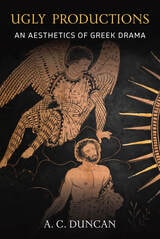
Ugly Productions
An Aesthetics of Greek DramaA. C. Duncan
University of Michigan Press, 2025
Amidst a culture otherwise obsessed with beauty, the Greek theater provided a unique space for Athenians to play with ugliness—to try these anti-ideals on for size. Such imaginative play was considered dangerous by some, such as Plato, who feared its corrupting influence; others, including Aristotle, saw the theater’s provocation and release of emotions as educational and even therapeutic. Sophocles’ and Euripides’ fifth-century audiences could not help but directly confront the ugliness of their drama, but as cultural memory of embodied productions faded, an abstracted contrast emerged between beautiful tragedy and ugly comedy—a pernicious aesthetic polarization that persists to this day. A. C. Duncan’s Ugly Productions embraces the materiality of the theater, arguing that dramatic aesthetics are best understood within affective frameworks where beauty or ugliness are produced through a dynamic interplay of verbal and visual modalities. Duncan reframes the Greek concept of “the ugly” not as mere “anti-beauty,” but as an affective disposition positively associated with such painful emotions as pity, fear, grief, and abjection.
Through studies of the figures of Xerxes, Electra, Philoctetes, Ajax, Heracles, and other tragic figures, Ugly Productions offers detailed analyses of the various ways ugliness was produced in performance with each chapter serving as an in-depth guide for studying the aesthetics of these works. Duncan confronts the historical neglect of ugliness in critical discourses, calling for a revaluation of negative aesthetics and renewed interest in the uglier aspects of these canonical works of theater.
Through studies of the figures of Xerxes, Electra, Philoctetes, Ajax, Heracles, and other tragic figures, Ugly Productions offers detailed analyses of the various ways ugliness was produced in performance with each chapter serving as an in-depth guide for studying the aesthetics of these works. Duncan confronts the historical neglect of ugliness in critical discourses, calling for a revaluation of negative aesthetics and renewed interest in the uglier aspects of these canonical works of theater.
[more]