Results by title
5 books match the query 'Green, William'
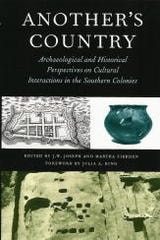
Another's Country
Archaeological and Historical Perspectives on Cultural Interactions in the Southern ColoniesEdited by J.W. Joseph and Martha Zierden
University of Alabama Press, 2001
The 18th-century South was a true melting pot, bringing together colonists from England, France, Germany, Ireland, Switzerland, and other locations, in addition to African slaves—all of whom shared in the experiences of adapting to a new environment and interacting with American Indians. The shared process of immigration, adaptation, and creolization resulted in a rich and diverse historic mosaic of cultures.
The cultural encounters of these groups of settlers would ultimately define the meaning of life in the nineteenth-century South. The much-studied plantation society of that era and the Confederacy that sprang from it have become the enduring identities of the South. A full understanding of southern history is not possible, however, without first understanding the intermingling and interactions of the region’s eighteenth-century settlers. In the essays collected here, some of the South’s leading historical archaeologists examine various aspects of the colonial experience, attempting to understand how cultural identity was expressed, why cultural diversity was eventually replaced by a common identity, and how the various cultures intermeshed.
Written in accessible language, this book will be valuable to archaeologists and non-archaeologists alike. Cultural, architectural, and military historians, cultural anthropologists, geographers, genealogists, and others interested in the cultural legacy of the South will find much of value in this book.

Labor Leaders in America
Edited by Melvyn Dubofsky and Warren Van Tine
University of Illinois Press, 1987
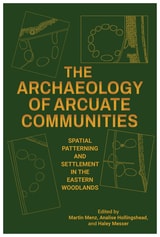
The Archaeology of Arcuate Communities
Spatial Patterning and Settlement in the Eastern WoodlandsEdited by Martin Menz, Analise Hollingshead, and Haley Messer
University of Alabama Press, 2024
A comparative archaeological synthesis examining the spatial, social, and ceremonial logics underpinning circular community formations across the Eastern Woodlands from 10,000 BC to the sixteenth century.
The Archaeology of Arcuate Communities is an edited collection of ten essays that illuminate how Indigenous communities of the Eastern Woodlands, from 10,000 BC to the 1550s, are analyzed and interpreted by archaeologists today. Volume editors Martin Menz, Analise Hollingshead, and Haley Messer define the persistent circular or “arcuate” pattern of Native settlements in this region as a spatial manifestation of community activities that reinforced group identity alongside plazas, mounds, and other architectural features.
The varied case studies in this volume focus on specific communities, how they evolved, and the types of archaeological data that have been used to assess them. Part I, “Defining the Domestic Unit in Arcuate Communities,” reveals social distinctions between households and household clusters in arcuate communities, how they differ in terms of stylistic patterns and exchange, and how they combined to form distinct social groups at different scales within a broader community. Part II, “Organizing Principles of Arcuate Communities,” broadens the scope to identify the organizing principles of entire arcuate communities, such as the central role of plazas in structuring their development, how the distribution of households and central features within communities was contested and reorganized, and the importance of mounds in both delineating arcuate communities and marking their position on the landscape. Part III, “Comparison and Change in Arcuate Communities,” comprises case studies that examine changes in the organization of arcuate communities over time. Rounding out the volume is a concluding chapter that assesses how and why communities around the world formed in circular patterns.
A valuable resource for archaeologists, this collection will also be of interest to those seeking to learn about Native North American settlement, ceremony, and community organization.
Theatre History Studies 2021, Vol 40
Edited by Lisa Jackson-Schebetta
University of Alabama Press, 2021
A peer-reviewed journal of theatre history and scholarship published annually since 1981 by the Mid-America Theatre Conference
Theatre History Studies 2021, Vol. 40, edited by Lisa Jackson-Schebetta, marks the fortieth volume of the respected, peer-reviewed journal published by the Mid-America Theatre Conference, a leading forum for innovative scholarship in theatre and performance studies. Bringing together a diverse collection of essays from established and emerging scholars, this volume examines the intersections of theatre history, cultural memory, performance, identity, race, gender, and social change across a wide range of historical and contemporary contexts.
The volume opens with a series of studies that challenge conventional narratives of theatre history and performance. Contributors explore topics including Voltaire and Enlightenment thought, the contributions and erasure of African American artists within the Federal Theatre Project's Negro Unit, questions of empathy and historical consciousness in contemporary drama, and the influence of Asian aesthetics on the work of modern dance innovator Alwin Nikolais. Together, these essays demonstrate the ongoing importance of theatre history as a lens through which to understand cultural power, representation, and artistic expression.
A special section,"Witch Characters and Witchy Performance," investigates the enduring cultural fascination with witches on stage and in popular performance. Essays examine witchcraft in the works of Joanna Baillie and Shakespeare, representations of female bodies and power in Caryl Churchill's Vinegar Tom, the feminist dimensions of Wicked, and the immersive theatrical worlds of productions such as Sleep No More and Then She Fell. Through these studies, the collection highlights how witch figures continue to serve as powerful symbols for exploring gender, authority, resistance, and cultural imagination.
The volume also features the recipient of the Robert A. Schanke Award, recognizing outstanding scholarship presented at the Mid-America Theatre Conference. This essay examines the evolving relationship between Broadway and high school musical theatre in the 2010s, offering valuable insight into theatre education, performance culture, and the transmission of theatrical traditions to new generations.
In addition to original research articles, Theatre History Studies 2021, Vol. 40 includes scholarly book reviews, contributor notes, and discussions of recent publications in the field, making it an essential resource for researchers, educators, students, and theatre practitioners. By bringing together rigorous historical inquiry and contemporary critical perspectives, this landmark volume showcases the breadth, vitality, and continuing relevance of theatre and performance scholarship in the twenty-first century.
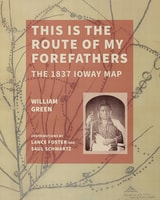
This Is the Route of My Forefathers
The 1837 Ioway MapWilliam Green
University of Iowa Press, 2025
Illustrating nearly 200 years of Ioway history, the 1837 Ioway map provides insights into the tribe’s political and diplomatic strategies, their relationships with neighboring nations, and how they resisted and negotiated in the face of dispossession. This Is the Route of My Forefathers uses an interdisciplinary approach to reveal how group accounts may fade over time, while accounts of origin—legendary histories—remain rich and vibrant.