Results by title
5 books match the query 'Gremillion, Kristen J.'
Between Contacts and Colonies
Archaeological Perspectives on the Protohistoric SoutheastEdited by Cameron B. Wesson and Mark A. Rees
University of Alabama Press, 2002
This collection of essays brings together diverse approaches to the analysis of Native American culture in the protohistoric period
For most Native American peoples of the Southeast, almost two centuries passed between first contact with European explorers in the 16th century and colonization by whites in the 18th century—a temporal span commonly referred to as the Protohistoric period. A recent flurry of interest in this period by archaeologists armed with an improved understanding of the complexity of culture contact situations and important new theoretical paradigms has illuminated a formerly dark time frame.
This volume pulls together the current work of archaeologists, historians, and anthropologists to demonstrate a diversity of approaches to studying protohistory. Contributors address different aspects of political economy, cultural warfare, architecture, sedentism, subsistence, foods, prestige goods, disease, and trade. From examination of early documents by René Laudonnière and William Bartram to a study of burial goods distribution patterns; and from an analysis of Caddoan research in Arkansas and Louisiana to an interesting comparison of Apalachee and Powhatan elites, this volume ranges broadly in subject matter. What emerges is a tantalizingly clear view of the protohistoric period in North America.
Food Production in Native North America
An Archaeological PerspectiveKristen J. Gremillion
University Press of Colorado, 2018
People, Plants, and Landscapes
Studies in PaleoethnobotanyKristen J. Gremillion
University of Alabama Press, 1997
Discover how ancient peoples and plants shaped one another across generations and landscapes.
People, Plants, and Landscapes showcases the potential of modern paleoethnobotany, an interdisciplinary field that explores the interactions between human beings and plants by examining archaeological evidence. Using different methods and theoretical approaches, the essays in this work apply botanical knowledge to studies of archaeological plant remains and apply paleoethnobotany to nonarchaeological sources of evidence. The resulting techniques often lie beyond the traditional boundaries of either archaeology or botany.
With this ground-breaking work, the technically and methodologically enhanced paleoethnobotany of the 1990s has joined forces with ecological and evolutionary theory to forge explanations of changing relationships between human and plant populations.
The Development of Southeastern Archaeology
Edited by Jay K. Johnson
University of Alabama Press, 1993
Ten scholars whose specialties range from ethnohistory to remote sensing and lithic analysis to bioarchaeology chronicle changes in the way prehistory in the Southeast has been studied since the 19th century. Each brings to the task the particular perspective of his or her own subdiscipline in this multifaceted overview of the history of archaeology in a region that has had an important but variable role in the overall development of North American archaeology.
Some of the specialties discussed in this book were traditionally relegated to appendixes or ignored completely in site reports more than 20 years old. Today, most are integral parts of such reports, but this integration has been hard won. Other specialties have been and will continue to be of central concern to archaeologists. Each chapter details the way changes in method can be related to changes in theory by reviewing major landmarks in the literature. As a consequence, the reader can compare the development of each subdiscipline.
As the first book of this kind to deal specifically with the region, it be will valuable to archaeologists everywhere. The general reader will find the book of interest because the development of southeastern archaeology reflects trends in the development of social science as a whole.
Contributors include:
Jay K. Johnson, David S. Brose, Jon L. Gibson, Maria O. Smith, Patricia K. Galloway, Elizabeth J. Reitz, Kristen J. Gremillion, Ronald L. Bishop, Veletta Canouts, and W. Fredrick Limp
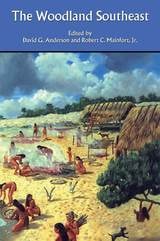
The Woodland Southeast
Edited by David G. Anderson and Robert C. Mainfort
University of Alabama Press, 2002
This collection presents, for the first time, a much-needed synthesis of the major research themes and findings that characterize the Woodland Period in the southeastern United States.
The Woodland Period (ca. 1200 B.C. to A.D. 1000) has been the subject of a great deal of archaeological research over the past 25 years. Researchers have learned that in this approximately 2000-year era the peoples of the Southeast experienced increasing sedentism, population growth, and organizational complexity. At the beginning of the period, people are assumed to have been living in small groups, loosely bound by collective burial rituals. But by the first millennium A.D., some parts of the region had densely packed civic ceremonial centers ruled by hereditary elites. Maize was now the primary food crop. Perhaps most importantly, the ancient animal-focused and hunting-based religion and cosmology were being replaced by solar and warfare iconography, consistent with societies dependent on agriculture, and whose elites were increasingly in competition with one another. This volume synthesizes the research on what happened during this era and how these changes came about while analyzing the period's archaeological record.
In gathering the latest research available on the Woodland Period, the editors have included contributions from the full range of specialists working in the field, highlighted major themes, and directed readers to the proper primary sources. Of interest to archaeologists and anthropologists, both professional and amateur, this will be a valuable reference work essential to understanding the Woodland Period in the Southeast.