Results by title
54 books match the query 'Grief' and 4 start with a
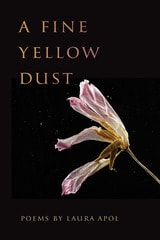
A Fine Yellow Dust
Laura Apol
Michigan State University Press, 2021
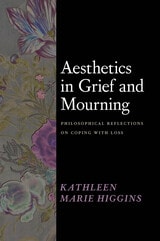
Aesthetics in Grief and Mourning
Philosophical Reflections on Coping with LossKathleen Marie Higgins
University of Chicago Press, 2024
In Aesthetics of Grief and Mourning, philosopher Kathleen Marie Higgins reflects on the ways that aesthetics aids people experiencing loss. Some practices related to bereavement, such as funerals, are scripted, but many others are recursive, improvisational, mundane—telling stories, listening to music, and reflecting on art or literature. Higgins shows how these grounding, aesthetic practices can ease the disorienting effects of loss, shedding new light on the importance of aesthetics for personal and communal flourishing.
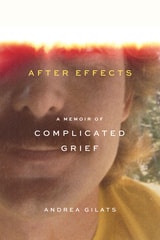
After Effects
A Memoir of Complicated GriefAndrea Gilats
University of Minnesota Press, 2021
An intensely moving and revelatory memoir of enduring and emerging from exceptional grief
To grieve after a profound loss is perfectly natural and healthy. To be debilitated by grief for more than a decade, as Andrea Gilats was, is something else. In her candid, deeply moving, and ultimately helpful memoir of breaking free of death’s relentless grip on her life, Gilats tells her story of living with prolonged, or “complicated,” grief and offers insight, hope, and guidance to others who suffer as she did.
Thomas Dayton, Andrea Gilats’s husband of twenty years, died at 52 after a five-month battle with cancer. In After Effects Gilats describes the desolation that followed and the slow and torturous twenty-year journey that brought her back to life. In the two years immediately following his death, Gilats wrote Tom daily letters, desperately trying to maintain the twenty-year conversation of their marriage. Excerpts from these letters reveal the depth of her despair but also the glimmer of an awakening as they also trace a different, more typical course of the grief experienced by one of Gilats's colleagues, also widowed. Gilats’s struggle to rescue herself takes her through the temptation of suicide, the threat of deadly illness, the overwhelming challenges of work, and the rigor of learning and eventually teaching yoga, to a moment of reckoning and, finally, reconciliation to a life without her beloved partner. Her story is informed by the lessons she learned about complicated grief as a disorder that, while intensely personal, can be defined, grappled with, and overcome.
Though complicated grief affects as many as one in seven of those stricken by the loss of a close loved one, it is little known outside professional circles. After Effects points toward a path of recuperation and provides solace along the way—a service and a comfort that is all the more timely and necessary in our pandemic-ravaged world of loss and isolation.
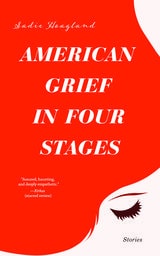
American Grief in Four Stages
StoriesSadie Hoagland
West Virginia University Press, 2019
American Grief in Four Stages is a collection of stories that imagines trauma as a space in which language fails us and narrative escapes us. These stories play with form and explore the impossibility of elegy and the inability of our culture to communicate grief, or sympathy, outside of cliché.
One narrator, for example, tries to understand her brother’s suicide by excavating his use of idioms. Other stories construe grief and trauma in much subtler ways—the passing of an era or of a daughter’s childhood, the seduction of a neighbor, the inability to have children. From a dinner party with Aztecs to an elderly shut-in’s recollection of her role in the Salem witch trials, these are stories that defy expectations and enrich the imagination. As a whole, this collection asks the reader to envisage the ways in which we suffer as both unbearably painful and unbearably American.