Results by title
11 books match the query 'Grief & Loss'
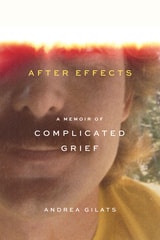
After Effects
A Memoir of Complicated GriefAndrea Gilats
University of Minnesota Press, 2021
An intensely moving and revelatory memoir of enduring and emerging from exceptional grief
To grieve after a profound loss is perfectly natural and healthy. To be debilitated by grief for more than a decade, as Andrea Gilats was, is something else. In her candid, deeply moving, and ultimately helpful memoir of breaking free of death’s relentless grip on her life, Gilats tells her story of living with prolonged, or “complicated,” grief and offers insight, hope, and guidance to others who suffer as she did.
Thomas Dayton, Andrea Gilats’s husband of twenty years, died at 52 after a five-month battle with cancer. In After Effects Gilats describes the desolation that followed and the slow and torturous twenty-year journey that brought her back to life. In the two years immediately following his death, Gilats wrote Tom daily letters, desperately trying to maintain the twenty-year conversation of their marriage. Excerpts from these letters reveal the depth of her despair but also the glimmer of an awakening as they also trace a different, more typical course of the grief experienced by one of Gilats's colleagues, also widowed. Gilats’s struggle to rescue herself takes her through the temptation of suicide, the threat of deadly illness, the overwhelming challenges of work, and the rigor of learning and eventually teaching yoga, to a moment of reckoning and, finally, reconciliation to a life without her beloved partner. Her story is informed by the lessons she learned about complicated grief as a disorder that, while intensely personal, can be defined, grappled with, and overcome.
Though complicated grief affects as many as one in seven of those stricken by the loss of a close loved one, it is little known outside professional circles. After Effects points toward a path of recuperation and provides solace along the way—a service and a comfort that is all the more timely and necessary in our pandemic-ravaged world of loss and isolation.
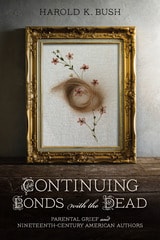
Continuing Bonds with the Dead
Parental Grief and Nineteenth-Century American AuthorsHarold K. Bush
University of Alabama Press, 2016
Grief transformed into legacy—how loss shaped the soul of American literature.
Harold K. Bush's Continuing Bonds with the Dead examines the profound transfiguration that the death of a child wrought on the literary work of nineteenth-century American writers. Taking as his subjects Harriet Beecher Stowe, Abraham Lincoln, William Dean Howells, Mark Twain, and W. E. B. Du Bois, Bush demonstrates how the death of a child became the defining "before-and-after moment" in their lives as adults and as artists. In narrating their struggles, Bush maps the intense field of creative energy induced by reverberating waves of parental grief and the larger nineteenth-century culture of mortality and grieving.
Bush explores in detail how each of these five writers grappled with and were altered by the loss of a child. He writes, for example, with moving insights about how the famed author of Adventures of Huckleberry Finn found himself adrift on a river of grief when meningitis struck down his daughter, Susy. In his deeply learned exploration of Twain's subsequent work, Bush illuminates how Twain wrote to cope with Susy's death, to make sense of her persistent presence in his life, and possibly to redeem her loss. Passionate and personal, Bush's insightful prose traces the paths of personal transformation each of these emblematic American writers took in order to survive the spiritual trauma of loss.
The savage Civil War was America's shared "before and after moment," the pivot upon which the nation's future swung. Bush's account of these five writers' grief amplifies our understanding of America's evolving, national relationship to mourning from then to the present.
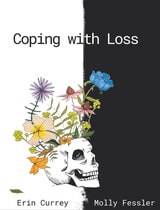
Coping with Loss
A Guide to Death, Grief and Clinical Experiences with Dying PatientsErin Currey
Michigan Publishing Services, 2025
In a cure-focused profession, the death of a patient can often feel like a failure. Yet, every patient will inevitably transition from health to illness, independence to dependence, and life to death. These transitions often mark some of the most meaningful interactions between patients and care providers. Coping with Loss is a self-directed workbook that provides addresses common questions, concerns, and emotional responses to these interactions with dying patients. Each lesson opens with real stories of professional grief that will resonate with healthcare professionals at multiple stages of their careers. Critical topics covered include recognizing the diverse presentations of grief, identifying dying patients, decompressing individually, and debriefing as a team. Significant portions of the text discuss how challenging patient cases impact the formation of professional identity. Ultimately, this workbook provides a place for healthcare providers to reflect on their patient interactions and learn how to support themselves and their healthcare teams through grief.
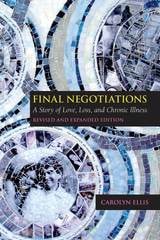
Final Negotiations
A Story of Love, Loss, and Chronic IllnessCarolyn Ellis
Temple University Press, 2018
Taking an autoethnographic perspective, Ellis focuses on her feeling and thinking self in relationships, narrating particular lived experiences that offer a gateway into understanding interpersonal and cultural life. In her new epilogue, “From New Endings to New Beginnings,” Ellis describes her changed identity and how Final Negotiations informs her life and her understanding of how she and her current partner grow older together. She hopes her book provides companionship and comfort to readers who also will suffer loss in their lives.
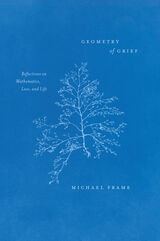
Geometry of Grief
Reflections on Mathematics, Loss, and LifeMichael Frame
University of Chicago Press, 2021
We all know the euphoria of intellectual epiphany—the thrill of sudden understanding. But coupled with that excitement is a sense of loss: a moment of epiphany can never be repeated. In Geometry of Grief, mathematician Michael Frame draws on a career’s worth of insight—including his work with a pioneer of fractal geometry Benoit Mandelbrot—and a gift for rendering the complex accessible as he delves into this twinning of understanding and loss. Grief, Frame reveals, can be a moment of possibility.
Frame investigates grief as a response to an irrevocable change in circumstance. This reframing allows us to see parallels between the loss of a loved one or a career and the loss of the elation of first understanding a tricky concept. From this foundation, Frame builds a geometric model of mental states. An object that is fractal, for example, has symmetry of magnification: magnify a picture of a mountain or a fern leaf—both fractal—and we see echoes of the original shape. Similarly, nested inside great loss are smaller losses. By manipulating this geometry, Frame shows us, we may be able to redirect our thinking in ways that help reduce our pain. Small‐scale losses, in essence, provide laboratories to learn how to meet large-scale losses.
Interweaving original illustrations, clear introductions to advanced topics in geometry, and wisdom gleaned from his own experience with illness and others’ remarkable responses to devastating loss, Frame’s poetic book is a journey through the beautiful complexities of mathematics and life. With both human sympathy and geometrical elegance, it helps us to see how a geometry of grief can open a pathway for bold action.
Memorializing Violence
Transnational Feminist ReflectionsAlison Crosby
Rutgers University Press, 2025
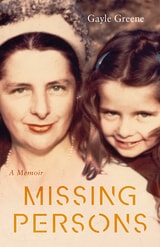
Missing Persons
A MemoirGayle Greene
University of Nevada Press, 2017
The memoir is structured as an account of her mother's and aunt’s final days and the year that follows, a year in which she reconstructs her life. This is a powerful story about family, what it means to have one, to lose one, never to have made one, and what, if anything, might take its place. It’s the story of a vexed mother-daughter relationship that mellows with age. It is also a search for home, as the very landscape shifts around her and the vast orchards are dug up and paved over for tract housing, strip malls, freeways, and the Santa Clara Valley, once known as the Valley of Heart’s Delight, is transformed to “Silicon.”
The Courage to Suffer
A New Clinical Framework for Life's Greatest CrisesDaryl R. Van Tongeren
Templeton Press, 2020
Suffering is an inescapable part of life. Some suffering is so profound, so violating, or so dogged that it fundamentally changes people in indelible ways. Many existing therapeutic approaches, from a medical model, treat suffering as mental illness and seek a curative solution. However, such approaches often fail to examine the deep questions that suffering elicits (e.g., existential themes of death, isolation, freedom, identity, and meaninglessness) and the far-reaching ways in which suffering affects the lived experience of each individual.
In The Courage to Suffer, Daryl and Sara Van Tongeren introduce a new therapeutic framework that helps people flourish in the midst of suffering by cultivating meaning.
Drawing from scientific research, clinical examples, existential and positive psychology, and their own personal stories of loss and sorrow, Daryl and Sara’s integrative model blends the rich depth of existential clinical approaches with the growth focus of strengths-based approaches.Through cutting edge-research and clinical case examples, they detail five “phases of suffering” and how to work with a client's existential concerns at each phase to develop meaning. They also discuss how current research suggests to build a flourishing life, especially for those who have endured, and are enduring, suffering.
Daryl and Sara show how those afflicted with suffering, while acknowledging the reality of their pain, can still choose to live with hope.
The Hardest Journey Home
A True Story of Loss and Duty during the Iraq WarDonleigh O. Gaunky
Westholme Publishing, 2017
“Sergeant Donleigh Gaunky’s moving memoir speaks to everyone who has lost a loved one in defense of our great nation. It serves as a reminder that freedom is not free, and it is our responsibility to continue to care for our service members, veterans, and their families. I am touched that Fisher House provided a refuge for Sergeant Gaunky during such a difficult journey.”—Ken Fisher, Chairman and CEO, Fisher House Foundation
“Fewer and fewer Americans have any close association with anyone serving in the Armed Forces. Donleigh Gaunky offers a heart-rending glimpse into his family as he, and they, grapple with the loss of Donleigh’s brother on a battlefield in Iraq. Every American should read this and, in so doing, learn what “Thank You for Your Service” really means.”
—Gen. Carter F. Ham, USA, Ret., President and CEO, Association of the United States Army
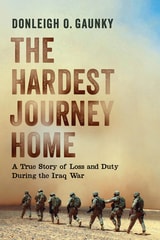
In November 2005, while analyzing live action reports at his base in Baghdad, Iraq, Donleigh O. Gaunky froze. His younger brother Alex’s unit had been hit by the enemy. Almost immediately, arrangements were made for Donleigh to meet his wounded brother in Germany, but Alex succumbed to his injuries before he arrived. Instead, Donleigh was asked to assume the role of remains escort. Most of the time a remains escort is picked at random from the appropriate branch of service or is someone with a relationship to the deceased, most often from the soldier’s own unit. Rarely—if ever in modern times—is the escort a family member. In The Hardest Journey Home: A True Story of Loss and Duty During the Iraq War, Donleigh O. Gaunky describes the events that unfolded over the course of a few days, from the front line in Iraq to the Landstuhl military hospital in Germany to their small town in Wisconsin, where he arrived with his brother’s body on Thanksgiving Day. In an effort to keep his mind off the tragedy and remain focused on his task, the author describes the protocol for escorting a body home—paperwork, appropriate attire, the proper use of the flag, when and where to salute—as well as how his divorced parents coped with the loss of one of their four sons serving in the military. Relying on commercial flights to bring Alex home, there was no military reception when they first landed in the United States and the author learned how little his brother’s sacrifice meant on a national level. But he was uplifted by his town’s response to his family’s loss when they unexpectedly lined the streets to pay their respects to one of their own. An important and moving story, The Hardest Journey Home reveals the human cost of a long, seemingly invisible war.
Unstaged Grief
Musicals and Mourning in Midcentury AmericaJake Johnson
University of Illinois Press, 2025
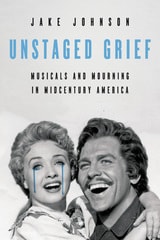
Often dismissed as escapism, screen musicals of the 1960s in fact tapped into unspoken sadness about an America that was slipping away. Jake Johnson delves into film and television musicals of the era to examine their place in networks of grieving in America, for America, and about America.
The Golden Age of musical theater ended just as Elisabeth Kübler-Ross’s On Death and Dying debuted, and Johnson uses Kübler-Ross’s five stages to frame the intertwining of musicals and grief. He analyzes films like Seven Brides for Seven Brothers and State Fair alongside paintings, poetry, and other images and texts to reveal how the musical theater engine built in the first half of the century broke down just as a new language emerged to describe the melancholy felt by people facing the end of the world they had known.
Nuanced and original, Unstaged Grief plumbs the grief, loss, and hope behind the Technicolor spectacle and rousing showstoppers.
Vegas Strong
Bearing Witness 1 October 2017Roberta Sterman Sabbath
University of Nevada Press, 2023
Mass shootings have been on the rise in the United States since the early 2000s, but until the heartbreak of the 1 October 2017 Route 91 Harvest Music Festival, the citizens of Las Vegas had never experienced the violence and tragedy of this now all-too-frequent occurrence. That day, fifty-eight people were shot to death on site, while another two victims later died of their injuries. The 1 October incident physically wounded nearly 900 concert-goers, but psychologically impacted countless untold victims.
As individual and institutional response to urgent requests for help came in both during and after the 1 October catastrophe, those who call Las Vegas home struggled to cope with pain and grief. Now, editor Roberta Sabbath draws together a collection of personal essays, oral histories, interviews, scholarly writings, and commentaries to remember those whose lives were lost, and to honor survivors and their loved ones. Written five years after the tragedy, each contribution offers a unique story of healing, demonstrating the wide-ranging experiences and repercussions of the event. The essays in this collection represent a broad diversity of voices from political leaders, health professionals, first responders, community members, and incident survivors. This work is dedicated to those who lost their lives on 1 October 2017, to survivors and their loved ones, and to the caregivers—both individual and institutional—all of whom continue to keep Vegas Strong.