Results by title

10 books match the query 'Ground'
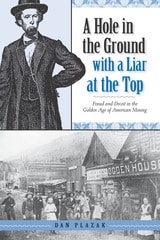
cover of A Hole in the Ground with a Liar at the Top: Fraud and Deceit in the Golden Age of American Mining

A Hole in the Ground with a Liar at the Top

Fraud and Deceit in the Golden Age of American Mining

Dan Plazak

University of Utah Press, 2006
Coal, silver, gold. There is something about the allure of hidden treasure that puts a glint in people’s eyes. By gathering such familiar stories as that of Nevada’s infamous Comstock Lode with a succession of lesser-known scandals, Dan Plazak provides an entertaining and informative volume that delightfully investigates the history of mining frauds in the United States from the Civil War to World War I.
[more]
cover of Athenian White Lekythoi: With Outline Drawing in Matt Color on a White Ground

Athenian White Lekythoi

With Outline Drawing in Matt Color on a White Ground

Arthur Fairbanks

University of Michigan Press, 1914
This volume examines so-called white-figure lekythoi in which the figure has been drawn in matt color. The author’s prior volume on these Athenian vase-shapes investigated lekythoi in which the figure was outlined in glaze. The goal of the volume is to work toward a standard catalog of these vase shapes and production methods.
[more]
cover of Between Gaia and Ground: Four Axioms of Existence and the Ancestral Catastrophe of Late Liberalism

Between Gaia and Ground

Four Axioms of Existence and the Ancestral Catastrophe of Late Liberalism

Elizabeth A. Povinelli

Duke University Press, 2021
In Between Gaia and Ground Elizabeth A. Povinelli theorizes the climatic, environmental, viral, and social catastrophe present as an ancestral catastrophe through which that Indigenous and colonized peoples have been suffering for centuries. In this way, the violence and philosophies the West relies on now threaten the West itself. Engaging with the work of Glissant, Deleuze and Guattari, Césaire, and Arendt, Povinelli highlights four axioms of existence—the entanglement of existence, the unequal distribution of power, the collapse of the event as essential to political thought, and the legacies of racial and colonial histories. She traces these axioms' inspiration in anticolonial struggles against the dispossession and extraction that have ruined the lived conditions for many on the planet. By examining the dynamic and unfolding forms of late liberal violence, Povinelli attends to a vital set of questions about changing environmental conditions, the legacies of violence, and the limits of inherited Western social theory. Between Gaia and Ground also includes a glossary of the keywords and concepts that Povinelli has developed throughout her work.
[more]
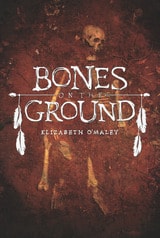
cover of Bones on the Ground

Bones on the Ground

Elizabeth O'Maley

Indiana Historical Society Press, 2014
What happened to the Indians of the Old Northwest Territory? Conflicting portraits emerge and answers often depend on who’s telling the story, with each participant bending and stretching the truth to fit their own view of themselves and the world. This volume presents biographical sketches and first-person narratives of Native Americans, Indian traders, Colonial and American leaders, and events that shaped the Indians’ struggle to maintain possession of their tribal lands in the face of the widespread advancement of white settlement. It covers events and people in the Old Northwest Territory from before the American Revolution through the removal of the Miami from Indiana in 1846. As America’s Indian policy was formed, and often enforced by the U.S. military, and white settlers pushed farther west, some Indians fought the white intruders, while others adopted their ways. In the end, most Indians were unable to hold their ground, and the evidence of their presence now lingers only in found relics and strange-sounding place names.
[more]
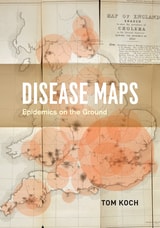
cover of Disease Maps: Epidemics on the Ground

Disease Maps

Epidemics on the Ground

Tom Koch

University of Chicago Press, 2011

In the seventeenth century, a map of the plague suggested a radical idea—that the disease was carried and spread by humans. In the nineteenth century, maps of cholera cases were used to prove its waterborne nature. More recently, maps charting the swine flu pandemic caused worldwide panic and sent shockwaves through the medical community. In Disease Maps, Tom Koch contends that to understand epidemics and their history we need to think about maps of varying scale, from the individual body to shared symptoms evidenced across cities, nations, and the world.  

Disease Maps
begins with a brief review of epidemic mapping today and a detailed example of its power. Koch then traces the early history of medical cartography, including pandemics such as European plague and yellow fever, and the advancements in anatomy, printing, and world atlases that paved the way for their mapping. Moving on to the scourge of the nineteenth century—cholera—Koch considers the many choleras argued into existence by the maps of the day, including a new perspective on John Snow’s science and legacy. Finally, Koch addresses contemporary outbreaks such as AIDS, cancer, and H1N1, and reaches into the future, toward the coming epidemics. Ultimately, Disease Maps redefines conventional medical history with new surgical precision, revealing that only in maps do patterns emerge that allow disease theories to be proposed, hypotheses tested, and treatments advanced.

[more]
cover of Facts on the Ground: Archaeological Practice and Territorial Self-Fashioning in Israeli Society

Facts on the Ground

Archaeological Practice and Territorial Self-Fashioning in Israeli Society

Nadia Abu El-Haj

University of Chicago Press, 2002

Archaeology in Israel is truly a national obsession, a practice through which national identity—and national rights—have long been asserted. But how and why did archaeology emerge as such a pervasive force there? How can the practices of archaeology help answer those questions? In this stirring book, Nadia Abu El-Haj addresses these questions and specifies for the first time the relationship between national ideology, colonial settlement, and the production of historical knowledge. She analyzes particular instances of history, artifacts, and landscapes in the making to show how archaeology helped not only to legitimize cultural and political visions but, far more powerfully, to reshape them. Moreover, she places Israeli archaeology in the context of the broader discipline to determine what unites the field across its disparate local traditions and locations.

Boldly uncovering an Israel in which science and politics are mutually constituted, this book shows the ongoing role that archaeology plays in defining the past, present, and future of Palestine and Israel.
[more]
cover of Hegel, Heidegger, and the Ground of History

Hegel, Heidegger, and the Ground of History

Michael Allen Gillespie

University of Chicago Press, 1984

In this wide-ranging and thoughtful study, Michael Allen Gillespie explores the philosophical foundation, or ground, of the concept of history. Analyzing the historical conflict between human nature and freedom, he centers his discussion on Hegel and Heidegger but also draws on the pertinent thought of other philosophers whose contributions to the debate is crucial—particularly Rousseau, Kant, and Nietzsche.
[more]
cover of My War in Italy: On the Ground and in Flight with the 15th Air Force

My War in Italy

On the Ground and in Flight with the 15th Air Force

Keith W. Mason

University of Missouri Press, 2027

Six weeks before Pearl Harbor, Keith Mason received a $150 uniform allowance, a pair of silver wings, and his first assignment as a flight instructor: Randolph Field, Texas. Two years later, he was Squadron Officer in the 460th Bomb Group, 15th Air Force in Spinazzola, Italy - flying the harrowing combat missions he dreamed of as a boy in rural Iowa.

As a memoir of one man’s war years, Mason provides insight on the inner workings of serving as an airman during World War II: facing stultifying boredom, stupefying incompetence, paralyzing fear, and stunning success. Details of how crews were selected for combat missions, of the necessity to occasionally break up crews, and of select missions in which Mason was a participant are important additions to the history and literature of this often neglected theater.
[more]
cover of Nunakun-gguq Ciutengqertut/They Say They Have Ears Through the Ground: Animal Essays from Southwest Alaska

Nunakun-gguq Ciutengqertut/They Say They Have Ears Through the Ground

Animal Essays from Southwest Alaska

Ann Fienup-Riordan

University of Alaska Press, 2020
Lifeways in Southwest Alaska today remains inextricably bound to the seasonal cycles of sea and land. Community members continue to hunt, fish, and make products from the life found in the rivers and sea. Based on a wealth of oral histories collected over decades of research, this book explores the ancestral relationship between Yup’ik people and the natural world of Southwest Alaska. Nunakun-gguq Ciutengqertut studies the overlapping lives of the Yup’ik with native plants, animals, and birds, and traces how these relationships transform as more Yup’ik people relocate to urban areas and with the changing environment. The book will be hailed as a milestone work in the anthropological study of contemporary Alaska.
[more]
cover of Parties on the Ground: A Study of Nominations for the House of Representatives

Parties on the Ground

A Study of Nominations for the House of Representatives

Kathleen Bawn, Knox Brown, Angela X. Ocampo, Shawn Patterson Jr., John L. Ray, and John Zaller

University of Chicago Press, 2026

A close-up examination of the roots of congressional politics in nominations for the House of Representatives.

With most House seats all but guaranteed for one party in general elections, primary elections for party nominees often decide who goes to Congress. Yet primaries are notoriously difficult to study, due in part to both the variety of rules that govern them and the differences in the influence of local leaders. Based on wide-ranging evidence from field interviews to fundraising data to exit polls, Parties on the Ground overcomes these challenges to take readers under the hood for an in-depth look at the nomination process.

Although progressive reformers sought the adoption of primaries to empower voters’ control over nominations, Parties on the Ground finds that most voters pay too little attention to make use of the opportunity. Instead, the most important actors are intense policy demanders—such as interest groups and activist organizations—who supply campaign resources to some candidates and deny them to others. These groups care most about securing an agent for their own interests and values; to this end, they put serious effort into vetting candidates and often coordinate among themselves or with local parties in support of their choices. At the same time, competition between establishment and insurgent groups can be high, especially in the Republican Party. Developing a nuanced account of House nominations in today’s parties, Parties on the Ground offers a host of new insights into this understudied but significant piece of the puzzle of American politics.

[more]