Results by title
10 books match the query 'Guerrilla warfare'
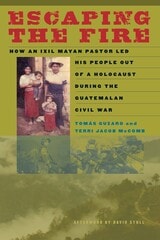
Escaping the Fire
How an Ixil Mayan Pastor Led His People Out of a Holocaust During the Guatemalan Civil WarBy Tomás Guzaro and Terri Jacob McComb
University of Texas Press, 2010
During the height of the Guatemalan civil war, Tomás Guzaro, a Mayan evangelical pastor, led more than two hundred fellow Mayas out of guerrilla-controlled Ixil territory and into the relative safety of the government army's hands. This exodus was one of the factors that caused the guerrillas to lose their grip on the Ixil, thus hastening the return of peace to the area.
In Escaping the Fire, Guzaro relates the hardships common to most Mayas and the resulting unrest that opened the door to civil war. He details the Guatemalan army's atrocities while also describing the Guerrilla Army of the Poor's rise to power in Ixil country, which resulted in limited religious freedom, murdered church leaders, and threatened congregations. His story climaxes with the harrowing vision that induced him to guide his people out of their war-torn homeland.
Guzaro also provides an intimate look at his spiritual pilgrimage through all three of Guatemala's main religions. The son of a Mayan priest, formerly a leader in the Catholic Church, and finally a convert to Protestantism, Guzaro, in detailing his religious life, offers insight into the widespread shift toward Protestantism in Latin America over the past four decades.
Riveting and highly personal, Escaping the Fire ultimately provides a counterpoint to the usual interpretation of indigenous agency during the Guatemalan civil war by documenting the little-studied experiences of Protestants living in guerrilla-held territory.
Guerrillas and Terrorists
Richard L. Clutterbuck
Ohio University Press, 1980
Terrorism and guerrilla warfare, whether justified as resistance to oppression or condemned as disrupting the rule of law, are as old as civilization itself. The power of the terrorist, however, has been magnified by modern weapons, including television, which he has learned to exploit.
To protect itself, society must understand the terrorist and what he is trying to do; thus Dr. Clutterbuck’s purpose in writing this book: “to contribute to the understanding and cooperation between the police, the public and the media.”

On Guerrilla Warfare
Mao Tse-tung
University of Illinois Press, 1961
One of the most influential documents of our time, Mao Tse-tung's pamphlet on guerrilla warfare has become the basic textbook for waging revolution in underdeveloped and emergent areas throughout the world.
Recognizing the fundamental disparity between agrarian and urban societies, Mao advocated unorthodox strategies that converted deficits into advantages: using intelligence provided by the sympathetic peasant population; substituting deception, mobility, and surprise for superior firepower; using retreat as an offensive move; and educating the inhabitants on the ideological basis of the struggle. This radical new approach to warfare, waged in jungles and mountains by mobile guerrilla bands closely supported by local inhabitants, has been adopted by other revolutionary leaders from Ho Chi Minh to Che Guevara.
Mao wrote On Guerrilla Warfare in 1937 while in retreat after ten years of battling the Nationalist army of Chiang Kai-shek. Twelve years later, the Nationalist Chinese were rousted from the mainland, and Mao consolidated his control of a new nation, having put his theories of revolutionary guerrilla warfare to the test.
Established governments have slowly come to recognize the need to understand and devise means to counter this new method of warfare. Samuel B. Griffith's classic translation makes Mao's treatise widely available and includes a comprehensive introduction that profiles Mao, analyzes the nature and conduct of guerrilla warfare, and considers its implications for American policy.

Orange Parades
The Politics of Ritual, Tradition and ControlDominic Bryan
Pluto Press, 2000
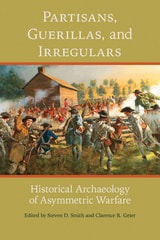
Partisans, Guerillas, and Irregulars
Historical Archaeology of Asymmetric WarfareEdited by Steven D. Smith and Clarence R. Geier
University of Alabama Press, 2019
Essays that explore the growing field of conflict archaeology
Within the last twenty years, the archaeology of conflict has emerged as a valuable subdiscipline within anthropology, contributing greatly to our knowledge and understanding of human conflict on a global scale. Although archaeologists have clearly demonstrated their utility in the study of large-scale battles and sites of conventional warfare, such as camps and forts, conflicts involving asymmetric, guerilla, or irregular warfare are largely missing from the historical record.
Partisans, Guerillas, and Irregulars: Historical Archaeology of Asymmetric Warfare presents recent examples of how historical archaeology can contribute to a better understanding of asymmetric warfare. The volume introduces readers to this growing study and to its historic importance. Contributors illustrate how the wide range of traditional and new methods and techniques of historiography and archaeology can be applied to expose critical actions, sacrifices, and accomplishments of competing groups representing opposing philosophies and ways of life, which are otherwise lost in time.
The case studies offered cover significant events in American and world history, including the French and Indian War, the American Revolution, Indian wars in the Southeast and Southwest, the Civil War, Reconstruction, Prohibition, and World War II. All such examples used here took place at a local or regional level, and several were singular events within a much larger and more complex historic movement. While retained in local memory or tradition, and despite their potential importance, they are poorly, and incompletely addressed in the historic record. Furthermore, these conflicts took place between groups of significantly different cultural and military traditions and capabilities, most taking on a “David vs. Goliath” character, further shaping the definition of asymmetric warfare.
Rebellion in the Backlands
Euclides da Cunha
University of Chicago Press, 1957
Euclides da Cunha's classic account of the brutal campaigns against religious mystic Antonio Conselheiro has been praised by readers around the world as perhaps the greatest book ever written about Brazil. An epic of nonfiction that reads like a novel, it has been hailed by the likes of Stefan Zweig and Elizabeth Hardwick for its prose and its insights into the character of Brazil as the nation was being formed. Da Cunha tells the story of a guerrilla rebellion in the remote village of Canudos that fought the central government from 1893 to 1897, of the challenging conditions that led the people to revolt, and of the violent repression that resulted. A national epic like no other, Rebellion in the Backlands is a lasting classic, a book that has been handed from reader to reader for decades.
The Defense of Jisr al-Doreaa
With E. D. Swinton's "The Defence of Duffer's Drift"Michael L. Burgoyne and Albert J. Marckwardt
University of Chicago Press, 2009
Following the invasion of Iraq in 2003 the U.S. military found itself in a battle with a lethal and adaptive insurgency, where the divisions between enemy and ally were ambiguous at best, and working with the local population was essential for day-to-day survival. From the lessons they learned during multiple tours of duty in Iraq, two American veterans have penned The Defense of Jisr al-Doreaa, an instructional parable of counterinsurgency that addresses the myriad of difficulties associated with war in the postmodern era.
In this tactical primer based on the military classic The Defence of Duffer’s Drift, a young officer deployed for the first time in Iraq receives ground-level lessons about urban combat, communications technology, and high-powered weaponry in an environment where policy meets reality. Over the course of six dreams, the inexperienced soldier fights the same battle again and again, learning each time—the hard way—which false assumptions and misconceptions he needs to discard in order to help his men avoid being killed or captured. As the protagonist struggles with his missions and grapples with the consequences of his mistakes, he develops a keen understanding of counterinsurgency fundamentals and the potential pitfalls of working with the native population.
Accompanied here by the original novella that inspired it, The Defense of Jisr al-Doreaa offers an invaluable resource for cadets and junior military leaders seeking to master counterinsurgency warfare—as well as general readers seeking a deeper understanding of the wars in Iraq and Afghanistan. Just as its predecessor has been a hallmark of military instruction, The Defense of Jisr al-Doreaa will draw the road map for counterinsurgency in the postmodern world.
Visit a website for the book here: www.defenseofJAD.com
The Indian Militia and Description of the Indies
Captain Bernardo de Vargas Machuca, Edited with an introduction by Kris Lane
Duke University Press, 2008
Containing advice on curing rattlesnake bites with amethysts and making saltpeter for gunpowder from concentrated human urine, The Indian Militia is a manual in four parts, the first of which outlines the ideal qualities of the militia commander. Addressing the organization and outfitting of conquest expeditions, Book Two includes extended discussions of arms and medicine. Book Three covers the proper behavior of soldiers, providing advice on marching through peaceful and bellicose territories, crossing rivers, bivouacking in foul weather, and carrying out night raids and ambushes. Book Four deals with peacemaking, town-founding, and the proper treatment of conquered peoples. Appended to these four sections is a brief geographical description of all of Spanish America, with special emphasis on the indigenous peoples of New Granada (roughly modern-day Colombia), followed by a short guide to the southern coasts and heavens. This first English-language edition of The Indian Militia includes an extensive introduction, a posthumous report on Vargas Machuca’s military service, and a selection from his unpublished attack on the writings of Fray Bartolomé de Las Casas.
The Second Palestinian Intifada
A Chronicle of a People's StruggleRamzy Baroud
Pluto Press, 2006
Ramzy Baroud is a veteran journalist and former producer for Al-Jazeera TV. This is his comprehensive account of the momentous events of the last five years which shaped the political landscape not only of Palestine and Israel but of the entire Middle East region.
Addressing the most controversial issues, including the alarming escalation in suicide bombings, and the construction of the Separation Wall, he reports on the huge rate of unemployment and hunger in the Occupied Territories -- statistics so critical that NGOs compare their magnitude to African nations such as the Congo. From the brutality of the Israeli army to the ever-compromising nature of the Palestinian Authority, few are spared Baroud’s thoughtful critique.
The book is clear and concise, with one chapter dedicated to the major events of each year, and includes a comprehensive timeline.
The Slaves Who Defeated Napoléon
Toussaint Louverture and the Haitian War of Independence, 1801–1804Philippe R. Girard
University of Alabama Press, 2011
A deeply researched and definitive account of the climactic battle at the end of the Haitian Revolution
Among the many rebellions against European colonial empires, the Haitian Revolution against France is among the most dramatic and complex. Having begun in 1791 as France was in the throes of its own young revolution, the conflict reached its dramatic climax when Napoleon dispatched a heavily armed expeditionary force led by his brother-in-law Charles Leclerc to re-establish slavery and the sugar economy that had so enriched France. Philippe Girard’s Slaves Who Defeated Napoleon is a deeply researched and engrossing account of this invasion and its spectacular defeat.
For this ambitious account, Philippe Girard has studied not only primary records in Haiti itself but also rare documents from nineteen public and private archives and research libraries in French, U.S., British, and Spanish collections. His more inclusive approach provides a fuller, more accurate and detailed narrative. He reveals not only key military movements, but also less-known aspects like the activities of U.S. merchants, in-fighting within Napoleon’s government, and communication between both sides and other European powers. Girard fills the work with unforgettable stories of those who led or were caught up in the war, people like poorly armed Black soldiers who ambushed Bonaparte’s columns, French child drummers, Jewish bankers in Kingston, weapon smugglers from Quaker Philadelphia, Polish artillerists, and mixed-raced people struggling to preserve their freedom against both Black and white opponents.
Transcending pat ideological and racial categories, the book brings into focus an Atlantic society at the crossroads of African and European influences, where Haitian rebels fought France while embracing its ideals.