Results by title

3 books match the query 'Guidotti-Hernández, Nicole M.'

cover of Archiving Mexican Masculinities in Diaspora

Archiving Mexican Masculinities in Diaspora

Nicole M. Guidotti-Hernández

Duke University Press, 2021

In Archiving Mexican Masculinities in Diaspora, Nicole M. Guidotti-Hernández challenges machismo—a shorthand for racialized and heteronormative Latinx men's misogyny—with nuanced portraits of Mexican men and masculinities along and across the US-Mexico border. Guidotti-Hernández foregrounds Mexican men's emotional vulnerabilities and intimacies in their diasporic communities. Highlighting how Enrique Flores Magón, an anarchist political leader and journalist, upended gender norms through sentimentality and emotional vulnerability that he performed publicly and expressed privately, Guidotti-Hernández documents compelling continuities between his expressions and those of men enrolled in the Bracero program. Braceros—more than 4.5 million Mexican men who traveled to the United States to work in temporary agricultural jobs from 1942 to 1964—forged domesticity and intimacy, sharing affection but also physical violence. Through these case studies that reexamine the diasporic male private sphere, Guidotti-Hernández formulates a theory of transnational Mexican masculinities rooted in emotional and physical intimacy that emerged from the experiences of being racial, political, and social outsiders in the United States.
[more]
cover of Sexing Empire: Bodies, Gender, and Desire in Colonial and Postcolonial Power Relations

Sexing Empire

Bodies, Gender, and Desire in Colonial and Postcolonial Power Relations

Ben Cowan, Nicole M. Guidotto-Hernández, and Jason Ruiz, special issue editors

Duke University Press, 0

From steamships to steam rooms and sweat lodges to sweatshops, processes of pleasures and desire have shaped the regulation and classification of bodies in a wide variety of colonial settings. On beaches and online, and in boardrooms, temples, and taverns, sexual practices have always influenced imperial power relations. In the many places and relationships where colonialism still affects economics, sex and sexuality remain a driving—if sometimes hidden—force. The contributors to this provocative issue contemplate empire as a global process involving sexualized subjects and objects, with essays that consider the history of sex and (or in) empire across several disciplines. Their topics include a "bewitched" nun in colonial Peru, contemporary call-center workers in the Philippines, and General Douglas MacArthur’s mixed-race Filipina mistress, among many others.

Ben Cowan is assistant professor of world history at George Mason University. Nicole M. Guidotti-Hernández is associate professor of American studies at the University of Texas at Austin and the author of Unspeakable Violence: Remapping U.S. and Mexican National Imaginaries, also published by Duke University Press. Jason Ruiz is assistant professor of American studies at the University of Notre Dame and the author of Americans in the Treasure House: Travel to Porfirian Mexico and the Cultural Politics of Empire.

Contributors: Laura Briggs, Keith Camacho, Ben Cowan, Emmanuel David, Vernadette Vicuña Gonzalez, Nicole M. Guidotti-Hernández, Elizabeth Mesok, Rachel Sarah O’Toole, Katrina Phillips, Jason Ruiz

[more]
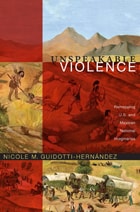
cover of Unspeakable Violence: Remapping U.S. and Mexican National Imaginaries

Unspeakable Violence

Remapping U.S. and Mexican National Imaginaries

Nicole M. Guidotti-Hernández

Duke University Press, 2011

Unspeakable Violence addresses the epistemic and physical violence inflicted on racialized and gendered subjects in the U.S.–Mexico borderlands from the mid-nineteenth century through the early twentieth. Arguing that this violence was fundamental to U.S., Mexican, and Chicana/o nationalisms, Nicole M. Guidotti-Hernández examines the lynching of a Mexican woman in California in 1851, the Camp Grant Indian Massacre of 1871, the racism evident in the work of the anthropologist Jovita González, and the attempted genocide, between 1876 and 1907, of the Yaqui Indians in the Arizona–Sonora borderlands. Guidotti-Hernández shows that these events have been told and retold in ways that have produced particular versions of nationhood and effaced other issues. Scrutinizing stories of victimization and resistance, and celebratory narratives of mestizaje and hybridity in Chicana/o, Latina/o, and borderlands studies, she contends that by not acknowledging the racialized violence perpetrated by Mexicans, Chicanas/os, and indigenous peoples, as well as Anglos, narratives of mestizaje and resistance inadvertently privilege certain brown bodies over others. Unspeakable Violence calls for a new, transnational feminist approach to violence, gender, sexuality, race, and citizenship in the borderlands.
[more]