Results by title
23 books match the query 'HIV infections'

A Pill for Promiscuity
Gay Sex in an Age of PharmaceuticalsAndrew R. Spieldenner
Rutgers University Press, 2023
Finalist for Lambda Literary Award for Best LGBTQ+ Anthology
For a generation of gay men who came of age in the 1980s and 1990s, becoming sexually active meant confronting the dangers of catching and transmitting HIV. In the 21st century, however, the development of viral suppression treatments and preventative pills such as PrEP and nPEP has massively reduced the risk of acquiring HIV. Yet some of the stigma around gay male promiscuity and bareback sex has remained, inhibiting open dialogues about sexual desire, risk, and pleasure.
A Pill for Promiscuity brings together academics, artists, and activists—from different generations, countries, ethnic backgrounds, and HIV statuses—to reflect on how gay sex has changed in a post-PrEP era. Some offer personal perspectives on the value of promiscuity and the sexual communities it fosters, while others critique unequal access to PrEP and the increased role Big Pharma now plays in gay life. With a diverse group of contributors that includes novelist Andrew Holleran, trans scholar Lore/tta LeMaster, cartoonist Steve MacIsaac, and pornographic film director Mister Pam, this book asks provocative questions about how we might reimagine queer sex and sexuality in the 21st century.
African Intimacies
Race, Homosexuality, and GlobalizationNeville Hoad
University of Minnesota Press, 2007

At Risk
Rhetoric, Deviance, and the Politics of HIV PreventionMcKinley Green
The Ohio State University Press, 2026
At Risk explores how young people living with HIV have developed risk-reduction practices that seem to contradict public health recommendations for HIV prevention. Putting forward a rhetoric of deviance to frame these instances, McKinley Green argues that they represent intentional healthcare decisions that help young people mitigate the health risks that are most pressing in their daily lives. While current HIV risk-reduction priorities in the US are framed around a finite spectrum of sexual behaviors and medical technologies, those living with HIV often encounter a broader spectrum of risks shaped by structural inequities like racism, housing insecurity, queer and transphobia, HIV stigma, trauma in medical settings, and addiction, all of which create conditions that increase the risk of HIV transmission and present other threats to safety and autonomy.
Drawing from more than sixty hours of interviews with young people living with HIV, frontline healthcare workers, and HIV activists, Green highlights how those living with HIV have developed agency and expertise in navigating, mitigating, and communicating about risk. In doing so, he offers alternative epistemologies of sexual health risk that point toward more patient-centered HIV prevention frameworks.

Commodities of Care
The Business of HIV Testing in ChinaElsa L. Fan
University of Minnesota Press, 2021
How global health practices can end up reorganizing practices of care for the people and communities they seek to serve
Commodities of Care examines the unanticipated effects of global health interventions, ideas, and practices as they unfold in communities of men who have sex with men (MSM) in China. Targeted for the scaling-up of HIV testing, Elsa L. Fan examines how the impact of this initiative has transformed these men from subjects of care into commodities of care: through the use of performance-based financing tied to HIV testing, MSM have become a source of economic and political capital.
In ethnographic detail, Fan shows how this particular program, ushered in by global health donors, became the prevailing strategy to control the epidemic in China in the late 2000s. Fan examines the implementation of MSM testing and its effects among these men, arguing that the intervention produced new markets of men, driven by the push to meet testing metrics.
Fan shows how men who have sex with men in China came to see themselves as part of a global “MSM” category, adopting new selfhoods and socialities inextricably tied to HIV and to testing. Wider trends in global health programming have shaped national public health responses in China and, this book reveals, have radically altered the ways health, disease, and care are addressed.
Cooking Data
Culture and Politics in an African Research WorldCal (Crystal) Biruk
Duke University Press, 2018
Criminalized Lives
HIV and Legal ViolenceAlexander McClelland
Rutgers University Press, 2024
Canada has been known as a hot spot for HIV criminalization where the act of not disclosing one’s HIV-positive status to sex partners has historically been regarded as a serious criminal offence. Criminalized Lives describes how this approach has disproportionately harmed the poor, Black and Indigenous people, gay men, and women in Canada. In this book, people who have been criminally accused of not disclosing their HIV-positive status, detail the many complexities of disclosure, and the violence that results from being criminalized.
Accompanied by portraits from artist Eric Kostiuk Williams, the profiles examine whether the criminal legal system is really prepared to handle the nuances and ethical dilemmas faced everyday by people living with HIV. By offering personal stories of people who have faced criminalization first-hand, Alexander McClelland questions common assumptions about HIV, the role of punishment, and the violence that results from the criminal legal system’s legacy of categorizing people as either victims or perpetrators.
Note: A regrettable error appears on page 22. The number 240 should be 206 when referring to the number of people prosecuted in relation to allegations of HIV nondisclosure. This will be fixed in future reprints.
Fault Lines of Care
Gender, HIV, and Global Health in BoliviaHeckert, Carina
Rutgers University Press, 2018
The HIV epidemic in Bolivia has received little attention on a global scale in light of the country’s low HIV prevalence rate. However, by profiling the largest city in this land-locked Latin American country, Carina Heckert shows how global health-funded HIV care programs at times clash with local realities, which can have catastrophic effects for people living with HIV who must rely on global health resources to survive. These ethnographic insights, as a result, can be applied to AIDS programs across the globe.
In Fault Lines of Care, Heckert provides a detailed examination of the effects of global health and governmental policy decisions on the everyday lives of people living with HIV in Santa Cruz. She focuses on the gendered dynamics that play a role in the development and implementation of HIV care programs and shows how decisions made from above impact what happens on the ground.
Governing the Global Clinic
HIV and the Legal Transformation of MedicineCarol A. Heimer
University of Chicago Press, 2025
A deep examination of how new, legalistic norms affected the trajectory of global HIV care and altered the practice of medicine.
HIV emerged in the world at a time when medicine and healthcare were undergoing two major transformations: globalization and a turn toward legally inflected, rule-based ways of doing things. It accelerated both trends. While pestilence and disease are generally considered the domain of biological sciences and medicine, social arrangements—and law in particular—are also crucial.
Drawing on years of research in HIV clinics in the United States, Thailand, South Africa, and Uganda, Governing the Global Clinic examines how growing norms of legalized accountability have altered the work of healthcare systems and how the effects of legalization vary across different national contexts. A key feature of legalism is universalistic language, but, in practice, rules are usually imported from richer countries (especially the United States) to poorer ones that have less adequate infrastructure and fewer resources with which to implement them. Challenging readers to reconsider the impulse to use law to organize and govern social life, Governing the Global Clinic poses difficult questions: When do rules solve problems, and when do they create new problems? When do rules become decoupled from ethics, and when do they lead to deeper moral commitments? When do rules reduce inequality? And when do they reflect, reproduce, and even amplify inequality?

Heterosexual Africa?
The History of an Idea from the Age of Exploration to the Age of AIDSMarc Epprecht
Ohio University Press, 2008
Heterosexual Africa? The History of an Idea from the Age of Exploration to the Age of AIDS builds from Marc Epprecht’s previous book, Hungochani (which focuses explicitly on same-sex desire in southern Africa), to explore the historical processes by which a singular, heterosexual identity for Africa was constructed—by anthropologists, ethnopsychologists, colonial officials, African elites, and most recently, health care workers seeking to address the HIV/AIDS pandemic. This is an eloquently written, accessible book, based on a rich and diverse range of sources, that will find enthusiastic audiences in classrooms and in the general public.
Epprecht argues that Africans, just like people all over the world, have always had a range of sexualities and sexual identities. Over the course of the last two centuries, however, African societies south of the Sahara have come to be viewed as singularly heterosexual. Epprecht carefully traces the many routes by which this singularity, this heteronormativity, became a dominant culture. In telling a fascinating story that will surely generate lively debate, Epprecht makes his project speak to a range of literatures—queer theory, the new imperial history, African social history, queer and women’s studies, and biomedical literature on the HIV/AIDS pandemic. He does this with a light enough hand that his story is not bogged down by endless references to particular debates.
Heterosexual Africa? aims to understand an enduring stereotype about Africa and Africans. It asks how Africa came to be defined as a “homosexual-free zone” during the colonial era, and how this idea not only survived the transition to independence but flourished under conditions of globalization and early panicky responses to HIV/AIDS.
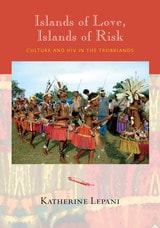
Islands of Love, Islands of Risk
Culture and HIV in the TrobriandsKatherine Lepani
Vanderbilt University Press, 2012
Written by an anthropologist who has direct ties to the Trobriands through marriage and who has been involved in Papua New Guinea's national response to the HIV epidemic since the mid-1990s, Islands of Love, Islands of Risk is an unusual insider ethnography. Katherine Lepani describes in vivid detail the cultural practices of regeneration, from the traditional dance called Wosimwaya to the elaborate exchanges that are part of the mortuary feasts called sagali. Focusing on the sexual freedom of young people, the author reveals the social value of sexual practice. By bringing cultural context and lived experience to the fore, the book addresses the failure of standardized public health programs to bridge the persistent gap between HIV awareness and prevention. The book offers insights on the interplay between global and local understandings of gender, sexuality, and disease and suggests the possibility of viewing sexuality in terms other than risk.
Islands of Love, Islands of Risk illustrates the contribution of ethnographic research methodology in facilitating dialogue between different ways of knowing. As a contemporary perspective on Malinowski's classic accounts of Trobriand sexuality, the book reaffirms the Trobriands' central place in the study of anthropology.
This book is the recipient of the annual Norman L. and Roselea J. Goldberg Prize for the best project in the area of medicine.
Modernizing Medicine in Zimbabwe
HIV/AIDS and Traditional HealersDavid S. Simmons
Vanderbilt University Press, 2012
Combining anthropological, historical, and public health perspectives, Modernizing Medicine in Zimbabwe explores the intersection of African healing traditions and Western health development, emphasizing the role of this historical relationship in current debates about HIV/AIDS. Drawing on diverse sources including colonial records, missionary correspondence, international health policy reports, and interviews with traditional healers, anthropologist David S. Simmons demonstrates the remarkable adaptive qualities of these disparate communities as they try to meet the urgent needs of the people.
Negotiating Pharmaceutical Uncertainty
Women's Agency in a South African HIV Prevention TrialEirik Saethre
Vanderbilt University Press, 2017
As embedded anthropologists, Saethre and Stadler provide a unique and nuanced perspective of the reality of a clinical trial that is often hidden from view.
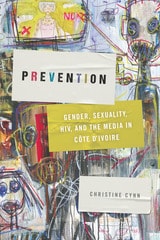
Prevention
Gender, Sexuality, HIV, and the Media in Côte d'IvoireChristine Cynn
The Ohio State University Press, 2018
More specifically, Cynn argues that through the bolstering of normative conceptions of gendered sexualities and families, HIV prevention media campaigns seek to actively create proper subjects, a goal corresponding with nation-building projects and reproducing their terms of belonging. During periods of increasingly virulent political and economic struggles in Côte d’Ivoire, such HIV prevention messages have lent support to lender- and state-mandated structural adjustment policies and to the exclusionary logic that casts some—such as those suffering from AIDS-related illnesses, those labeled as “homosexual,” sex workers, intravenous drug users, and the HIV-positive child—as implicitly unassimilable to the community and nation. Deeply interdisciplinary, Prevention brings to light new forms of exclusion and expands scholarship on gender and sexual normativities as it intersects with that on public health, neoliberalism, and film and media.
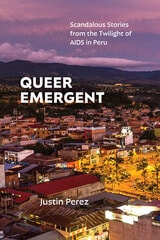
Queer Emergent
Scandalous Stories from the Twilight of AIDS in PeruJustin Perez
Duke University Press, 2025

Regulating Romance
Youth Love Letters, Moral Anxiety, and Intervention in Uganda’s Time of AIDSShanti Parikh
Vanderbilt University Press, 2016
Parikh also examines the unintended consequences of Uganda's aggressive HIV campaigns that thrust sexuality and anxieties about it into the public sphere. In a context of economic precarity and generational tension that constantly complicates young people's notions of consumption-based romance, communities experience the dilemmas of protecting and policing young people from reputational and health dangers of sexual activity. "They arrested me for loving a school girl" is the title of a chapter on controlling delinquent daughters and punishing defiant boyfriends for attempting to undermine patriarchal authority by asserting their adolescent romantic agency. Sex education programs struggle between risk and pleasure amidst morally charged debates among international donors and community elders, transforming the youthful female body into a platform for public critique and concern. The many sides of this research constitute an eloquently executed critical anthropology of intervention.
Risky Rhetoric
AIDS and the Cultural Practices of HIV TestingJ. Blake Scott
Southern Illinois University Press, 2003
Risky Rhetoric: AIDS and the Cultural Practices of HIV Testing is the first book-length study of the rhetoric inherent in and surrounding HIV testing. In addition to providing a history of HIV testing in the United States from 1985 to the present, J. Blake Scott explains how faulty arguments about testing’s power and effects have promoted unresponsive and even dangerous testing practices for so-called healthy subjects as well as those deemed risky.A new afterword to the paperback edition discusses changes in testing technology, treatments, and public health responses in the last ten years. The ultimate goal of Risky Rhetoric is to offer strategies to policy makers, HIV educators and test counselors, and other rhetors for developing more responsive and egalitarian testing-related rhetorics and practices.
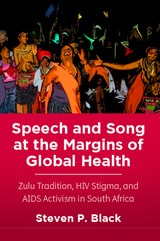
Speech and Song at the Margins of Global Health
Zulu Tradition, HIV Stigma, and AIDS Activism in South AfricaSteven P. Black
Rutgers University Press, 2019
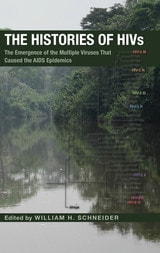
The Histories of HIVs
The Emergence of the Multiple Viruses That Caused the AIDS EpidemicsWilliam H. Schneider
Ohio University Press, 2021
This new collection of essays on HIV viruses spans disciplines to topple popular narratives about the origins of the AIDS pandemic and the impact of the disease on public health policy.
With a death toll in the tens of millions, the AIDS pandemic was one of the worst medical disasters of the past century. The disease was identified in 1981, at the height of miraculous postwar medical achievements, including effective antibiotics, breakthrough advances in heart surgery and transplantations, and cheap, safe vaccines—smallpox had been eradicated just a few years earlier. Arriving as they did during this era of confidence in modern medicine, the HIV epidemics shook the public’s faith in health science. Despite subsequent success in identifying, testing, and treating AIDS, the emergence of epidemics and outbreaks of Ebola, Zika, and the novel coronaviruses (SARS and COVID-19) are stark reminders that such confidence in modern medicine is not likely to be restored until the emergence of these viruses is better understood.
This collection combines the work of major social science and humanities scholars with that of virologists and epidemiologists to provide a broader understanding of the historical, social, and cultural circumstances that produced the pandemic. The authors argue that the emergence of the HIV viruses and their epidemic spread were not the result of a random mutation but rather broader new influences whose impact depended upon a combination of specific circumstances at different places and times. The viruses emerged and were transmitted according to population movement and urbanization, changes in sexual relations, new medical procedures, and war. In this way, the AIDS pandemic was not a chance natural occurrence, but a human-made disaster.
Essays by: Ernest M. Drucker, Tamara Giles-Vernick, Ch. Didier Gondola, Guillaume Lachenal, Amandine Lauro, Preston A. Marx, Stephanie Rupp, François Simon, Jorge Varanda
The Republic of Therapy
Triage and Sovereignty in West Africa’s Time of AIDSVinh-Kim Nguyen
Duke University Press, 2010
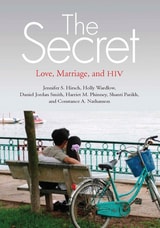
The Secret
Love, Marriage, and HIVJennifer S. Hirsch
Vanderbilt University Press, 2009
For many women around the world, their greatest risk of HIV infection comes from having sex with the very person with whom they are supposed to have sex: their spouse. The Secret situates marital HIV risk within a broader exploration of marital and extramarital sexuality in five diverse settings: Mexico, Nigeria, Uganda, Vietnam, and Papua New Guinea. In these settings, the authors write, men's extramarital sex is an officially secret but actually widespread (and widely acknowledged) social practice, rather than something men do because their bodies demand it and women can't stop them.
Drawing on research conducted as part of an innovative comparative ethnographic study, and modeling a novel approach to collaborative anthropological scholarship, the authors show men's extramarital sex to be a fundamental aspect of gendered social organization. Through theoretically sophisticated yet lucid writing and vivid ethnographic description, drawing on rich data from the marital case studies conducted by research teams in each country, they trace how extramarital opportunity structures, sexual geographies, and concerns about social risk facilitate men's participation in extramarital sex. Also documented throughout is the collision between traditional ways and the new practices of romantic companionate marriage.
The Sympathetic State
Disaster Relief and the Origins of the American Welfare StateMichele Landis Dauber
University of Chicago Press, 2012
Viral Frictions
Global Health and the Persistence of HIV Stigma in KenyaElizabeth J. Pfeiffer
Rutgers University Press, 2022
Whose Agency
The Politics and Practice of Kenya's HIV-Prevention NGOsMegan Hershey
University of Wisconsin Press, 2019
By focusing on one particular type of NGO—those organized to help prevent the spread and transmission of HIV in Kenya—Megan Hershey interrogates the ways these organizations achieve (or fail to achieve) their planned outcomes. Along the way, she examines the slippery slope that is often used to define “success” based on meeting donor-set goals versus locally identified needs. She also explores the complex network of bureaucratic requirements at both the national and local levels that affect the delicate relationships NGOs have with the state. Drawing on extensive, original quantitative and qualitative research, Whose Agency serves as a much-needed case study for understanding the strengths and shortcomings of participatory development and community engagement.