Results by title
3 books match the query 'Habitations'
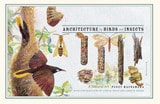
Architecture by Birds and Insects
A Natural ArtPaintings by Peggy Macnamara
University of Chicago Press, 2008
Influential American architect Philip Johnson once mused, “All architecture is shelter; all great architecture is the design of space that contains, cuddles, exalts, or stimulates the persons in that space.” But with just a small swap of a key word, Johnson could well have been describing animal nests. Birds and insects are nature’s premier architects, using a dizzying array of talents to build functional homes in which to live, reproduce, and care for their young. Recycling sticks, branches, grass, and mud to construct their shelters, they are undoubtedly the originators of “green architecture.”
A visual celebration of these natural feats of engineering and ingenuity, Architecture by Birds and Insects allows readers a peek inside a wide range of nests, offering a rare opportunity to get a sense of the materials and methods used to build them. Here, we see the kinds of places where nests are built—for instance, the house wren has been known to occupy cow skulls, flower pots, tin cans, and the pockets of hanging laundry, while the uglynest caterpillar prefers rose bushes and cherry trees. Inspired by the vast nest collection at the Field Museum, which features specimens gathered throughout North and South America, Peggy Macnamara’s paintings are enhanced by text written by museum curators. This narrative provides a foundation in natural history for each painting, as well as fascinating anecdotes about the nests and their builders.
Like so many natural treasures, nests are easy to ignore. But Macnamara’s gorgeous paintings will undoubtedly change that. Architecture by Birds and Insects at last gives the tiniest engineers their rightful moment in the spotlight, and in so doing increases awareness and encourages the protection of birds, insects, and their habitats. Readers will never look at a Frank Gehry design, or a treetop nest, the same way again.
[more]

Habitations of Modernity
Essays in the Wake of Subaltern StudiesDipesh Chakrabarty
University of Chicago Press, 2002
In Habitations of Modernity, Dipesh Chakrabarty explores the complexities of modernism in India and seeks principles of humaneness grounded in everyday life that may elude grand political theories. The questions that motivate Chakrabarty are shared by all postcolonial historians and anthropologists: How do we think about the legacy of the European Enlightenment in lands far from Europe in geography or history? How can we envision ways of being modern that speak to what is shared around the world, as well as to cultural diversity? How do we resist the tendency to justify the violence accompanying triumphalist moments of modernity?
Chakrabarty pursues these issues in a series of closely linked essays, ranging from a history of the influential Indian series Subaltern Studies to examinations of specific cultural practices in modern India, such as the use of khadi—Gandhian style of dress—by male politicians and the politics of civic consciousness in public spaces. He concludes with considerations of the ethical dilemmas that arise when one writes on behalf of social justice projects.
Chakrabarty pursues these issues in a series of closely linked essays, ranging from a history of the influential Indian series Subaltern Studies to examinations of specific cultural practices in modern India, such as the use of khadi—Gandhian style of dress—by male politicians and the politics of civic consciousness in public spaces. He concludes with considerations of the ethical dilemmas that arise when one writes on behalf of social justice projects.
[more]
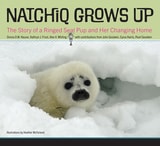
Natchiq Grows Up
The Story of an Alaska Ringed Seal Pup and Her Changing HomeDonna D.W. Hauser
University of Alaska Press, 2023
This is the story of Natchiq, the ringed seal pup, growing up in her snow cave on the sea ice in northern Alaska with her mom Siku. Interwoven with Indigenous Knowledge from Qikiktagruk Elders from northwest Alaska, Iñupiaq terms, and scientific findings, readers follow Natchiq’s daring escapes from predators and seal dogs specially trained to help biologists find ringed seals.
Beginning in the 1980s, scientists started traveling to northwest Alaska to research the lives of ringed seals, bringing Labrador retrievers who could sniff out seals and their snow cave homes (called lairs) on the sea ice. Decades later, scientists partnered with the Iñupiaq people of
Qikiktaġruk (Kotzebue) to learn more about ringed seals. They relied on a combination of Indigenous Knowledge and scientific techniques to capture and apply tags to understand the movements and behavior of ringed seals.
But the Arctic homes of ringed seals are changing, and the long history of ringed seal science in the Kotzebue Sound proved to be just the beginning of long and cooperative relationships melding science and Indigenous knowledge. During 2018 and 2019, with unprecedented sea ice conditions, Qikiktagrumiut Elders and scientists returned to the ice to measure changes in the habitat available for ringed seal pups in the region.
[more]