Results by title
5 books match the query 'Hacking'
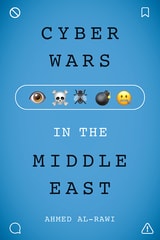
Cyberwars in the Middle East
Ahmed Al-Rawi
Rutgers University Press, 2021
On the one hand, nation-states as well as their affiliated hacking groups like cyber warriors employ hacking as offensive and defensive tools in connection to the cyber activity or inactivity of other nation-states, such as the role of Russian Trolls disseminating disinformation on social media during the US 2016 presidential election. This is regarded as a horizontal flow of political disruption. Sometimes, nation-states, like the UAE, Saudi Arabia, and Bahrain, use hacking and surveillance tactics as a vertical flow (top-bottom) form of online political disruption by targeting their own citizens due to their oppositional or activists’ political views. On the other hand, regular hackers who are often politically independent practice a form of bottom-top political disruption to address issues related to the internal politics of their respective nation-states such as the case of a number of Iraqi, Saudi, and Algerian hackers. In some cases, other hackers target ordinary citizens to express opposition to their political or ideological views which is regarded as a horizontal form of online political disruption. This book is the first of its kind to shine a light on many ways that governments and hackers are perpetrating cyber attacks in the Middle East and beyond, and to show the ripple effect of these attacks.
From Russia with Code
Programming Migrations in Post-Soviet TimesMario Biagioli and Vincent Antonin Lepinay, editors
Duke University Press, 2019
Contributors. Irina Antoschyuk, Mario Biagioli, Ksenia Ermoshina, Marina Fedorova, Andrey Indukaev, Alina Kontareva, Diana Kurkovsky, Vincent Lépinay, Alexandra Masalskaya, Daria Savchenko, Liubava Shatokhina, Alexandra Simonova, Ksenia Tatarchenko, Zinaida Vasilyeva, Dimitrii Zhikharevich
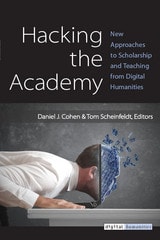
Hacking the Academy
New Approaches to Scholarship and Teaching from Digital HumanitiesDaniel J. Cohen and Tom Scheinfeldt, Editors
University of Michigan Press, 2013
On May 21, 2010, Daniel J. Cohen and Tom Scheinfeldt posted the following provocative questions online:
“Can an algorithm edit a journal? Can a library exist without books? Can students build and manage their own learning management platforms? Can a conference be held without a program? Can Twitter replace a scholarly society?”
As recently as the mid-2000s, questions like these would have been unthinkable. But today serious scholars are asking whether the institutions of the academy as they have existed for decades, even centuries, aren’t becoming obsolete. Every aspect of scholarly infrastructure is being questioned, and even more importantly, being hacked. Sympathetic scholars of traditionally disparate disciplines are canceling their association memberships and building their own networks on Facebook and Twitter. Journals are being compiled automatically from self-published blog posts. Newly minted PhDs are forgoing the tenure track for alternative academic careers that blur the lines between research, teaching, and service. Graduate students are looking beyond the categories of the traditional CV and building expansive professional identities and popular followings through social media. Educational technologists are “punking” established technology vendors by rolling out their own open source infrastructure.
Here, in Hacking the Academy, Daniel J. Cohen and Tom Scheinfeldt have gathered a sampling of the answers to their initial questions from scores of engaged academics who care deeply about higher education. These are the responses from a wide array of scholars, presenting their thoughts and approaches with a vibrant intensity, as they explore and contribute to ongoing efforts to rebuild scholarly infrastructure for a new millennium.
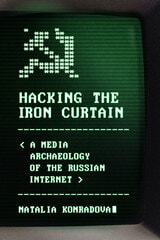
Hacking the Iron Curtain
A Media Archaeology of the Russian InternetNatalia Konradova
University of Wisconsin Press, 2026
Media archaeologist Natalia Konradova examines the history of the internet in Russia and its predecessor state, cutting through layers of technological history and dusting off conceptual artifacts of the past. Inspired by the fundamental question of how Soviets imagined future technologies, she investigates experiments with telepathy alongside the (then equally improbable) dream of a global, digitally connected computer network. Since the story of the Russian internet is inextricably wound up with Soviet society and the history of the Cold War, Hacking the Iron Curtain is as much a cultural and political history as it is a technological one—a history that illustrates how collective dreams can challenge geopolitical ambitions and inspire world-changing technologies.

The Heretic's Guide to Global Finance
Hacking the Future of MoneyBrett Scott
Pluto Press, 2013
Popular anger against the financial system has never been higher, yet the practical workings of the system remain opaque to many people. The Heretic's Guide to Global Finance aims to bridge the gap between protest slogans and practical proposals for reform.
Brett Scott is a campaigner and former derivatives broker who has a unique understanding of life inside and outside the financial sector. He builds up a framework for approaching it based on the three principles of 'Exploring', 'Jamming' and 'Building', offering a practical guide for those who wish to deepen their understanding of, and access to, the inner workings of financial institutions.
Scott covers aspects frequently overlooked, such as the cultural dimensions of the financial system, and considers major issues such as agricultural speculation, carbon markets and tar-sands financing. Crucially, it also showcases the growing alternative finance movement, showing how everyday people can get involved in building a new, democratic, financial system.