Results by title
2 books match the query 'Halliwell, Stephen'
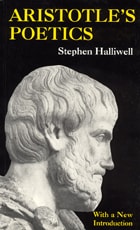
Aristotle's Poetics
Stephen Halliwell
University of Chicago Press, 1998
In this, the fullest, sustained interpretation of Aristotle's Poetics available in English, Stephen Halliwell demonstrates that the Poetics, despite its laconic brevity, is a coherent statement of a challenging theory of poetic art, and it hints towards a theory of mimetic art in general. Assessing this theory against the background of earlier Greek views on poetry and art, particularly Plato's, Halliwell goes further than any previous author in setting Aristotle's ideas in the wider context of his philosophical system.
The core of the book is a fresh appraisal of Aristotle's view of tragic drama, in which Halliwell contends that at the heart of the Poetics lies a philosophical urge to instill a secularized understanding of Greek tragedy.
"Essential reading not only for all serious students of the Poetics . . . but also for those—the great majority—who have prudently fought shy of it altogether."—B. R. Rees, Classical Review
"A splendid work of scholarship and analysis . . . a brilliant interpretation."—Alexander Nehamas, Times Literary Supplement
[more]
Tolstoy and His Problems
Views from the Twenty-First CenturyEdited by Inessa Medzhibovskaya
Northwestern University Press, 2019
Assessing the relevance of Tolstoy's thought and teachings for the current day, Tolstoy and His Problems: Views from the Twenty-First Century is a collection of essays by a group of Tolstoy specialists who are leading scholars in the humanities and social sciences.
In the broadest sense—with essays on a variety of issues that occupied Tolstoy, such as nihilism, mysticism, social theory, religion, Judaism, education, opera, and Shakespeare—the volume offers a fresh evaluation of Tolstoy's program to reform the ways we live, work, commune with nature and art, practice spirituality, exchange ideas and knowledge, become educated, and speak and think about history and social change.
In the broadest sense—with essays on a variety of issues that occupied Tolstoy, such as nihilism, mysticism, social theory, religion, Judaism, education, opera, and Shakespeare—the volume offers a fresh evaluation of Tolstoy's program to reform the ways we live, work, commune with nature and art, practice spirituality, exchange ideas and knowledge, become educated, and speak and think about history and social change.
[more]