Results by title
5 books match the query 'Hallucinogenic drugs and religious experience'
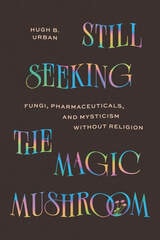
Still Seeking the Magic Mushroom
Fungi, Pharmaceuticals, and Mysticism Without ReligionHugh B. Urban
University of Chicago Press, 2026
A sweeping cultural history of our yearning for psychedelics to free us from both modern life and traditional religion.
In 1957, Life Magazine published an article called “Seeking the Magic Mushroom” about a Mexican healing ritual centered on an obscure psychedelic: Psilocybe mushrooms. Readers raced to experiment with the drug for their own spiritual, therapeutic, and recreational purposes until a psychedelic wave swept the nation. Today, though psilocybin has been transformed from a sacred fungus into a pharmaceutical product, many people still turn to the enigmatic mushroom to encounter profound spiritual experiences without the baggage of traditional religion.
In Still Seeking the Magic Mushroom, Hugh B. Urban examines the alluring promise of mysticism without religion. With psychedelics, one need not fast, flagellate, or even worship a god to encounter the transcendent; a carefully timed ingestion of psilocybin will suffice. But, Urban argues, stripping the trip from its religion came at a cost: the erasure of Indigenous culture and the eventual commercialization and scientification of the psychedelic underground. Urban shows that psychedelic mushrooms, far from the fringe or countercultural margins, have been central players in shaping American attitudes toward religion and science over the last century. He argues that our love affair with the intoxicating fungus reveals a deep frustration with a disenchanted world, desire for meaning beyond religion, yearning for nature amid ecological crisis, faith in science to save us, and the relentless power of capitalism to turn everything into commodities.
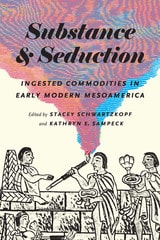
Substance and Seduction
Ingested Commodities in Early Modern MesoamericaEdited by Stacey Schwartzkopf and Kathryn E. Sampeck
University of Texas Press, 2017
Chocolate and sugar, alcohol and tobacco, peyote and hallucinogenic mushrooms—these seductive substances have been a nexus of desire for both pleasure and profit in Mesoamerica since colonial times. But how did these substances seduce? And when and how did they come to be desired and then demanded, even by those who had never encountered them before? The contributors to this volume explore these questions across a range of times, places, and peoples to discover how the individual pleasures of consumption were shaped by social, cultural, economic, and political forces.
Focusing on ingestible substances as a group, which has not been done before in the scholarly literature, the chapters in Substance and Seduction trace three key links between colonization and commodification. First, as substances that were taken into the bodies of both colonizers and colonized, these foods and drugs participated in unexpected connections among sites of production and consumption; racial and ethnic categories; and free, forced, and enslaved labor regimes. Second, as commodities developed in the long transition from mercantile to modern capitalism, each substance in some way drew its enduring power from its ability to seduce: to stimulate bodies; to alter minds; to mark class, social, and ethnic boundaries; and to generate wealth. Finally, as objects of scholarly inquiry, each substance rewards interdisciplinary approaches that balance the considerations of pleasure and profit, materiality and morality, and culture and political economy.
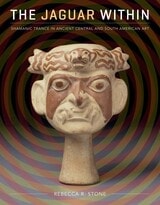
The Jaguar Within
Shamanic Trance in Ancient Central and South American ArtBy Rebecca R. Stone
University of Texas Press, 2011
An important new way of viewing the prehistoric art of the Americas, The Jaguar Within demonstrates that understanding a work of art’s connection with shamanic trance can lead to an appreciation of it as an extremely creative solution to the inherent challenge of giving material form to nonmaterial realities and states of being.
Shamanism—the practice of entering a trance state to experience visions of a reality beyond the ordinary and to gain esoteric knowledge—has been an important part of life for indigenous societies throughout the Americas from prehistoric times until the present. Much has been written about shamanism in both scholarly and popular literature, but few authors have linked it to another significant visual realm—art. In this pioneering study, Rebecca R. Stone considers how deep familiarity with, and profound respect for, the extra-ordinary visionary experiences of shamanism profoundly affected the artistic output of indigenous cultures in Central and South America before the European invasions of the sixteenth century.
Using ethnographic accounts of shamanic trance experiences, Stone defines a core set of trance vision characteristics, including enhanced senses; ego dissolution; bodily distortions; flying, spinning, and undulating sensations; synaesthesia; and physical transformation from the human self into animal and other states of being. Stone then traces these visionary characteristics in ancient artworks from Costa Rica and Peru. She makes a convincing case that these works, especially those of the Moche, depict shamans in a trance state or else convey the perceptual experience of visions by creating deliberately chaotic and distorted conglomerations of partial, inverted, and incoherent images.

The Oven
An Anti-LectureIlan Stavans
University of Massachusetts Press, 2018
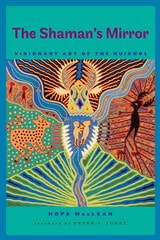
The Shaman’s Mirror
Visionary Art of the HuicholBy Hope MacLean
University of Texas Press, 2011
Huichol Indian yarn paintings are one of the world's great indigenous arts, sold around the world and advertised as authentic records of dreams and visions of the shamans. Using glowing colored yarns, the Huichol Indians of Mexico paint the mystical symbols of their culture—the hallucinogenic peyote cactus, the blue deer-spirit who appears to the shamans as they croon their songs around the fire in all-night ceremonies deep in the Sierra Madre mountains, and the pilgrimages to sacred sites, high in the central Mexican desert of Wirikuta.
Hope MacLean provides the first comprehensive study of Huichol yarn paintings, from their origins as sacred offerings to their transformation into commercial art. Drawing on twenty years of ethnographic fieldwork, she interviews Huichol artists who have innovated important themes and styles. She compares the artists' views with those of art dealers and government officials to show how yarn painters respond to market influences while still keeping their religious beliefs.
Most innovative is her exploration of what it means to say a tourist art is based on dreams and visions of the shamans. She explains what visionary experience means in Huichol culture and discusses the influence of the hallucinogenic peyote cactus on the Huichol's remarkable use of color. She uncovers a deep structure of visionary experience, rooted in Huichol concepts of soul-energy, and shows how this remarkable conception may be linked to visionary experiences as described by other Uto-Aztecan and Meso-American cultures.