Results by title
81 books match the query 'Handbook' and 5 start with a
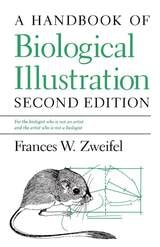
A Handbook of Biological Illustration
Frances W. Zweifel
University of Chicago Press, 1988
This book is designed to help biologists who must create their own illustrations and artists who are confronted with unfamiliar biological subjects. The author, an experienced biological illustrator, gives practical instructions and advice on the consideration of size and of printing processes, choice of materials, methods for saving time and labor, drawing techniques, lettering methods, and mounting and packing the finished illustrations. She explains how to produce clear and attractive charts, graphs, and maps, so essential to science publications. Though this primer does not cover photographic techniques, it does include advice on retouching, cropping, and mounting photographs and on using photographs of biological subjects as aids in drawing. This second edition is updated to reflect the many technological changes in art materials and printing processes that have occurred since the book's first publication, and it includes an entirely new chapter on planning, designing, and mounting the poster presentations that have become an essential part of conferences held by scientific societies. Also included are the requirements and conventions peculiar to biological illustration and a bibliography of useful reference works.
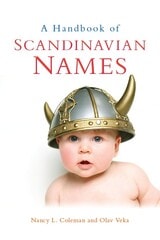
A Handbook of Scandinavian Names
Nancy L. Coleman
University of Wisconsin Press, 2010
Are you looking for
• A Scandinavian name for your baby?
• The names of Norse gods and heroes?
• The history and meaning of Scandinavian first names?
• Variations and alternate spellings for common Scandinavian names?
• Naming traditions and customs in Norway, Sweden, and Denmark?
A Handbook of Scandinavian Names includes a dictionary of more than fifteen hundred given names from Norway, Sweden, and Denmark, plus some from Iceland and Finland. Each entry provides a guide to pronunciation and the origin and meaning of the name. Many entries also include variations and usage in the Scandinavian countries and famous bearers of the name.
Adding engaging context to the dictionary section is an extensive comparative guide to naming practices. The authors discuss immigration to North America from Scandinavia and the ways given names and surnames were adapted in the New World. Also included in the book is a history of Scandinavian names, information on “Name Days,” and discussion of significant names from mythology and history, including naming traditions in royal families.
A Handbook of Veterinary Parasitology
Domestic Animals of North AmericaHenry Griffiths
University of Minnesota Press, 1978
A Poet's Ear
A Handbook of Meter and FormAnnie Finch
University of Michigan Press, 2013
Praise for Annie Finch
“A self-proclaimed ‘postmodern poetess,’ Annie Finch lives up to the moniker, presenting a simultaneously thorough and mercurial array of musings on poetics focusing on form and meter, remaining three beats ahead of the rank-and-file herd of traditional prosodists.”
—Art New England
For beginning or advanced students of poetry focused on the art of structuring a poem, A Poet’s Ear serves as a handbook to writing in numerous fixed forms. Here, Annie Finch’s remarkably in-depth introduction to poetic form in English opens a new and exciting world to contemporary poets. From the basic meters and traditional European forms of the ballad and the sonnet to poetic forms brought to English from worldwide cultures and postmodern forms and techniques, A Poet’s Ear serves as both a survey and a guide to the exploration of poetic form. More diverse and comprehensive than any other form handbook, A Poet’s Ear will be essential to the serious student of poetry.

An Introduction to Richard Wagner’s Der Ring des Nibelungen
A HandbookWilliam O. Cord
Ohio University Press, 1995
Today, more than a century after its first performance, Richard Wagner’s The Ring of Nibelung endures as one of the most significant artistic creations in the history of opera. This monumental work not only altered previously accepted concepts of music and drama but also inspired creative and intellectual efforts far beyond the field of opera.
Previous studies of the Ring have appealed only to those already acquainted in some way with the Wagnerian art. For the uninitiated, Wagner and his landmark creation have seemed forbidding, and those eager to learn about the masterpiece have faced a vast and frequently esoteric body of commentary. Professor Cord addresses the interests of the non-specialist by taking the reader first into Wagner’s unique intent, and then through the complete history of the Ring.
Cord, who has attended forty performances of the Ring, considers the conception of the poem, its development into a music-drama exemplifying Wagnerian thought, its introduction to the world, and the reactions and interpretation it elicits.