Results by title
13 books match the query 'Handicraft'

53 Ready-to-Use Kawaii Craft Projects
Ellyssa Kroski
American Library Association, 2020
In her new book Kroski, bestselling enthusiast of makerspaces, cosplay, and geek culture in libraries, has gathered creative and crafty librarians to share their most popular Kawaii programs. Running the gamut in terms of cost and difficulty, this book’s 53 programs are sure to include many that will fit your budget, space, and skills. Just scan the estimated budget, age range, materials, equipment needs, and learning outcomes in each listing. Projects include
- keychains with felt or 3D printing;
- slime squishies;
- 3D printed animal earrings;
- hosting a stuffed animal fashion show;
- monster emoji paper bookmarks;
- origami fortune cookies;
- buttons with anime or comic book art;
- crocheted coffee cozy or puppy nose warmer;
- tiny top hats with laser-cut felt cameos; and
- how to Kawaii-ify a planner.
What’s more, the plentiful suggestions for “next projects” scattered throughout the book will help you keep the super-cute fun going!
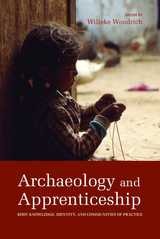
Archaeology and Apprenticeship
Body Knowledge, Identity, and Communities of PracticeEdited by Willeke Wendrich
University of Arizona Press, 2012
Apprenticeship is broadly defined as the transmission of culture through a formal or informal teacher–pupil relationship. This collection invites a wide discussion, citing case studies from all over the world and yet focuses the scholarship into a concise set of contributions. The chapters in this volume demonstrate how archaeology can benefit greatly from the understanding of the social dimensions of knowledge transfer. This book also examines apprenticeship in archaeology against a backdrop of sociological and cognitive psychology literature, to enrich the understanding of the relationship between material remains and enculturation.
Each of the authors in this collection looks specifically at how material remains can reveal several specific aspects of ancient cultures: What is the human potential for learning? How do people learn? Who is teaching? Why are they learning? What are the results of such learning? How do we recognize knowledge transfer in the archaeological record? These fundamental questions are featured in various forms in all chapters of the book. With case studies from the American Southwest, Alaska, Egypt, Ancient Greece, and Mesopotamia, this book will have broad appeal for scholars—particularly those concerned with cultural transmission and traditions of learning and education—all over the world.
Craft Production in Complex Societies
Multicraft and Producer PerspectivesIzumi Shimada
University of Utah Press, 2007
Many crafts are treated as separate, but are actually practiced concurrently and in close proximity to each other, facilitating crucial interaction. There is a need for a balanced evaluation of the roles of producer and consumer in craft production, and the importance of properly contextualized workshop excavations and the definition of the entire sequence of operation in documenting craft production both as a social and material process.
Craft Production in Complex Societies redresses the skewed conception and approach to craft production that have been shaped by studies focused on separate, single medium crafts, finished products, and the consumer. It presents case studies and regional syntheses from diverse geographical areas, time periods, and sociopolitical complexities that break important new ground in the anthropological study of the creative role and social identity of the producer and multi-craft production. It is expected to serve as a key reference in craft studies for many years to come.
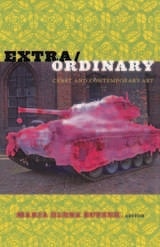
Extra/Ordinary
Craft and Contemporary ArtMaria Elena Buszek, ed.
Duke University Press, 2011
Contributors. Elissa Auther, Anthea Black, Betty Bright, Nicole Burisch, Maria Elena Buszek, Jo Dahn, M. Anna Fariello, Betsy Greer, Andrew Jackson, Janis Jefferies, Louise Mazanti, Paula Owen, Karin E. Peterson, Lacey Jane Roberts, Kirsty Robertson, Dennis Stevens, Margaret Wertheim
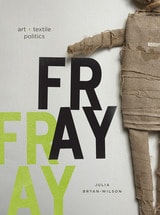
Fray
Art and Textile PoliticsJulia Bryan-Wilson
University of Chicago Press, 2017
Closely examining how amateurs and fine artists in the United States and Chile turned to sewing, braiding, knotting, and quilting amid the rise of global manufacturing, Julia Bryan-Wilson argues that textiles unravel the high/low divide and urges us to think flexibly about what the politics of textiles might be. Her case studies from the 1970s through the 1990s—including the improvised costumes of the theater troupe the Cockettes, the braided rag rugs of US artist Harmony Hammond, the thread-based sculptures of Chilean artist Cecilia Vicuña, the small hand-sewn tapestries depicting Pinochet’s torture, and the NAMES Project AIDS Memorial Quilt—are often taken as evidence of the inherently progressive nature of handcrafted textiles. Fray, however, shows that such methods are recruited to often ambivalent ends, leaving textiles very much “in the fray” of debates about feminized labor, protest cultures, and queer identities; the malleability of cloth and fiber means that textiles can be activated, or stretched, in many ideological directions.
The first contemporary art history book to discuss both fine art and amateur registers of handmaking at such an expansive scale, Fray unveils crucial insights into how textiles inhabit the broad space between artistic and political poles—high and low, untrained and highly skilled, conformist and disobedient, craft and art.
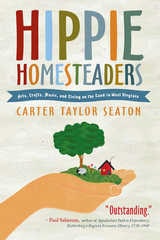
Hippie Homesteaders
Arts, Crafts, Music and Living on the Land in West VirginiaCarter Taylor Seaton
West Virginia University Press, 2014
It’s the 1960s. The Vietnam War is raging and protests are erupting across the United States. In many quarters, young people are dropping out of society, leaving their urban homes behind in an attempt to find a safe place to live on their own terms, to grow their own food, and to avoid a war they passionately decry. During this time, West Virginia becomes a haven for thousands of these homesteaders—or back-to-the-landers, as they are termed by some. Others call them hippies.
When the going got rough, many left. But a significant number remain to this day. Some were artisans when they arrived, while others adopted a craft that provided them with the cash necessary to survive. Hippie Homesteaders tells the story of this movement from the viewpoint of forty artisans and musicians who came to the state, lived on the land, and created successful careers with their craft. There’s the couple that made baskets coveted by the Smithsonian Institution’s Renwick Gallery. There’s the draft-dodger that fled to Canada and then became a premier furniture maker. There’s the Boston-born VISTA worker who started a quilting cooperative. And, there’s the immigrant Chinese potter who lived on a commune.
Along with these stories, Hippie Homesteaders examines the serendipitous timing of this influx and the community and economic support these crafters received from residents and state agencies in West Virginia. Without these young transplants, it’s possible there would be no Tamarack: The Best of West Virginia, the first statewide collection of fine arts and handcrafts in the nation, and no Mountain Stage, the weekly live musical program broadcast worldwide on National Public Radio since 1983. Forget what you know about West Virginia.
Hippie Homesteaders isn’t about coal or hillbillies or moonshine or poverty. It is the story of why West Virginia was—and still is—a kind of heaven to so many.
Leading Kids to Books Through Crafts
American Library Association, 2000

Penny Loafers & Bobby Pins
Tales and Tips from Growing Up in the ’50s and ’60sSusan Sanvidge
Wisconsin Historical Society Press, 2010
“In the fifties, sleek Mixmasters were replacing rusty eggbeaters, and new pressure-cookers blew their tops in kitchens all over town. There were kids everywhere, and new ‘ranch-style’ houses filled vacant lots. . . . Turquoise Studebakers and dusty-rose Chevy BelAirs with flamboyant fins and lots of chrome replaced dark pre-war cars. Cameras took color snapshots instead of black-and-white. We wore red canvas tennis shoes and lemon yellow shorts, and bright blue popsicles melted down our chins.” —from the Introduction
Teen Craft Projects 2
Tina Coleman
American Library Association, 2013
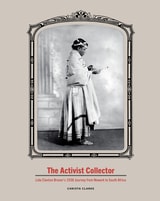
The Activist Collector
Lida Clanton Broner’s 1938 Journey from Newark to South AfricaChrista Clarke
Rutgers University Press, 2023
Published by the Newark Museum. Distributed worldwide by Rutgers University Press.
“After twenty-eight years of desire and determination, I have visited Africa, the land of my forefathers.” So wrote Lida Clanton Broner (1895–1982), an African American housekeeper and hairstylist from Newark, New Jersey, upon her return from an extraordinary nine-month journey to South Africa in 1938. This epic trip was motivated not only by Broner’s sense of ancestral heritage, but also a grassroots resolve to connect the socio-political concerns of African Americans with those of black South Africans under the segregationist policies of the time. During her travels, this woman of modest means circulated among South Africa’s Black intellectual elite, including many leaders of South Africa’s freedom struggle. Her lectures at Black schools on “race consciousness and race pride” had a decidedly political bent, even as she was presented as an “American beauty specialist.”
How did Broner—a working class mother—come to be a globally connected activist? What were her experiences as an African American woman in segregated South Africa and how did she further her work after her return? Broner’s remarkable story is the subject of this book, which draws upon a deep visual and documentary record now held in the collection of the Newark Museum of Art. This extraordinary archive includes more than one hundred and fifty objects, ranging from beadwork and pottery to mission school crafts, acquired by Broner in South Africa, along with her diary, correspondence, scrapbooks, and hundreds of photographs with handwritten notations.
The Hipster Librarian's Guide to Teen Craft Projects
Tina Coleman
American Library Association, 2009
The Holiday Handbook
700+ Storytime Activities from Arbor Day to Yom Kippur…from Diwali to Kwanzaa to RamadanBarbara A. Scott
American Library Association, 2012
Ways of Making and Knowing
The Material Culture of Empirical KnowledgeEdited by Pamela H. Smith, Amy R. W. Meyers, and Harold J. Cook
Bard Graduate Center, 2017