Results by title
3 books match the query 'Hapke, Laura'
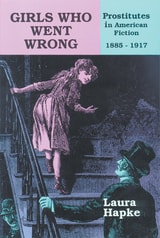
Girls Who Went Wrong
Prostitutes in American Fiction, 1885–1917Laura Hapke
University of Wisconsin Press, 1989
The period 1885 to 1917 saw thousands of American crusaders working hard to “save the fallen women,” but little on the part of American social protest writers. In this first work on the subject, Laura Hapke examines how writers attempted to turn an outcast into a heroine in a literature otherwise known for its puritanical attitude toward the fallen woman. She focuses on how these authors (all male) expressed late-Victorian conflicts about female sexuality. If, as they all maintained, women have an innate preference for chastity, how could they account for the prostitute? Was she a sinner, suggesting the potential waywardness of all women? Or, if she was a victim, what of her “depravity”?

Labor's Text
The Worker in American FictionHapke, Laura
Rutgers University Press, 2000
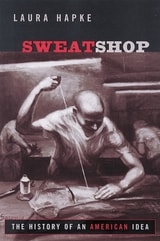
Sweatshop
The History of an American IdeaHapke, Laura
Rutgers University Press, 2004
Arguing that the sweatshop is as American as apple pie, Laura Hapke surveys over a century and a half of the language, verbal and pictorial, in which the sweatshop has been imagined and its stories told. Not seeking a formal definition of the sort that policymakers are concerned with, nor intending to provide a strict historical chronology, this unique book shows, rather, how the “real” sweatshop has become intertwined with the “invented” sweatshop of our national imagination, and how this mixture of rhetoric and myth has endowed American sweatshops with rich and complex cultural meaning.
Hapke uncovers a wide variety of tales and images that writers, artists, social scientists, reformers, and workers themselves have told about “the shop.” Adding an important perspective to historical and economic approaches, Sweatshop draws on sources from antebellum journalism, Progressive era surveys, modern movies, and anti-sweatshop websites. Illustrated chapters detail how the shop has been a facilitator of assimilation, a promoter of upward mobility, the epitome of exploitation, a site of ethnic memory, a venue for political protest, and an expression of twentieth-century managerial narratives.
An important contribution to the real and imagined history of garment industry exploitation, this book provides a valuable new context for understanding contemporary sweatshops that now represent the worst expression of an unregulated global economy.