Results by title
5 books match the query 'Hardware'

Computer Control of Real-Time Processes
S. Bennett
The Institution of Engineering and Technology, 1990
This book provides an introduction to many aspects of computer control. It covers techniques or control algorithm design and tuning of controllers; computer communications; parallel processing; and software design and implementation. The theoretical material is supported by case studies covering power systems control, robot manipulators, liquid natural as vaporisers, batch control of chemical processes; and active control of aircraft.
[more]
Guide to Data Centre Power Systems
The Institution of Engineering and Technology
The Institution of Engineering and Technology, 2022
Data centres are at the heart of our modern-day digital infrastructure. Our use of and reliance on data is only set to grow and therefore data centres will also have to grow in number and size with improved reliability, resilience and efficiency.
[more]
Many-Core Computing
Hardware and softwareBashir M. Al-Hashimi
The Institution of Engineering and Technology, 2019
Computing has moved away from a focus on performance-centric serial computation, instead towards energy-efficient parallel computation. This provides continued performance increases without increasing clock frequencies, and overcomes the thermal and power limitations of the dark-silicon era. As the number of parallel cores increases, we transition into the many-core computing era. There is considerable interest in developing methods, tools, architectures and applications to support many-core computing.
[more]
The Accidental Network
How a Small Company Sparked a Global Broadband TransformationRouzbeh Yassini-Fard
West Virginia University Press, 2025
“How would our lives change,” wondered entrepreneur Rouzbeh Yassini-Fard in 1987, “if everyday people had a stable, high-speed data connection to the Internet?” While he wasn’t the first to imagine a world of digital connectivity, Yassini-Fard was in the vanguard by creating the cable modem, which transformed residential Internet access from its slow, frustrating dial-up origins to a fast, always-on, and extraordinary connectivity tool by harnessing the existing infrastructure of the residential cable network.
The Accidental Network shares the untold story of the invention of the cable modem by the small, struggling tech company LANcity in the early 1990s, illustrating how Yassini-Fard overcame a cascade of technical challenges, investment community naysayers, and unnerving business obstacles to create the cable modem technology that has changed the way billions of individuals across the globe now manage their daily lives and commerce. The cable modem delivered broadband, with speeds ranging from 10 megabits per second (Mbps) to 10 gigabits per second (Gbps)—a big leap from the dial-up speeds of 56 kilobits per second (Kbps). This platform, along with the adoption of the DOCSIS (Data Over Cable Service Interface Specification) standard, engendered the modern revolution in broadband Internet access. Shunned by venture capitalists and surviving on a shoestring budget, Yassini-Fard and his colleagues were willing to bet it all (including the deed for Yassini-Fard’s home) on the creation of the cable modem and the pursuit of global adoption.
The Accidental Network is both a valuable history of technology innovation and an engrossing account of business conducted at high speed. The book details Yassini-Fard’s journey from electrical engineer to entrepreneur in the race to secure technology partners, create a wholly new marketplace, and convince cable industry executives that a bold business awaited in transmitting data to households at a time when skepticism about the reach of personal computing was the norm.
Written from the lens of a devoted idealist and WVU alum known as “the father of the cable modem,” this book reveals how a perfect storm of forces—the rise of cable television, the onset of the personal computing era, a growing awareness of the Internet for information and commerce, and the development of the cable modem—converged to usher in the age of broadband access.
[more]
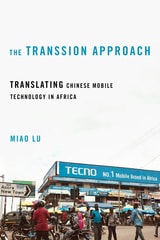
The Transsion Approach
Translating Chinese Mobile Technology in AfricaMiao Lu
University of Illinois Press, 2025
How do we explain China’s tech rise in Africa? As Africa’s top phone seller, the Shenzhen-based company Transsion has profoundly shaped the continent’s digital transformation by providing affordable yet feature-rich mobile phones for the economically disadvantaged. Miao Lu draws on rich fieldwork in China and Ghana to delve into the company’s operations and growing influence. Critiquing technology transfer, Lu focuses on design, marketing, and repair to illustrate the multi-layered technology translations between China and Ghana. Borrowing the metaphor of deep ploughing, Lu examines the rural-centric and lower-class–oriented approach of translating mobile technology. Transsion challenges the cultural imagination of big tech. But the company is also evolving into a regional power that’s adept at marginalizing small players and increasing local dependence. Lu’s analysis explores the complexity that Shenzhen can act as Silicon Valley’s “South” and Africa’s “North” simultaneously. The middle space created by Transsion bridges globalization from above and below, which opens the door to new possibilities and inequalities.
[more]