Results by title
3 books match the query 'Harem'
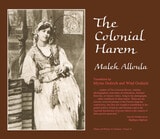
Colonial Harem
Malek Alloula
University of Minnesota Press, 1986
A collection of picture postcards of Algerian women exploited by the French, this “album” illustrates a powerful analysis of the distorting, denigrating effects of their presence on Algerian Society.
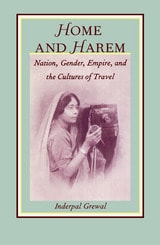
Home and Harem
Nation, Gender, Empire and the Cultures of TravelInderpal Grewal
Duke University Press, 1996
In her look at England, Grewal draws on nineteenth-century aesthetics, landscape art, and debates about women’s suffrage and working-class education to show how all social classes, not only the privileged, were educated and influenced by imperialist travel narratives. By examining diverse forms of Indian travel to the West and its colonies and focusing on forms of modernity offered by colonial notions of travel, she explores how Indian men and women adopted and appropriated aspects of European travel discourse, particularly the set of oppositions between self and other, East and West, home and abroad.
Rather than being simply comparative, Home and Harem is a transnational cultural study of the interaction of ideas between two cultures. Addressing theoretical and methodological developments across a wide range of fields, this highly interdisciplinary work will interest scholars in the fields of postcolonial and cultural studies, feminist studies, English literature, South Asian studies, and comparative literature.
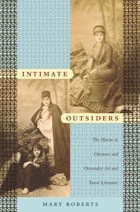
Intimate Outsiders
The Harem in Ottoman and Orientalist Art and Travel LiteratureMary Roberts
Duke University Press, 2007
Roberts draws on a range of sources, including paintings, photographs, and travelogues discovered in archives in Britain, Turkey, Egypt, and Denmark. She rethinks the influential harem works of the realist painter John Frederick Lewis, a British artist living in Cairo during the 1840s, whose works were granted an authoritative status by his British public despite the actual limits of his insider knowledge. Unlike Lewis, British women were able to visit Ottoman harems, and from the mid-nineteenth century on they did so in droves. Writing about their experiences in published travelogues, they undermined the idea that harems were the subject only of male fantasies. The elite Ottoman women who orchestrated these visits often challenged their guests’ misapprehensions about harem life, and a number of them exercised power as patrons, commissioning portraits from European artists. Their roles as art patrons defy the Western idea of the harem woman as passive odalisque.