Results by title
2 books match the query 'Hargittai, István'
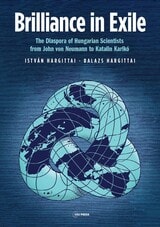
Brilliance in Exile
The Diaspora of Hungarian Scientists from John von Neumann to Katalin KarikóIstván Hargittai
Central European University Press, 2023
By addressing the enigma of the exceptional success of Hungarian emigrant scientists and telling their life stories, Brilliance in Exile combines scholarly analysis with fascinating portrayals of uncommon personalities. István and Balazs Hargittai discuss the conditions that led to five different waves of emigration of scientists from the early twentieth century to the present. Although these exodes were driven by a broad variety of personal motivations, the attraction of an open society with inclusiveness, tolerance, and – needless to say – better circumstances for working and living, was the chief force drawing them abroad.
While emigration from East to West is a general phenomenon, this book explains why and how the emigration of Hungarian scientists is distinctive. The high number of Nobel Prizes among this group is only one indicator. Multicultural tolerance, a quickly emerging, considerably Jewish, urban middle class, and a very effective secondary school system were positive legacies of the Austro-Hungarian Monarchy. Multiple generations, shaped by these conditions, suffered from the increasingly exclusionist, intolerant, antisemitic, and economically stagnating environment, and chose to go elsewhere. “I would rather have roots than wings, but if I cannot have roots, I shall use wings," explained Leo Szilard, one of the fathers of the Atom Bomb.
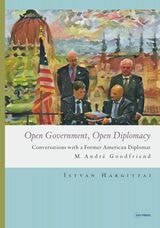
Open Government, Open Diplomacy
Conversations with a Former American Diplomat M. André GoodfriendIstván Hargittai
Central European University Press, 2023
André Goodfriend was Deputy Chief of Mission from 2013 to 2015 at the US Embassy in Budapest. In the absence of an ambassador, most of the time he was Chargé d’Affaires. Goodfriend represented his country, and for that matter, liberal democracy, in the early period of the increasingly autocratic Orbán regime. This tenure was distinguished by an unusually high public visibility and broad-based popularity. This book contains the distilled essence of conversations recorded in the fall of 2015 and in the years after his departure.
Aside from Goodfriend’s reflections on his personal history, the main focus of the deliberations is on open government: its characteristics, preconditions, benefits, and its relation to modern diplomacy. The mindset of a democracy-rooted diplomat with a working experience in an increasingly autocratic regime lends a particular perspective to the topics discussed. These topics include the fight against corruption, the protection of civil society, crisis prevention, education, economy, international relations, applied humanities, and the use of the social and traditional media to achieve policy goals.
This book presents modern, “people-friendly” diplomacy in an era in which public officials are increasingly expected to be transparent and engaged.