Results by title

9 books match the query 'Harris, Neil'
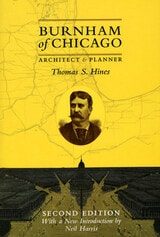
cover of Burnham of Chicago: Architect and Planner, Second Edition

Burnham of Chicago

Architect and Planner, Second Edition

Thomas S. Hines

University of Chicago Press, 2008

2009 marks the centennial of the influential Plan of Chicago. Designed by Daniel H. Burnham, coauthored by Edward Bennett and produced in collaboration with the Commercial Club of Chicago, the forward-thinking plan proposed many of the city’s most distinctive features, including its lakefront parks and roadways, the Magnificent Mile, and Navy Pier. As a result, by the time he died in 1912, Burnham was one of the most famous architects in America as well as an internationally renowned city planner. Thomas S. Hines’s book is at once both a biography of Burnham and a vivid portrait of the birth and growth of an American city. In commemoration of the historic anniversary of Burnham’s Plan, this edition of Burnham of Chicago includes a new introduction by American history scholar, Neil Harris.
           
“Indeed, the book as a whole is a model of the balanced portrait, sure of Burnham’s importance but always conscious of his failings.”—Paul Goldberger, New York Times Book Review

“In every sense this is the definitive biography.”—Harry Weese, Chicago Tribune
 
“Professor Hines has written what may prove to be an epoch-making book in the study of American civilization.”—Reyner Banham, Times Literary Supplement
 
[more]
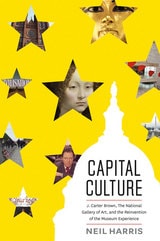
cover of Capital Culture: J. Carter Brown, the National Gallery of Art, and the Reinvention of the Museum Experience

Capital Culture

J. Carter Brown, the National Gallery of Art, and the Reinvention of the Museum Experience

Neil Harris

University of Chicago Press, 2013

American art museums flourished in the late twentieth century, and the impresario leading much of this growth was J. Carter Brown, director of the National Gallery of Art in Washington, DC, from 1969 to 1992.  Along with S. Dillon Ripley, who served as Smithsonian secretary for much of this time, Brown reinvented the museum experience in ways that had important consequences for the cultural life of Washington and its visitors as well as for American museums in general. In Capital Culture, distinguished historian Neil Harris provides a wide-ranging look at Brown’s achievement and the growth of museum culture during this crucial period.

Harris combines his in-depth knowledge of American history and culture with extensive archival research, and he has interviewed dozens of key players to reveal how Brown’s showmanship transformed the National Gallery. At the time of the Cold War, Washington itself was growing into a global destination, with Brown as its devoted booster. Harris describes Brown’s major role in the birth of blockbuster exhibitions, such as the King Tut show of the late 1970s and the National Gallery’s immensely successful Treasure Houses of Britain, which helped inspire similarly popular exhibitions around the country. He recounts Brown’s role in creating the award-winning East Building by architect I. M. Pei and the subsequent renovation of the West building. Harris also explores the politics of exhibition planning, describing Brown's courtship of corporate leaders, politicians, and international dignitaries.

In this monumental book Harris brings to life this dynamic era and exposes the creation of Brown's impressive but costly legacy, one that changed the face of American museums forever.
[more]
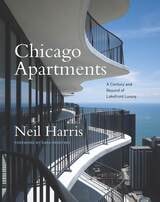
cover of Chicago Apartments: A Century and Beyond of Lakefront Luxury

Chicago Apartments

A Century and Beyond of Lakefront Luxury

Neil Harris and Teri J. Edelstein

University of Chicago Press, 2020
The Chicago lakefront is one of America’s urban wonders. The ribbon of high-rise luxury apartment buildings along the Lake Michigan shore has few, if any, rivals nationwide for sustained architectural significance. This historic confluence of site, money, style, and development lies at the heart of the updated edition of Neil Harris's Chicago Apartments: A Century and Beyond of Lakefront Luxury. The book features more than one hundred buildings, stretching from south to north and across more than a century, each with its own special combination of design choice, floor plans, and background story. Harris, with the assistance of Teri J. Edelstein, proves to be an affable and knowledgeable tour guide, guiding us through dozens of buildings, detailing a host of inimitable development histories, design choices, floor plans, and more along the way. Of particular note are recent structures on the Chicago River and south of the Loop that are proposing new definitions of comfort and extravagance. Featuring nearly 350 stunning images and a foreword by renowned Chicago author Sara Paretsky, this new edition of Chicago Apartments offers a wide-ranging look inside some of the Windy City’s most magnificent abodes.
 
[more]
cover of Chicago by the Book: 101 Publications That Shaped the City and Its Image

Chicago by the Book

101 Publications That Shaped the City and Its Image

Caxton Club

University of Chicago Press, 2018

Despite its rough-and-tumble image, Chicago has long been identified as a city where books take center stage. In fact, a volume by A. J. Liebling gave the Second City its nickname. Upton Sinclair’s The Jungle arose from the midwestern capital’s most infamous industry. The great Chicago Fire led to the founding of the Chicago Public Library. The city has fostered writers such as Nelson Algren, Saul Bellow, and Gwendolyn Brooks. Chicago’s literary magazines The Little Review and Poetry introduced the world to Eliot, Hemingway, Joyce, and Pound. The city’s robust commercial printing industry supported a flourishing culture of the book. With this beautifully produced collection, Chicago’s rich literary tradition finally gets its due.

Chicago by the Book profiles 101 landmark publications about Chicago from the past 170 years that have helped define the city and its image. Each title—carefully selected by the Caxton Club, a venerable Chicago bibliophilic organization—is the focus of an illustrated essay by a leading scholar, writer, or bibliophile.

Arranged chronologically to show the history of both the city and its books, the essays can be read in order from Mrs. John H. Kinzie’s 1844 Narrative of the Massacre of Chicago to Sara Paretsky’s 2015 crime novel Brush Back. Or one can dip in and out, savoring reflections on the arts, sports, crime, race relations, urban planning, politics, and even Mrs. O’Leary’s legendary cow. The selections do not shy from the underside of the city, recognizing that its grit and graft have as much a place in the written imagination as soaring odes and boosterism. As Neil Harris observes in his introduction, “Even when Chicagoans celebrate their hearth and home, they do so while acknowledging deep-seated flaws.” At the same time, this collection heartily reminds us all of what makes Chicago, as Norman Mailer called it, the “great American city.”

With essays from, among others, Ira Berkow, Thomas Dyja, Ann Durkin Keating, Alex Kotlowitz, Toni Preckwinkle, Frank Rich, Don Share, Carl Smith, Regina Taylor, Garry Wills, and William Julius Wilson; and featuring works by Saul Bellow, Gwendolyn Brooks, Sandra Cisneros, Clarence Darrow, Erik Larson, David Mamet, Studs Terkel, Ida B. Wells-Barnett, Frank Lloyd Wright, and many more.
[more]
cover of Cultural Excursions: Marketing Appetites and Cultural Tastes in Modern America

Cultural Excursions

Marketing Appetites and Cultural Tastes in Modern America

Neil Harris

University of Chicago Press, 1990

Neil Harris's scholarship of the past twenty-five years has helped to open up the study of American cultural history. This long-awaited collection gathers some of his rich and varied writings. Harris takes us from John Philip Sousa to Superman, with stops along the way to explore art museums and world fairs, shopping malls and hotel lobbies, urban design and utopian novels, among other artifacts of American cultures.

The essays fall into three general sections: the first treats the history of cultural institutions, highlighting the role of museums; the second section focuses on some literary, artistic, and entrepreneurial responses to the new mass culture; and the final group of essays explores the social history of art and architecture. Throughout Harris's diverse writings certain themes recur—the redefining of boundaries between high art and popular culture, the relationship between public taste and technological change, and the very notion of what constitutes a shared social experience. Harris's pioneering work has broadened the field of cultural history and encouraged whole new areas of inquiry. Cultural Excursions will be useful for those in American and culture studies, as well as for the general reader trying to make sense of the culture in which we live.
[more]
cover of Humbug: The Art of P. T. Barnum

Humbug

The Art of P. T. Barnum

Neil Harris

University of Chicago Press, 1981

This carefully researched study of America's greatest showman, huckster, and impresario is both an inclusive analysis of the historical and cultural forces that were the conditions of P. T. Barnum's success, and, as befits its subject, a richly entertaining presentation of the outrageous man and his exploits.
[more]
cover of Museum Pieces: Collectors and Collection

Museum Pieces

Collectors and Collection

Neil Harris

University of Chicago Press, 0

An eminent historian assembles a career-long group of essays about art collecting and the leadership, strategies, and shifting cultural power of American art museums as they have emerged over the past 150 years.

Museums and their cultural power, and the vagaries of collecting in the United States have fascinated University of Chicago historian Neil Harris for more than sixty years. In this collection of eighteen lively essays from across his distinguished career, Harris addresses period rooms, visitor research, museum education, museum branding and merchandising, and the persistent influence of individual collectors and patrons such as J. Pierpont Morgan, among other important topics. Harris’s geographical range is broad, too, with considerations of museums in Boston, New York, Washington, D.C., Toledo, Chicago, Denver, and elsewhere.

Harris remains one of a very small number of art-minded scholars whose work on museums, taste, and collecting not only can be read by other historians of the United States but can be read with real profit. In a rich and reflective introduction, Harris connects his deep interest in recurring subjects to both his own intellectual biography and broader trends in American scholarship.
[more]
cover of The Artist in American Society: The Formative Years

The Artist in American Society

The Formative Years

Neil Harris

University of Chicago Press, 1982
What was the place of the artist in a new society? How would he thrive where monarchy, aristocracy, and an established church—those traditional patrons of painting, sculpture, and architecture—were repudiated so vigorously? Neil Harris examines the relationships between American cultural values and American society during the formative years of American art and explores how conceptions of the artist's social role changed during those years.
[more]
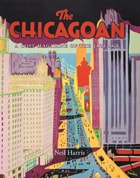
cover of The Chicagoan: A Lost Magazine of the Jazz Age

The Chicagoan

A Lost Magazine of the Jazz Age

Neil Harris

University of Chicago Press, 2008

While browsing the stacks of the Regenstein Library at the University of Chicago some years ago, noted historian Neil Harris made a surprising discovery: a group of nine plainly bound volumes whose unassuming spines bore the name the Chicagoan.  Pulling one down and leafing through its pages, Harris was startled to find it brimming with striking covers, fanciful art, witty cartoons, profiles of local personalities, and a whole range of incisive articles.  He quickly realized that he had stumbled upon a Chicago counterpart to the New Yorker that mysteriously had slipped through the cracks of history and memory.
 
Here Harris brings this lost magazine of the Jazz Age back to life. In its own words, the Chicagoan claimed to represent “a cultural, civilized, and vibrant” city “which needs make no obeisance to Park Avenue, Mayfair, or the Champs Elysees.” Urbane in aspiration and first published just sixteen months after the 1925 appearance of the New Yorker, it sought passionately to redeem the Windy City’s unhappy reputation for organized crime, political mayhem, and industrial squalor by demonstrating the presence of style and sophistication in the Midwest.  Harris’s substantial introductory essay here sets the stage, exploring the ambitions, tastes, and prejudices of Chicagoans during the 1920s and 30s.  The author then lets the Chicagoan speak for itself in lavish full-color segments that reproduce its many elements: from covers, cartoons, and editorials to reviews, features—and even one issue reprinted in its entirety.
 
Recalling a vivid moment in the life of the Windy City, the Chicagoan is a forgotten treasure, offered here for a whole new age to enjoy.
 
[more]