Results by title
9 books match the query 'Harvard University'
Black Space
Negotiating Race, Diversity, and Belonging in the Ivory TowerSherry L. Deckman
Rutgers University Press, 2022
Crossing the River
A Memoir of the American Left, the Cold War, and Life in East GermanyVictor Grossman
University of Massachusetts Press, 2003
What could possibly impel a relatively privileged twenty-four-year-old American-serving in the U.S. Army in Germany in 1952 to swim across the Danube River to what was then referred to as the Soviet Zone? How are we to understand his decision to forsake the land of his birth and build a new life in the still young German Democratic Republic? These are the questions at the core of this memoir by Victor Grossman, who was born Stephen Wechsler but changed his name after defecting to the GDR.
A child of the Depression, Grossman witnessed firsthand the dislocations wrought by the collapse of the U.S. economy during the 1930s. Widespread unemployment and poverty, CIO sit-down strikes, and the fight to save Republican Spain from fascism-all made an indelible impression as he grew up in an environment that nurtured a commitment to left-wing causes. He continued his involvement with communist activities as a student at Harvard in the late 1940s and after graduation, when he took jobs in two factories in Buffalo, New York, and tried to organize their workers.
Fleeing McCarthyite America and potential prosecution, Grossman worked in the GDR with other Western defectors and eventually became, as he notes, the “only person in the world to attend Harvard and Karl Marx universities.” Later, he was able to establish himself as a freelance journalist, lecturer, and author. Traveling throughout East Germany, he evaluated the failures as well as the successes of the GDR's “socialist experiment.” He also recorded his experiences, observations, and judgments of life in East Berlin after reunification, which failed to bring about the post-Communist paradise so many had expected.
Written with humor as well as candor, Crossing the River provides a rare look at the Cold War from the other side of the ideological divide.
Mark Solomon, a distinguished historian of the American left, provides a historical afterword that places Grossman's experiences in a larger Cold War context.
Dyed in Crimson
Football, Faith, and Remaking Harvard's AmericaZev Eleff
University of Illinois Press, 2023
Zev Eleff tells the story of two immigrants’ sons shaped by a vision of an America that rewarded any person of virtue. As a player, the Chicago-born Horween had led Harvard to its 1920 Rose Bowl victory. As a coach, he faced intractable opposition from powerful East Coast alumni because of his values and Midwestern, Jewish background. Eleff traces Bingham and Horween’s careers as student-athletes and their campaign to wrest control of the football program from alumni. He also looks at how Horween undermined stereotypes of Jewish masculinity and dealt with the resurgent antisemitism of the 1920s.
Reading the Shape of Nature
Comparative Zoology at the Agassiz MuseumMary P. Winsor
University of Chicago Press, 1991
In 1859, Louis Agassiz established the Museum of Comparative Zoology to house research on the ideal types that he believed were embodied in all living forms. Agassiz's vision arose from his insistence that the order inherent in the diversity of life reflected divine creation, not organic evolution. But the mortar of the new museum had scarcely dried when Darwin's Origin was published. By Louis Agassiz's death in 1873, even his former students, including his son Alexander, had defected to the evolutionist camp. Alexander, a self-made millionaire, succeeded his father as director and introduced a significantly different agenda for the museum.
To trace Louis and Alexander's arguments and the style of science they established at the museum, Winsor uses many fascinating examples that even zoologists may find unfamiliar. The locus of all this activity, the museum building itself, tells its own story through a wonderful series of archival photographs.
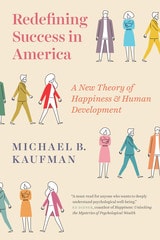
Redefining Success in America
A New Theory of Happiness and Human DevelopmentMichael Kaufman
University of Chicago Press, 2019
Returning to the legendary Harvard Student Study of undergraduates from the 1960s and interviewing participants almost fifty years later, Kaufman shows that formative experiences in family, school, and community largely shape a future adult’s worldview and well-being by late adolescence, and that fundamental change in adulthood, when it occurs, is shaped by adult family experiences, not by ever-greater competitive success. Published research on general samples shows that these patterns, and the book’s findings generally, are broadly applicable to demographically varied populations in the United States.
Leveraging biography-length clinical interviews and quantitative evidence unmatched even by earlier landmark studies of human development, Redefining Success in America redefines the conversation about the nature and origins of happiness, and about how adults develop. This longitudinal study pioneers a new paradigm in happiness research, developmental science, and personality psychology that will appeal to scholars and students in the social sciences, psychotherapy professionals, and serious readers navigating the competitive journey.
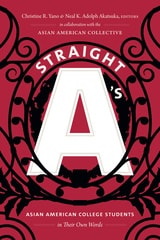
Straight A's
Asian American College Students in Their Own WordsChristine R. Yano and Neal K. Adolph Akatsuka, editors
Duke University Press, 2018
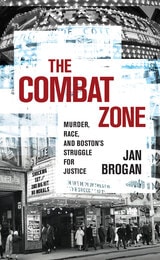
The Combat Zone
Murder, Race, and Boston's Struggle for JusticeJan Brogan
University of Massachusetts Press, 2021
At the end of the 1976 football season, more than forty Harvard athletes went to Boston's Combat Zone to celebrate. In the city's adult entertainment district, drugs and prostitution ran rampant, violent crime was commonplace, and corrupt police turned the other way. At the end of the night, Italian American star athlete Andy Puopolo, raised in the city's North End, was murdered in a stabbing. Three African American men were accused of the crime. His murder made national news and led to the eventual demise of the city's red-light district.
Starting with this brutal murder, The Combat Zone tells the story of the Puopolo family's struggle with both a devastating loss and a criminal justice system that produced two trials with opposing verdicts, all within the context of a racially divided Boston. Brogan traces the contentious relationship between Boston’s segregated neighborhoods during the busing crisis; shines a light on a court system that allowed lawyers to strike potential jurors based purely on their racial or ethnic identity; and lays bare the deep-seated corruption within the police department and throughout the Combat Zone. What emerges is a fascinating snapshot of the city at a transitional moment in its recent past.
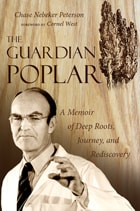
The Guardian Poplar
A Memoir of Deep Roots, Journey, and RediscoveryChase Nebeker Peterson
University of Utah Press, 2012
When Barney Clark received the Jarvik-7 artificial heart in 1983 and Cold Fusion came under fire in 1989, Chase Peterson, as the University of Utah president, was inevitably pulled into these campus events. While these episodes may be the best known in Peterson’s professional history, they are certainly not the only stories that make his autobiography worth reading.
The Guardian Poplar tells of a man who grew up in small-town Utah and carried his pioneer and Mormon heritage to a New England prep school and later to Harvard. He then returned to Utah as a doctor, but unexpectedly found himself back at Harvard as its dean of admissions, handling issues such as the Vietnam War and racial and gender reform. The book explains how Peterson’s home state recruited him back to become an administrator at the University of Utah and how he would eventually become the university president, taking on new issues and challenges. Peterson recounts these years by drawing on anecdotes that recall the people he served and the moments that brought his life meaning.
This autobiography is a compelling account of how Peterson has managed to balance family and career, handle the tensions that have arisen between his faith and his scientific training, and remain solid in the face of his newest challenge—cancer. The book’s engaging prose and honest reflections are sure to intrigue and inspire readers who know the man well, as well as those readers who simply want to know a man who can be described as dedicated, faithful, hardworking, and hopeful about the future.
“When I first met Chase Peterson as a Harvard freshman—along with our joint friend and brother David Evans—something deeply touched me. It was not only his sincere smile and open embrace but also a sense that here was a kind and courageous man comfortable in his own skin, secure in who he was yet eager to encounter new persons, new experiences, and new challenges. . . . He was from Utah but in New England, a Mormon in old Harvard, and a medical doctor in the deanship of admissions. Little did I know that his journey would enhance and enrich my own—owing to his critical allegiance to his family, his faith, his friends, and to his citizenship of country and world. His prophetic witness at Harvard in the turbulent ‘60s and ‘70s, his promotion of black priesthood in the Mormon church, his support of antiapartheid protests in the ‘80s, and his steadfast defense of academic freedom in the Cold Fusion controversy in the early ‘90s all express his quiet and humble effort to be true to himself—a self grounded in, but
not limited by, a rich Mormon tradition.”—from the foreword by Cornel West
We Cant Eat Prestige
The Women Who Organized HarvardJohn Hoerr
Temple University Press, 2001
This story explodes the popular belief that women white-collar workers tend to reject unionization and accept a passive role in the workplace. On the contrary, the women workers of Harvard University created a powerful and unique union--one that emphasizes their own values and priorities as working women and rejects unwanted aspects of traditional unionism.
The workers involved comprise Harvard's 3,600-member "support staff," which includes secretaries, library and laboratory assistants, dental hygienists, accounting clerks, and a myriad of other office workers who keep a great university functioning. Even at prestigious private universities like Harvard and Yale, these workers--mostly women--have had to put up with exploitive management policies that denied them respect and decent wages because they were women. But the women eventually rebelled, declaring that they could not live on "prestige" alone.
Encouraged by the women's movement of the early 1970's, a group of women workers (and a few men) began what would become a 15-year struggle to organize staff employees at Harvard. The women persisted in the face of patronizing and sexist attitudes of university administrators and leaders of their own national unions. Unconscionably long legal delays foiled their efforts. But they developed innovative organizing methods, which merged feminist values with demands for union representation and a means of influencing workplace decisions.
Out of adversity came an unorthodox form of unionism embodied in the Harvard Union of Clerical and Technical Workers (HUCTW). Its founding was marked by an absorbing human drama that pitted unknown workers, such as Kris Rondeau, a lab assistant who came to head the union, against famous educators such as Harvard President Derek Bok and a panoply of prestigious deans. Other characters caught up in the drama included Harvard's John T. Dunlop, the nation's foremost industrial relations scholar and former U.S. Secretary of Labor. The drama was played out in innumerable hearings before the National Labor Relations Board, in the streets of Cambridge, and on the walks of historic Harvard Yard, where union members marched and sang and employed new tactics like "ballooning," designed to communicate a message of joy and liberation rather than the traditional "hate-the-boss" hostility.
John Hoerr tells this story from the perspective of both Harvard administrators and union organizers. With unusual access to its meetings, leaders, and files, he examines the unique culture of a female-led union from the inside. Photographs add to the impact of this dramatic narrative.
postamble();