Results by title
15 books match the query 'Health Services Accessibility'
AIDS and the Distribution of Crises
Jih-Fei Cheng, Alexandra Juhasz, and Nishant Shahani, editors
Duke University Press, 2020
Contributors. Cecilia Aldarondo, Pablo Alvarez, Marlon M. Bailey, Emily Bass, Darius Bost, Ian Bradley-Perrin, Jih-Fei Cheng, Bishnupriya Ghosh, Roger Hallas, Pato Hebert, Jim Hubbard, Andrew J. Jolivette, Julia S. Jordan-Zachery, Alexandra Juhasz, Dredge Byung'chu Kang-Nguyễn, Theodore (Ted) Kerr, Catherine Yuk-ping Lo, Cait McKinney, Viviane Namaste, Elton Naswood, Cindy Patton, Margaret Rhee, Juana María Rodríguez, Sarah Schulman, Nishant Shahani, C. Riley Snorton, Eric A. Stanley, Jessica Whitbread, Quito Ziegler

Ancestors and Antiretrovirals
The Biopolitics of HIV/AIDS in Post-Apartheid South AfricaClaire Laurier Decoteau
University of Chicago Press, 2013
In Ancestors and Antiretrovirals, Claire Laurier Decoteau backs up Tutu’s assertion with powerful arguments about how this came to pass. Decoteau traces the historical shifts in health policy after apartheid and describes their effects, detailing, in particular, the changing relationship between biomedical and indigenous health care, both at the national and the local level. Decoteau tells this story from the perspective of those living with and dying from AIDS in Johannesburg’s squatter camps. At the same time, she exposes the complex and often contradictory ways that the South African government has failed to balance the demands of neoliberal capital with the considerable health needs of its population.
Borders of Care
Immigrants, Migrants, and the Fight for Health Care in the United StatesBeatrix Hoffman
University of Chicago Press, 2025
For the roughly ten million undocumented immigrants living in the United States, federal health care coverage is out of reach. Barred from Medicare, Medicaid, and the Affordable Care Act, most rely on hospital emergency rooms when they get sick, or clinics that don’t inquire about immigration status. Further obstacles to health care, including discrimination and the fear of deportation, mean that immigrants, undocumented or not, seek and receive less medical attention than any other population in the country. Yet immigrants haven’t always been ostracized from health care in the United States—providers and activists have for over a century worked to make medical services available to newcomers and migrants, including, at times, the undocumented.
Drawing together stories from diverse communities from the mid-nineteenth century to the present, Borders of Care examines how health care in the United States has both included and excluded immigrants. Beatrix Hoffman analyzes both the health and immigration systems, adding to our understanding of why these structures, and the policies that support them, have resisted reform. Moreover, she shows that immigrants, often scapegoated as burdens on the health-care system, have strengthened it through their responses to systemic exclusion. By creating hospitals and clinics, serving as practitioners, fighting for safer workplaces, filing lawsuits, organizing and protesting, immigrants and migrants have improved medical access for everybody and advanced the idea of health care as a universal right. As accessible as it is authoritative, Hoffman’s survey could not be more timely.
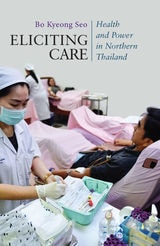
Eliciting Care
Health and Power in Northern ThailandBo Kyeong Seo
University of Wisconsin Press, 2020
Using the broader concept of elicitation, Seo analyzes the social encounters and forces that shape caregivers. These dynamics challenge dichotomies of subjugation and resistance, consent and coercion, and dependence and autonomy. The intimate and moving stories at the core of Eliciting Care from patients and providers draw attention to a broader, critically important phenomenon at the hospital level. Seo's poignant ethnography engages with feminist theory on the ethics of care, and in so doing, makes a significant contribution to emerging work in the field of health policy and politics.

Global Pharmaceuticals
Ethics, Markets, PracticesAdriana Petryna, Andrew Lakoff, and Arthur Kleinman, eds.
Duke University Press, 2006
Whether considering how American drug companies seek to create a market for antidepressants in Japan, how Brazil has created a model HIV/AIDS prevention and treatment program, or how the urban poor in Delhi understand and access healthcare, these essays illuminate the roles of corporations, governments, NGOs, and individuals in relation to global pharmaceuticals. Some essays show how individual and communal identities are affected by the marketing and availability of medications. Among these are an exploration of how the pharmaceutical industry shapes popular and expert understandings of mental illness in North America and Great Britain. There is also an examination of the agonizing choices facing Ugandan families trying to finance AIDS treatment. Several essays explore the inner workings of the emerging international pharmaceutical regime. One looks at the expanding quest for clinical research subjects; another at the entwining of science and business interests in the Argentine market for psychotropic medications. By bringing the moral calculations involved in the production and distribution of pharmaceuticals into stark relief, this collection charts urgent new territory for social scientific research.
Contributors. Kalman Applbaum, João Biehl, Ranendra K. Das, Veena Das, David Healy, Arthur Kleinman, Betty Kyaddondo, Andrew Lakoff, Anne Lovell, Lotte Meinert, Adriana Petryna, Michael A. Whyte, Susan Reynolds Whyte

Health Care for Some
Rights and Rationing in the United States since 1930Beatrix Hoffman
University of Chicago Press, 2012
Health Extension
Community-Based Healthcare and the Future of Cooperative ExtensionCheryl L. Eschbach
Michigan State University Press, 2024

Just Care
Messy Entanglements of Disability, Dependency, and DesireAkemi Nishida
Temple University Press, 2022
Just Care is Akemi Nishida’s thoughtful examination of care injustice and social justice enabled through care. The current neoliberal political economy has turned care into a business opportunity for the healthcare industrial complex and a mechanism of social oppression and control. Nishida analyzes the challenges people negotiate whether they are situated as caregivers, receivers, or both. Also illuminated is how people with disabilities come together to assemble community care collectives and bed activism (resistance and visions emerging from the space of bed) to reimagine care as a key element for social change.
The structure of care, Nishida writes, is deeply embedded in and embodies the cruel social order—based on disability, race, gender, migration status, and wealth—that determines who survives or deteriorates. Simultaneously, many marginalized communities treat care as the foundation of activism. Using interviews, focus groups, and participant observation with care workers and people with disabilities, Just Care looks into lives unfolding in the assemblage of Medicaid long-term care programs, community-based care collectives, and bed activism. Just Care identifies what care does, and asks: How can we activate care justice or just care where people feel cared affirmatively and care being used for the wellbeing of community and for just world making?

Just Don't Get Sick
Access to Health Care in the Aftermath of Welfare ReformSeccombe, Karen
Rutgers University Press, 2007
Drawing upon statistical data and in-depth interviews with over five hundred families in Oregon, Karen Seccombe and Kim Hoffman assess the ways in which welfare reform affects the well-being of adults and children who leave the program for work. We hear of asthmatic children whose uninsured but working mothers cannot obtain the preventive medicines to keep them well, and stories of pregnant women receiving little or no prenatal care who end up in emergency rooms with life-threatening conditions.
Representative of poor communities nationwide, the vivid stories recounted here illuminate the critical relationship between health insurance coverage and the ability to transition from welfare to work.
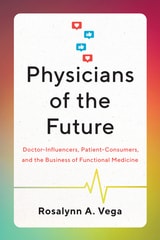
Physicians of the Future
Doctor-Influencers, Patient-Consumers, and the Business of Functional MedicineRosalynn A. Vega
University of Texas Press, 2024
The first scholarly exploration of the forums, practice, and economics of functional medicine.
Physicians of the Future interrogates the hidden logics of inclusion and exclusion in functional medicine (FM), a holistic form of personalized medicine that targets chronic disease. Rosalynn Vega uncovers how, as “wounded healers,” some FM practitioners who are former chronic disease sufferers turn their illness narratives into a form of social capital, leveraging social media to relate to patients and build practices as “doctor-influencers.” Arguing that power and authority operate distinctly in FM when compared to conventional medicine, largely because FM services are paid for out of pocket by socioeconomically privileged “clients,” Vega studies how FM practitioners engage in entrepreneurship of their own while critiquing the profit motives of the existing healthcare system, pharmaceutical industry, and insurance industry. Using data culled from online support groups, conferences, docuseries, blogs, podcasts, YouTube, and TED Talks, as well as her own battles with chronic illness, Vega argues that FM practices prioritize the individual while inadvertently reinscribing inequities based on race and class. Ultimately, she opens avenues of possibility for FM interlocutors wrestling with their responsibility for making functional medicine accessible to all.
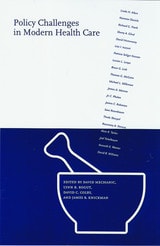
Policy Challenges in Modern Health Care
Edited by David Mechanic, Lynn B. Rogut, David Colby, and James R. Knickman
Rutgers University Press, 2005
Health care delivery in the United States is an enormously complex enterprise, and its $1.6 trillion annual expenditures involve a host of competing interests. While arguably the nation offers among the most technologically advanced medical care in the world, the American system consistently under performs relative to its resources. Gaps in financing and service delivery pose major barriers to improving health, reducing disparities, achieving universal insurance coverage, enhancing quality, controlling costs, and meeting the needs of patients and families.
Bringing together twenty-five of the nation’s leading experts in health care policy and public health, this book provides a much-needed perspective on how our health care system evolved, why we face the challenges that we do, and why reform is so difficult to achieve. The essays tackle tough issues including: socioeconomic disadvantage, tobacco, obesity, gun violence, insurance gaps, the rationing of services, the power of special interests, medical errors, and the nursing shortage.
Linking the nation’s health problems to larger political, cultural, and philosophical contexts, Policy Challenges in Modern Health Care offers a compelling look at where we stand and where we need to be headed.
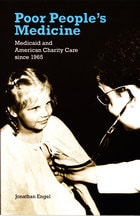
Poor People's Medicine
Medicaid and American Charity Care since 1965Jonathan Engel
Duke University Press, 2006
Starting with a brief overview of the history of charity medical care, Jonathan Engel presents the debates surrounding Medicaid’s creation and the compromises struck to allow federal funding of the nascent programs. He traces the development of Medicaid through the decades, as various states attempted to both enlarge the programs and more finely tailor them to their intended targets. At the same time, he describes how these new programs affected existing institutions and initiatives such as public hospitals, community clinics, and private pro bono clinical efforts. Along the way, Engel recounts the many political battles waged over Medicaid, particularly in relation to larger discussions about comprehensive health care and social welfare reform. Poor People’s Medicine is an invaluable resource for understanding the evolution and present state of programs to deliver health care to America’s poor.
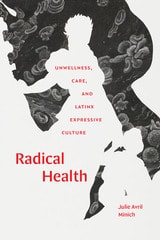
Radical Health
Unwellness, Care, and Latinx Expressive CultureJulie Avril Minich
Duke University Press, 2023
Treating AIDS
Politics of Difference, Paradox of PreventionSangaramoorthy, Thurka
Rutgers University Press, 2014
Sangaramoorthy documents in detail the work of AIDS prevention programs and their effect on the health and well-being of Haitians, a transnational community long plagued by the stigma of being stereotyped in public discourse as disease carriers. By tracing the ways in which public knowledge of AIDS prevention science circulates from sites of surveillance and regulation, to various clinics and hospitals, to the social worlds embraced by this immigrant community, she ultimately demonstrates the ways in which AIDS prevention programs help to reinforce categories of individual and collective difference, and how they continue to sustain the persistent and pernicious idea of race and ethnicity as risk factors for the disease.
We Are Having This Conversation Now
The Times of AIDS Cultural ProductionAlexandra Juhasz and Theodore Kerr
Duke University Press, 2022